

These Automakers Want America's Gas Tax Gone – Here's What Would Replace It
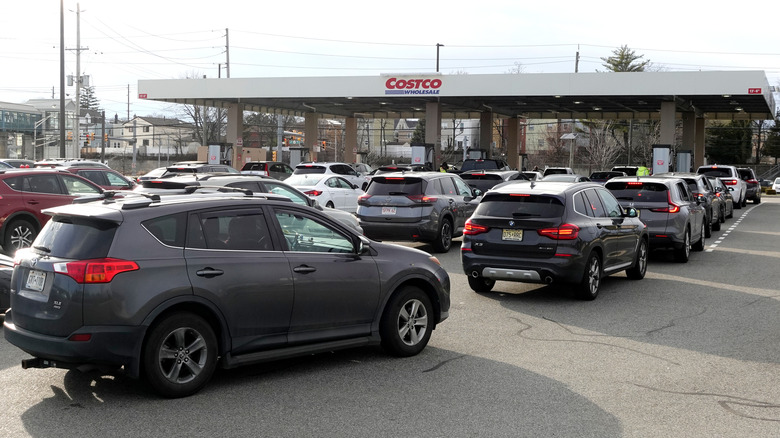
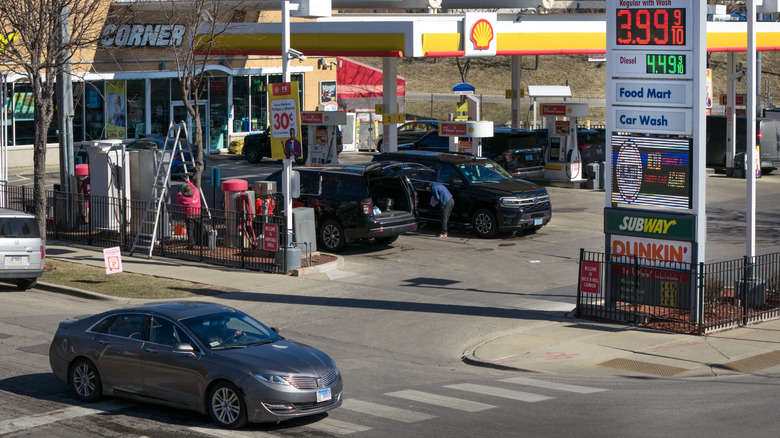
With gasoline prices rising across America, drivers are likely paying a lot more attention to how much they are actually paying for a gallon of fuel. This doesn't just mean shopping around for the best price or noticing the strange tricks the gas stations use when displaying their prices; it also likely entails an interest in where exactly all that money spent per gallon actually goes.
It's well known that the actual cost of the fuel is just one component of the price we pay, with gas taxes also making up a significant part of the price, depending on where you live. State taxes on gasoline vary widely across the country, with states like California charging up to 70 cents per gallon. There's also a federal gas tax across the country, which currently stands at 18.4 cents per gallon — and it's been that amount for a long time.
Now, though, an auto industry group is calling for the U.S. government to remove the federal gas tax altogether. The goal, though, isn't specifically to save drivers money at the pump. Instead, the idea is to replace the existing per-gallon gas tax with a vehicle-based fee system that it feels would more fairly and effectively have drivers fund the growing costs of highway repairs and infrastructure work.
A growing problem nationwide
The policy change is being pitched by the Alliance for Automotive Innovation, an industry group that represents nearly all the major players in the American auto industry, including Ford, GM, Hyundai, and Toyota. The proposal, as authored by the group's president, John Bozella, calls for the federal gasoline tax to be repealed and replaced with a new system that collects a registration fee from every vehicle based on its weight.
What would this accomplish? Well, for starters, the group argues that the current gas tax rate is outdated. The current 18.4-cent-per-gallon tax has been the same since 1993, which means that the federal gasoline tax has lost over 60% of its value due to inflation. This is part of the reason why the Highway Trust Fund, which uses these taxes to fund the construction of highways, has run at a deficit for 20 years. Without changes, the fund is likely to be depleted in a couple of years.
Further compounding the problem is the rapid growth of electric vehicles over the last decade, which, since they don't use gasoline, don't contribute to the Highway Trust Fund — despite using the roads like any other vehicle. The issue of EVs and gas taxes is not new, however, and potential solutions have included a proposal to leverage an additional federal tax specifically on EV drivers.
The road bill must be paid somehow
Along with the growth of EVs, which use no gasoline at all, the Alliance for Automotive Innovation also notes today's popular hybrid vehicles, which use much less gasoline per mile traveled. They say the current system unfairly shifts the burden of highway funding onto older, less fuel-efficient vehicles, whose drivers may not be able to afford a newer EV or hybrid. While the proposal doesn't specify exactly how a new weight-based fee system would work, there's certainly some logic to it.
However, EV and hybrid issues aside, some would argue that gas taxes work better in principle, as you pay more only if you drive more — not because you own a heavier vehicle. This proposed federal-level fee would work in the opposite way to some recent state proposals, such as California's idea of tracking mileage and charging drivers based on how much they drive. However, California already varies commercial vehicle registration fees by vehicle weight, and state politicians have proposed additional fees on top of that for large vehicles.
Federal lawmakers have yet to indicate whether they might embrace this specific gas tax alternative. However, both the existence and amount of the federal gasoline tax are likely to be topics of debate in the coming months, with current surface transportation laws scheduled to expire in the fall of 2026.