

US Navy Claims China's Submarine Fleet Could Soon Go All-Nuclear
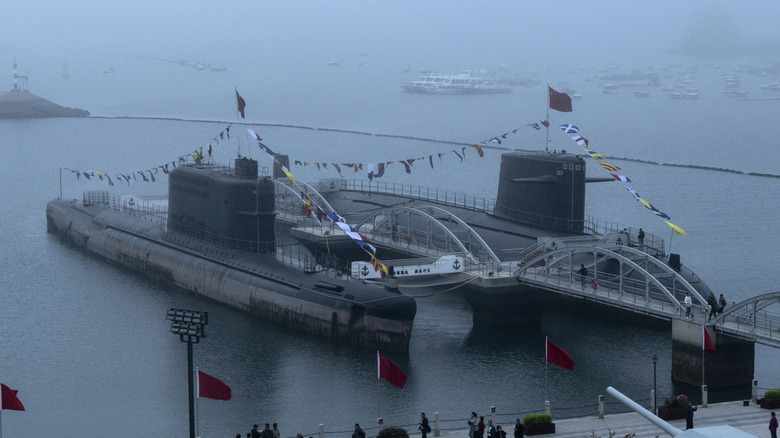
China's submarine fleet has always been big, but it's also comprised mainly of vessels with diesel-electric submarine engines, and that class of subs needs to surface regularly to recharge its batteries or snorkel. This limits both range and time at sea, and surfacing up also makes them significantly more prone to detection. The solution to this? Phasing out diesel and going nuclear. And that's exactly what China's submarine program is headed, according to the top intelligence official for the US Navy.
Rear Adm. Mike Brookes leads the Office of Naval Intelligence (ONI), and he revealed these startling findings in a written testimony to the US-China Economic and Security Review Commission on March 2nd, 2026. He testified that the People's Liberation Army Navy is "executing a significant strategic shift from diesel-electric to all-nuclear construction, representing a fundamental departure from historical construction patterns."
Currently, China has over 60 submarines in total, with around 14 being nuclear-powered. But by 2035, the total is expected to grow to 80, with about half of those being nuclear-powered.
China's submarine production now outpaces the US
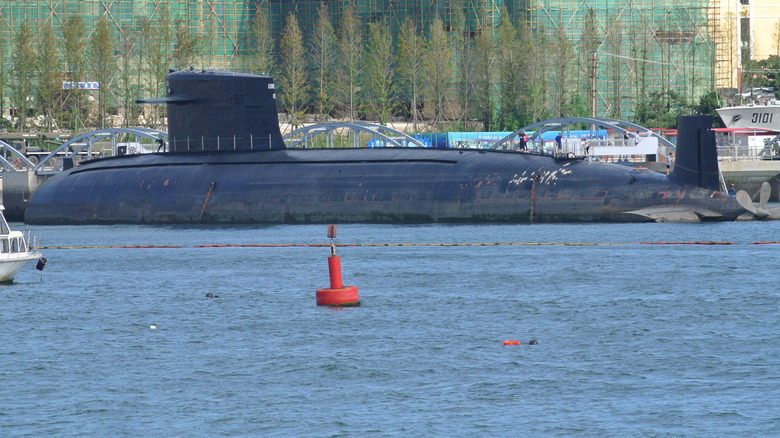
That plan is already in motion, according to the testimony. Beijing has already been pouring investment into three major shipyards over the past decade or so to upgrade them. Its main facility in Huludao even got a whole second manufacturing hall between 2019 and 2022. All of this has bumped the country's nuclear submarine production rate from less than one per year to, in his words, "significantly higher rates."
A February 2026 report from the International Institute of Strategic Studies (IISS) has even backed these findings up with satellite imagery. Those revealed that China had launched 10 nuclear-powered submarines between 2021 and 2025. Meanwhile, the US only managed to build seven submarines in the same window. The IISS also estimated that up to nine Type 093B guided-missile submarines have come out of Huludao already since 2022. This is a nuclear class of submarines, which Brookes described as "the PLA Navy's most capable operational attack submarine." It's already considered one of the most advanced nuclear submarines in active service today.
Brookes' testimony also covered newer submarine classes that are either already in the water or on the way. There's the Type 041 Zhou-class, for instance. That's again a nuclear-powered attack submarine that's roughly the size of a conventional diesel-electric boat. The idea behind it is to offer longer endurance than a diesel sub, while at the same time also being less expensive and complex than a full-size nuclear attack submarine.
Building fast, but building well?
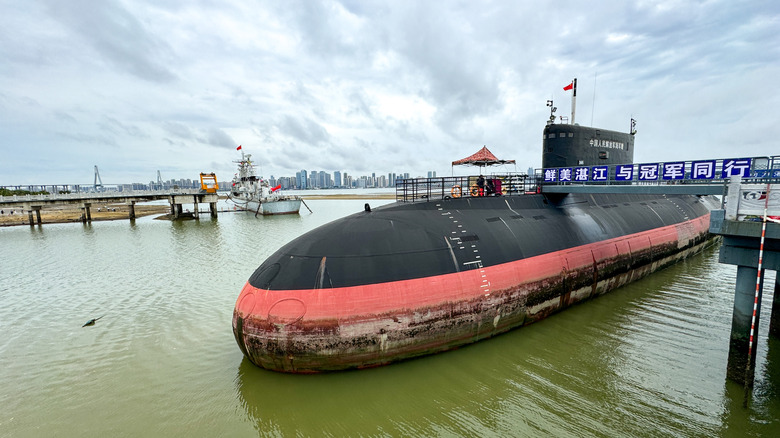
That said, the first Zhou-class boat actually accidentally sank pier-side at a shipyard near Wuhan. This happened sometime between May and June 2024, even before proper sea trials were started. A US Department of Defense report from last year suggested that it might have been tied to corruption in China's defense procurement.
Then there are the next-generation platforms, the Type 095 guided-missile submarine and the Type 096 ballistic missile submarine. Both are expected to enter service later this decade and into the 2030s. The Type 096 is particularly notable because it'll carry JL-4 submarine-launched ballistic missiles, which Brookes said would let it "target large portions of the US from protected waters."
However, building more nuclear submarines doesn't automatically make them good. The IISS report also noted that noise levels remain a real limiting factor for Chinese subs. It builds on a 2009 ONI assessment, which found that the Type 093 attack submarine and Type 094 ballistic missile submarine were both noisier than even late Cold War-era Soviet equivalents. China has made iterative improvements to both classes since then, but those are still basically the same hull designs.
But noisy or not, the sheer scale of what China is building has US officials paying attention. Also in the same hearing is Vice Adm. Richard Seif, who commands US submarine forces. He said China's military modernization now reflects an ambition to operate well beyond its coastline. Brookes added to that saying that China is also building layered undersea surveillance networks to track foreign submarines. He even warned that by 2040, the PLA Navy's undersea forces "may credibly challenge US regional maritime dominance."