

The Ryobi Power Tool That Can Stop Your Driveway From Cracking – If You Use It Regularly
We may receive a commission on purchases made from links.
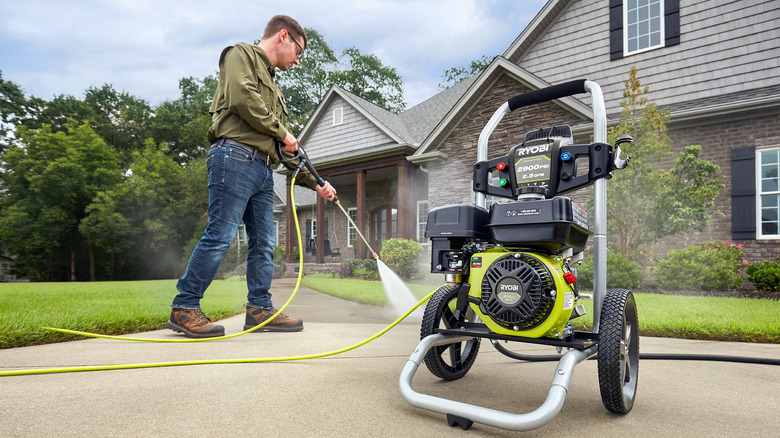
Concrete and asphalt driveways are supposed to last anywhere from 15 to 40 years when properly installed. However, when exposed to dirt, oil, and mildew, they can start to form cracks long before that. Cracks can ruin your home's aesthetics and structural integrity, become tripping hazards, and, if left unchecked, put a big dent in your wallet. To keep your driveway looking its best and extend its lifespan, experts recommend that you keep it sparkling clean. To that end, you'll want to deep clean your driveway regularly, so it looks new again, and that's where the Ryobi pressure washer comes into play.
Ryobi offers an impressive lineup of pressure washers that are quite affordable, with entry-level models retailing at $99 and the most expensive at $599. A portable option like the Ryobi 40V HP Brushless Whisper Series 2000 PSI Pressure Washer, which retails for $399, is ideal for bringing back the look of your driveway. It's easy to use, and, like other Ryobi power tools that make cleaning your home easier, this cordless washer comes with a three-year warranty and is compatible with any of the company's 40V batteries.
How to protect your driveway from cracking using a Ryobi pressure washer
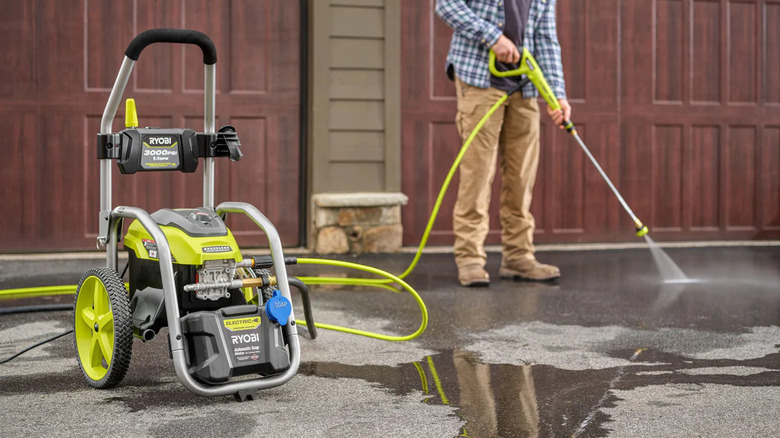
If you're using a pressure washer for the first time (or the first time in a long time), you'll want to proceed very cautiously and only after you've read the manual and done your research. A pressure washer is a dangerous machine, and guessing how to use it can easily lead to injury. Keeping this in mind, always wear the correct PPE. Put on safety glasses to keep dust and other debris from blowing back onto your eyes. Wear closed-toed or rubber-soled shoes, rubber gloves, and long pants and sleeves. You also want to ensure that pets and kids are out of the way for this project.
Once you're ready, start by sweeping away any fallen leaves, seed pods, and other debris. This will help you inspect the whole driveway for damage and stains. Pressure washing without cleaners and detergents is entirely possible. For the best cleaning results, however, it's best that you pre-treat your driveway.
To quickly and effectively remove stubborn oil stains from your driveway, you can cover the spill with kitty litter, baking soda, laundry detergent, or even WD-40. If you need something more industrial, look for degreasers like the LPS Shop Fast Degreaser, available on Amazon for $18.
Next, grab your pressure washer and test one area first before attacking the entire driveway. Be sure to clean your driveway from the highest point down. This way, you will prevent dirt and other contaminants from washing over areas you've already cleaned.
Everything you need to know before using a Ryobi pressure washer to clean your driveway
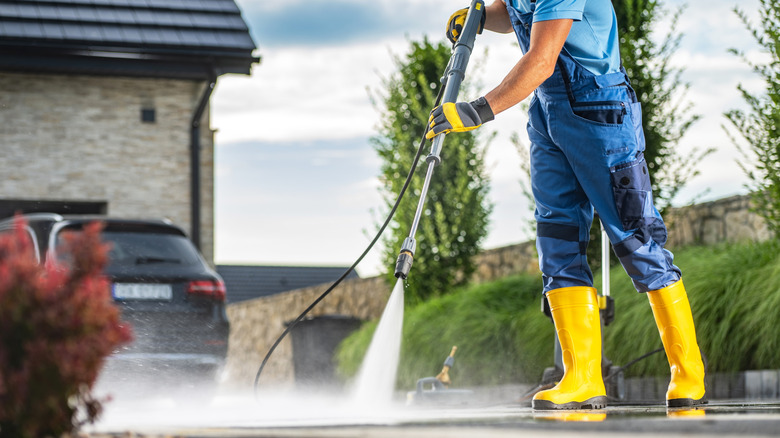
As important as power washing your concrete is, it's worth noting that the process is not as easy as it seems. You'll want to avoid is choosing the wrong pressure washing machine. To get the best results, you'll want to use an electric pressure washer, which is ideal for smaller-scale washing jobs, or a gas-powered option, which works best for large areas. 18v battery-powered Ryobi pressure washers might seem convenient, but it's best you skip them; they will not offer enough cleaning power to handle dirty driveways. However, 40V models will work just fine as they offer solid cleaning performance.
Aside from the type of machine, you'll also want to choose the right nozzle for your pressure washer. A powerful nozzle might damage your driveway, while a weak one will not get the job done. Don't forget to check the PSI (pounds per square inch) setting. You'll want to start at the lower end, around 1,500 PSI, and if this setting isn't lifting the stains or dirt effectively, gradually increase the pressure until you find the sweet spot, usually around 3,000 PSI for concrete driveways. If there are any visible cracks, avoid spraying them. Doing so could cause further damage. Don't forget to reseal your driveway after pressure washing for long-term protection.