

Some Retailers Could Refuse To Install Your Tires For This One Reason
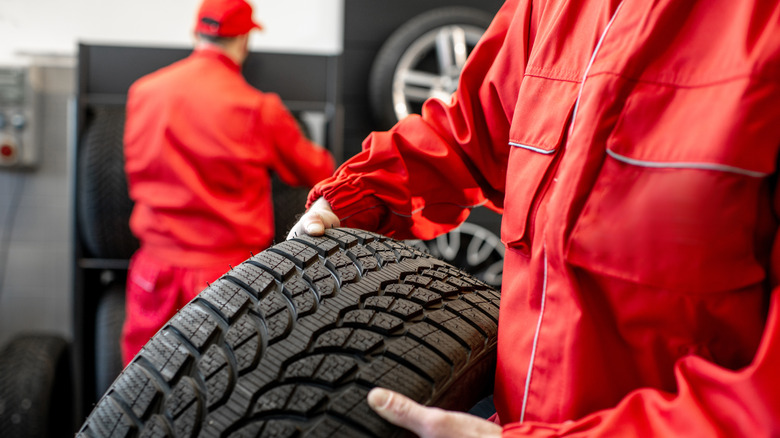
There are a lot of options when it comes time to install new tires on a vehicle. Some car owners prefer the easy route, dropping the car off at a full-service tire shop that sells and installs them as part of a package. Others prefer to take matters into their own hands, purchasing the tires online and then taking them to a tire shop for installation.
One woman recently went viral on TikTok for showing how buying tires online can save money compared to buying from big-box stores, but her situation also highlighted one of the possible risks of buying tires online. When she went to have the tires installed at a local shop, she was refused, as the tires she had bought were not the same size as the ones that came on her vehicle.
It's unknown exactly why the woman ended up with differently-sized tires than what came on her car, but the situation nonetheless has raised questions about what a tire shop is or isn't allowed to do when it comes to installing tires they didn't sell. There are many reasons a reputable tire shop might refuse to install a set of tires. They could be used and worn beyond what's safe, or have manufacturer defects, or, as in this case, not be the correct size for the vehicle. No matter the situation, it all comes down to company policy and liability.
It's all about liability
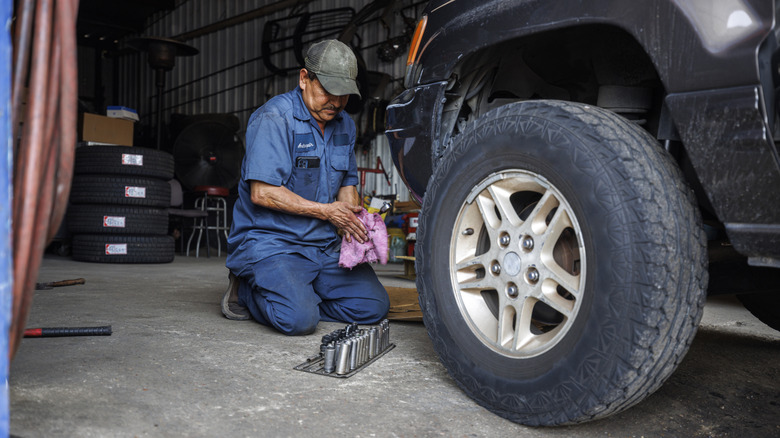
Even if incorrectly-sized tires will physically fit on a vehicle without issue, that may not be enough for large tire shops and corporate chain stores to install them — and it all comes down to liability. Tires are the one part of your vehicle that touches the road, and if there's even a minor chance that tires could lead to a safety issue, accident, or a ticket for violating a vehicle code, the shop is likely to refuse the risk and liability.
Fortunately, it's pretty easy to know which tire size a vehicle is supposed to have, as factory tire sizes are usually found on a sticker inside a car's door jamb. From there, the tire shop will generally use the 3% rule for tire sizing, which states that the overall diameter of a vehicle's tires should not differ more than 3% from the factory diameter to avoid issues.
Not only can incorrectly-sized tires make speedometers inaccurate, but they could also throw off all kinds of vehicle systems. Likewise, oversized tires can also put additional wear on your vehicle's drivetrain. With all of that, it's not hard to see why tire shops would want to steer clear of the risk altogether and stick with factory sizes.
Cars have specific tire sizes for a reason
This isn't to say that no tire shop will ever install a set of tires that are different from the OEM size. After all, there's an entire industry dedicated to custom wheels and tires, with many of these tires being much larger than what the vehicles were originally sold with.
However, these situations are different than a normal person trying to fit larger or smaller tires on their factory wheels and expecting everything to be the same as the stock tires. Most often, a person purposely modifying or upgrading their tires will understand the trade-offs that come with different sizes, which can include downsides like decreased fuel economy compared to stock tires. If you're having this work done through a shop, there's a good chance the paperwork you sign will clear the installer of any liability for installing modified or non-standard parts.
On the other hand, if you aren't an enthusiast looking to modify your vehicle, you can avoid all of this headache by just buying the correct tires in the first place. The possibility of a shop refusing to help you is just one more reason why you shouldn't skimp out or cut corners on your tires just because you found a good deal somewhere. Likely, the money you save won't be worth the hassle and risk.