

The US Air Force's F-47 Fighter Jet Timeline Has Changed, And That's A Problem
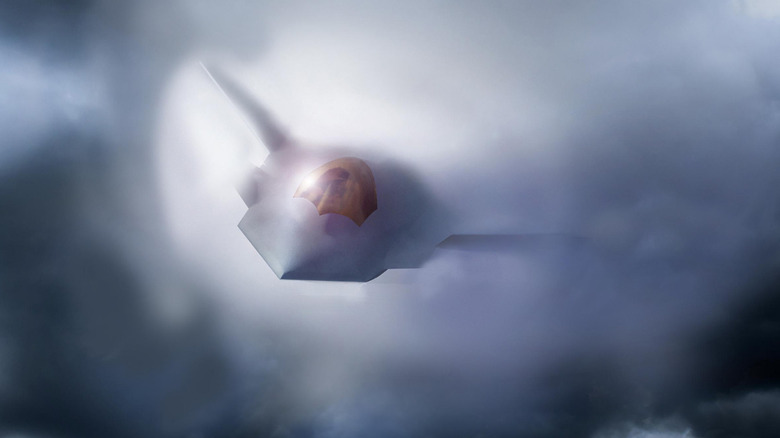
The U.S. Air Force utilizes some of the military's most technologically advanced and capable aircraft. This is thanks in large part to America's push to stay ahead of the curve, which is why the Air Force may spend up to $16 billion on new advanced engine tech. However, one new program has fallen a bit behind, as the F-47 isn't expected to enter service until the mid-2030s. This timeframe is later than the original 2030 operational window.
The problem with this delay is that while the new F-47 remains in development, the Air Force has to depend on existing fighter jets to carry the load. This means current fighter planes will act as a bridge until the new fighters are ready to go. For example, the F-22 Raptor is receiving upgrades intended to extend its service life. At the same time, the Navy is expected to keep the F/A-18 Super Hornet in service longer than originally planned as it waits for its own next-generation replacement.
As the Air Force works to improve these fighters just to keep up, the F-47 is expected to incorporate some seriously advanced electronics and networking functions when it does go into production. This will allow it to work as part of a broader, connected combat system instead of just a standalone fighter. This approach shows how the Air Force is stepping up its efforts to improve its fighter jet design, while also opening the door for future upgrades.
What features will the F-47 likely have?
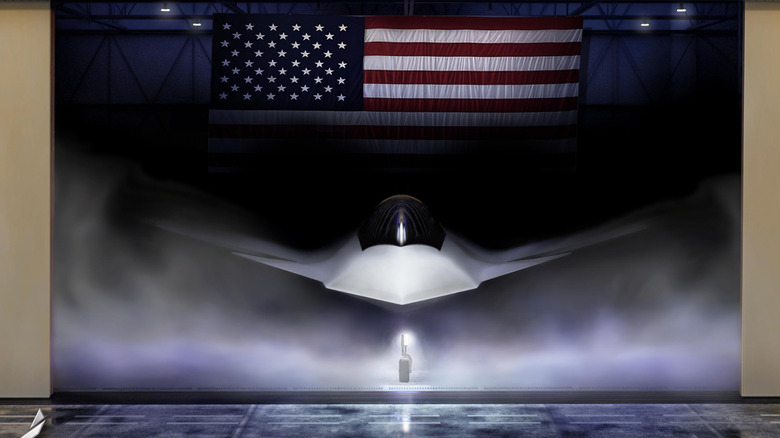
The F-47 was first announced in March 2025. It would be the U.S. Air Force's sixth-generation fighter and would be part of the Next Generation Air Dominance (NGAD) program. The development and eventual production of the new jet is being handled by Boeing, and not longtime military contractor Lockheed Martin. The F-47 is set to become the USAF's primary combat jet, replacing the F-22 Raptor in that operational capacity.
The F-47 is expected to be a fast supersonic fighter that will heavily depend on semi-autonomous systems. This means it will incorporate AI, allowing its systems to quickly manage data to analyze threats and identify targets. This is also expected to help alleviate some of the workload during live missions, as the pilot will be able to maintain focus in tense situations. This could allow the F-47 to react faster than traditional fighters, thus giving it an edge over enemy aircraft.
Also, this new fighter jet will be stealthy, with the capability of penetrating deep inside enemy airspace. This will be possible thanks to its ability to avoid radar detection, which means it can fly with less exposure than other planes. But what really sets the F-47 apart from the rest is its modern versatility. With its built-in AI and advanced tech, it could become one of the most effective Air Force fighter planes in the sky.