

The US Still Hasn't Adopted This European Car Safety Rule: Here's Why
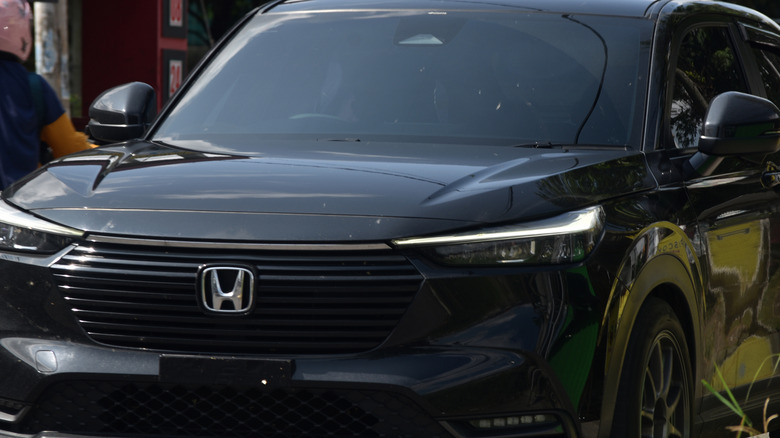
You know those little lights under your headlights? Those are daytime running lights. The European Union has required all new cars to be built with them since 2011. Data from multiple studies conducted by multiple European countries convinced the parliament that daytime driving is safer when drivers have their running lights on because it increases visibility and reduces accidents.
That sounds reasonable, and yet, the federal government does not require these lights, nor do any of the 50 states, because ultimately, the feds weren't persuaded by the data, even when lobbied by a major automaker to make the lights mandatory. However, this is the Unites States of "we do our own research" and the studies run by the feds had different results, leading the National Highway Traffic Safety Administration to conclude that making a whole federal regulation requiring these lights isn't necessary. In fact, daytime running lights weren't even legal in the United States at first, because of the same law that made adaptive beam headlights illegal.
At least most cars manufactured in the United States nowadays are made with running lights, anyway. So, feel free to drive with them on, but remember, they're not the same as headlights, so be sure to know the difference. Just like there's no law that says you have to, there's no law that says you can't.
The E.U. made daytime running lights mandatory
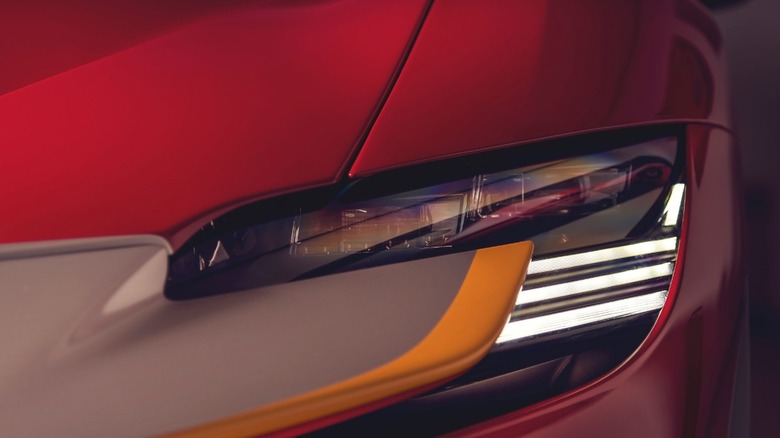
Some countries in Europe were implementing daytime running lights long before the European Union came into existence. The first to do so were Scandinavian countries, which makes sense. That far north, it stays dark most of the day during winter months. But drivers in these countries were using running lights all the way back in the 1970s.
These countries had been gathering statistics on the results of using daytime running lights, so by the time the European Union came around, there was plenty of data on the subject for the European Commission (EC) to review. This governmental body looked at several meta-analyses of multiple studies, and the results were pretty conclusive. According to the EC, legally requiring the use of daytime running lights cut down crashes between multiple parties by 8-15%. One Norwegian meta-analysis of 41 studies of running light use, some on cars and some on motorcycles, found a reduction in multi-party collisions of 5-10%. One Dutch review found a 20% reduction in injured crash victims and 25% reduction in deaths.
So, in 2011, the European Union enacted legislation that required all new cars and small delivery vans be manufactured with daytime running lights. Beginning in August 2012, the same requirements were put in place for buses and trucks. This is one of those driving rules that exist in other countries but don't exist for Americans.
Why doesn't the U.S. make daytime running lights mandatory?
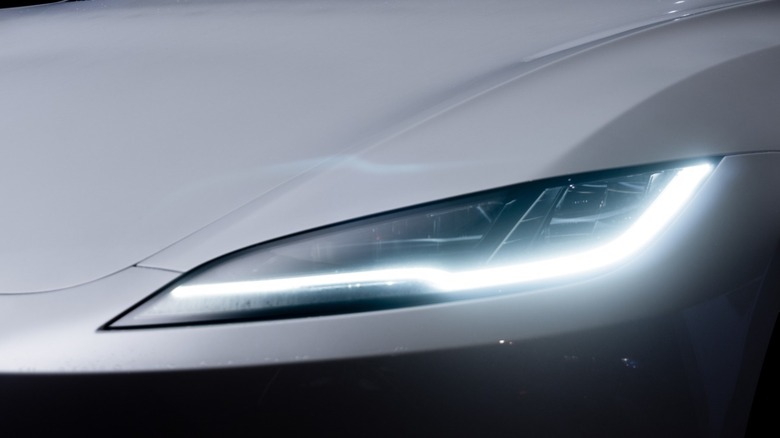
In 1985, Jim Burnett, the chairman of the National Transportation Safety Board said, "Running lights definitely are a means to help reduce the toll in lives and property from highway accidents." Yet, the United States has never been that eager to require daytime running lights. In fact, they weren't even allowed on U.S. roads until the 1990s.
Further, one of the major automakers has actually been trying to get the government to make running lights mandatory for some time. In the early 1990s, it was General Motors who petitioned the NHTSA to allow, but not require, manufacturers to put running lights in their cars, which the agency did in 1993, with some regulation. Later, in 2001, GM would petition the NHTSA to require manufacturers to include these lights on their cars. Studies from twelve states conducted from 1994 to 1997, as well as a study that included 18 states, were shown to the agency as evidence that these lights make the roads safer. But at the end of the day, the powers that be were not convinced, and this is why we can't have nice things.