

Do You Need To Drain Old Coolant Before Adding More To Your Car?
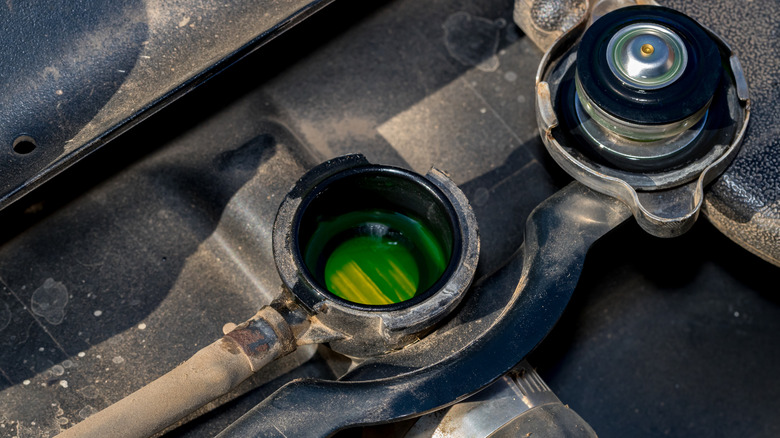
Every car will appreciate regular servicing and maintenance, even if it doesn't use an internal combustion engine. Even EVs need maintenance from time to time, although that service may need to happen less often than it does for their combustion counterparts. If you own a car, you're likely aware that an annual service also includes replacing the oil and, often times, the coolant. We know that the old oil has to be drained first because the oil filter is also replaced during annual service, but does that also apply to the coolant?
Generally, the coolant doesn't need to be flushed with every annual service. It does need a flush every couple of years or after you pass a certain number of miles, however. The recommended interval to flush the coolant for most cars and trucks is generally two years or 30,000 miles, but this can vary. Always check your owner's manual to know the exact interval for your specific vehicle. There are also other situations when it's a good idea to drain the coolant, as it could lead to some pretty major issues.
When should you actually flush the coolant?
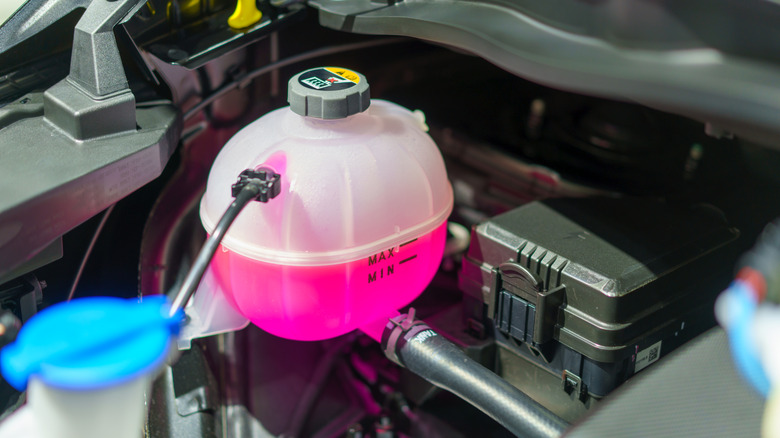
As mentioned, coolant does need to be flushed in specific situations. Coolant can get contaminated or dirty if left for years or hundreds of thousands of miles. This can lead to decreased effectiveness, which can cause overheating and other potential headaches. Other than the typical mileage/years passed interval, flushing and replacing the coolant is also necessary when you replace the water pump, as that's one of the crucial cooling components. If your coolant is leaking, chances are you'll also need to drain it and re-add it after carrying out a repair to stop the leakage.
Any sort of hissing or steam coming out from under the hood; a coolant-related warning light; coolant temperatures soaring; or constantly needing to top up with coolant are all good signs that it's time to drain and top up with fresh coolant. This is important because coolant can also contain and carry rust. If that rust reaches other parts of the engine, that would be a pretty major blow.
If you plan to replace the coolant yourself, always check that you're using the right color for your engine. You'll also want to check if the coolant you purchased has already been diluted, which would mean you could just pour it in. If it's a concentrate, however, it will have to be diluted with distilled water. It's not always necessary to top up or drain the coolant when you take your car in for an oil and filter change, but if your vehicle is showing the symptoms, that is a good time to flush it. The good news is, flushing your coolant is one of the many DIY engine maintenance tasks you can do at home.