

Concrete Repair Tools Every DIYer Needs
We may receive a commission on purchases made from links.
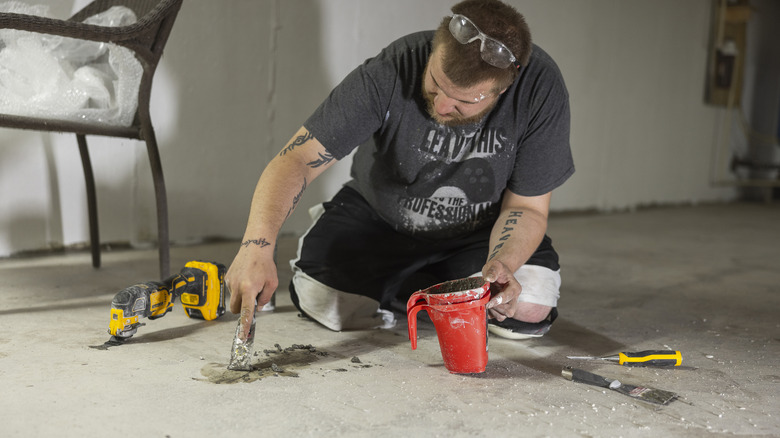
Cracked concrete can be more than just a minor aesthetic annoyance. What starts as a chip from exposure to harsh weather conditions, one-off impacts, or overuse can turn into a large crack that can affect your home's structure, value, and safety. Given these risks, you might call in a professional to address this issue, especially if you consider the guarantee and peace of mind a licensed contractor offers. Before you spend hundreds or thousands of dollars on professional repair, however, you'll be interested to know that repairing cracked concrete is a DIY home improvement project that you should try before calling the pros.
If you want to fix damaged concrete, you'll want to arm yourself with knowledge, which, fortunately, you can find online; there are plenty of YouTube tutorials and blogs that can help you grow your DIY chops. On top of that, you'll want to take a trip to your local hardware store and purchase specialized concrete repair tools to save you some money, time, and energy. Some tools might even help you find a new hobby in masonry or backyard hardscaping.
Here are some must-have tools you'll need to get started on your concrete work journey. We've picked these tools based on recommendations from DIY experts, licensed contractors, and trusted voices online.
A caulk gun is essential for applying concrete sealant
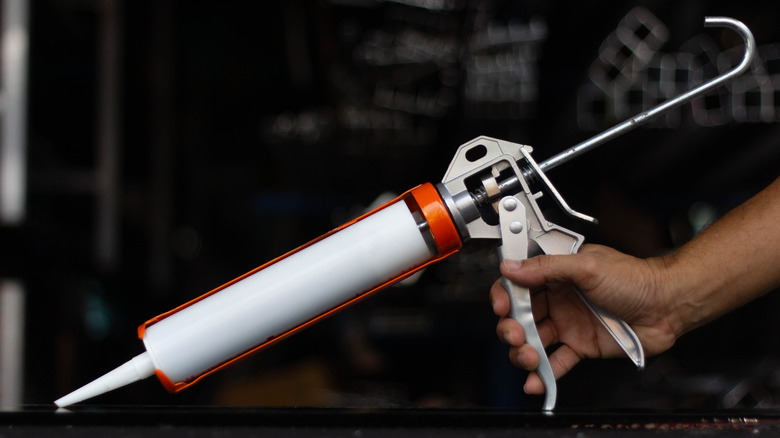
As long as the cracks are not deep, you'll probably need standard concrete caulk to say goodbye to cracked concrete driveways, patios, or garage floors. Given that caulking by hand is possible, you'll want to think twice before you attempt this DIY. Hand-squeezing is exhausting, can lead to wrist pains, and ruin your home improvement project, which is why a caulk gun is an invaluable part of your tool collection.
It basically dispenses sealants or caulk from the cartridge and allows for precise, steady application (especially in tight corners), which is difficult to achieve by hand. This makes caulk guns perfect not just for concrete repair, but also for plumbing applications and bathroom renovations, where you need sealants. Because a caulk gun is the kind of home improvement tool you can get for under $50, you might outsmart yourself and save a few dollars on a cheap gun that goes for $10 or less.
While it might be economical, you'll want to avoid this type of tool as it can make your DIY home improvement project look messy. If you do a lot of caulking, the best way to avoid this is to purchase an electric caulk gun. A model like the Ryobi 18V ONE+ 10 oz. Caulk and Adhesive Gun, which retails at $49, as of this writing, will do what traditional manual guns do, only better and a whole lot easier. It will also get the job done quickly and provide greater consistency.
Pressure washers and an angle grinder to prep the concrete surface
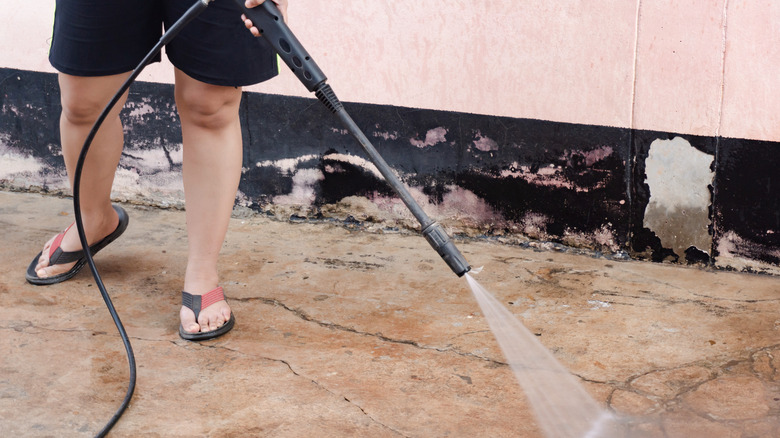
There are many mistakes people make when repairing a cracked concrete surface, and the most common, with long-lasting effects, is skipping surface preparation. Small bits of concrete, debris, and unwanted weeds will prevent the sealant or filler from bonding correctly to the surface. If there are extreme temperature changes, the repaired concrete will probably deteriorate, chip, or simply crack. To minimize these risks, you'll want to turn to a pressure washer. It's an ideal power tool for removing stubborn stains and revealing hidden cracks.
If you don't have a pressure washer, you can either borrow from a friend or rent from a tool library or your local store. Just be sure that you set your machine to the right PSI (around 1500–2,800 PSI) to avoid damaging the surface. Ideally, you'll want to test the pressure washer on a small, inconspicuous section first to ensure the pressure isn't so high that it etches or damages the concrete. Alternatively, you can use a garden hose attached to a nozzle to give your cracked concrete a good clean-up.
Once you've cleaned the surface, you'll need to level the ground so you have a smooth surface to work on. Any concrete dips or bumps could lead to uneven concrete thickness, resulting in weak floor spots. An angle grinder will play a crucial role in this step, as it will help grind rough edges smooth and cut through cracks to offer a better surface for sealants to bond properly.
A trowel, wheelbarrow, and screed board for concrete work
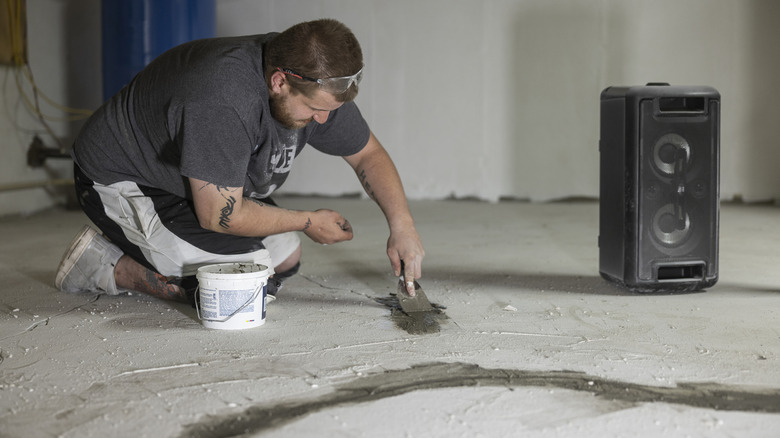
If you're dealing with deep cracks, you might assume that using actual concrete to seal them would work best, but it could actually lead to more cracks forming. Instead, it's wise that you turn to a ready-mix concrete patch like this Sika Ready-Mixed Concrete Patch, available on Amazon for $8. Ready-mix concrete patch cures fast and creates a strong seal that protects your concrete from any future damage.
With that said, to apply a concrete patch the right way, you'll need a trowel to effortlessly fill cracks with patching material. A square-edged trowel will play a crucial role in smoothing the filler so it matches the surrounding concrete. Aside from the trowel, if you're tearing out and repairing your entire garage concrete floor, you might also need a screed board. It's a useful tool that brings the surface to level, allowing for a relatively flat, smooth finish.
You will also need a bucket, which is like a jack-of-all-trades in a concrete repair project. It will come in handy if you want to hold water for cleaning your tools, carry sand, or mix dry concrete, especially if you're conducting large-scale concrete repairs. A heavy-duty bucket can even double as a spur-of-the-moment chair when you want to take a break. Don't forget a wheelbarrow. It's an all-purpose tool for hauling loads of sand, building materials, and waste.
Ensure you have the right safety gear
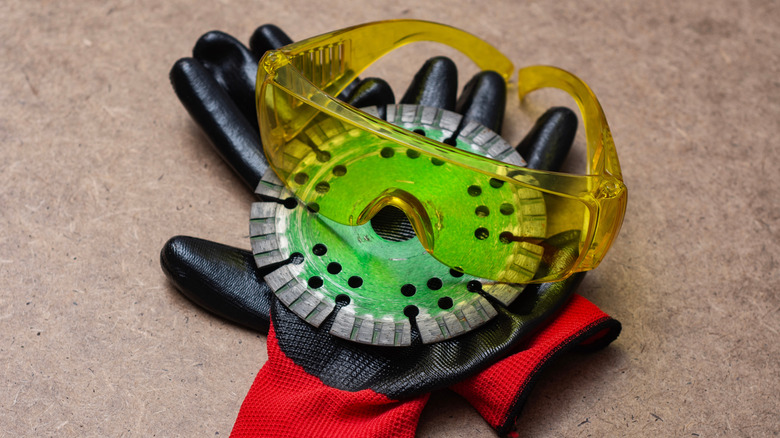
Before you start working with concrete, you ought to know that working with this material is quite dangerous. Wet concrete is highly alkaline, and when it comes into contact with your skin, it can cause alkali burns, leading to deep-tissue injuries. Keeping this in mind, you'll want to get yourself some long sleeves and work gloves to protect your hands from blisters, sore palms, and skin burns. You'll also need a pair of safety goggles and a disposable N95 face mask. Cutting and leveling concrete can kick up dust containing silica, a well-known culprit for serious lung issues.
Given that your feet are among the most exposed and vulnerable parts of your body, it's a good idea to favor long pants and work boots when repairing cracked concrete. Waterproof boots like these Showave Steel Toe Rubber Work Boots will keep the concrete mixture from contacting your skin, preventing severe skin burns. They will also keep your feet dry and prevent slipping or falling. Finally, don't forget to give your knees some love with well-cushioned knee pads.