

Red Light Cameras Are Still Illegal In These US States
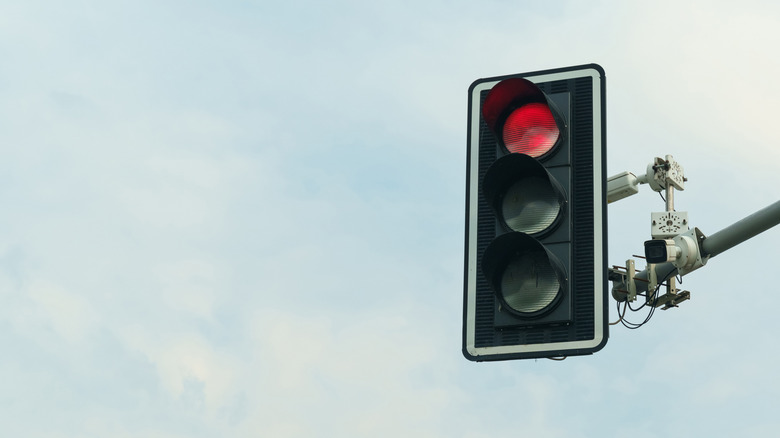
Ran a red light and scared you'll get a ticket in the mail? Depending on what state you're in, you might not have anything to worry about. Police powers — in this case, citing people for traffic violations — are reserved for the states, not the federal level. For that reason, red light camera laws differ from coast to coast. Looking at the big picture, things are pretty evenly split: States either allow them, don't allow them, or have no laws one way or the other. That means even neighboring states could be on completely different pages regarding red light cams.
As of this writing, nine states have explicit bans on red light cameras: Idaho, Maine, Mississippi, Montana, New Hampshire, South Carolina, South Dakota, Texas, and West Virginia. Over a dozen others have no real definitive statewide laws legalizing them. This includes Alaska, Arkansas, Indiana, Kansas, Kentucky, Massachusetts, Michigan, Nebraska, Nevada, New Jersey, North Dakota, Oklahoma, Utah, Vermont, Wisconsin and Wyoming. Without legislation at the state level, local jurisdictions have their hands tied. Add them all up, that's 25 states in one corner and another 25 in the other.
The red light camera debate is still ongoing
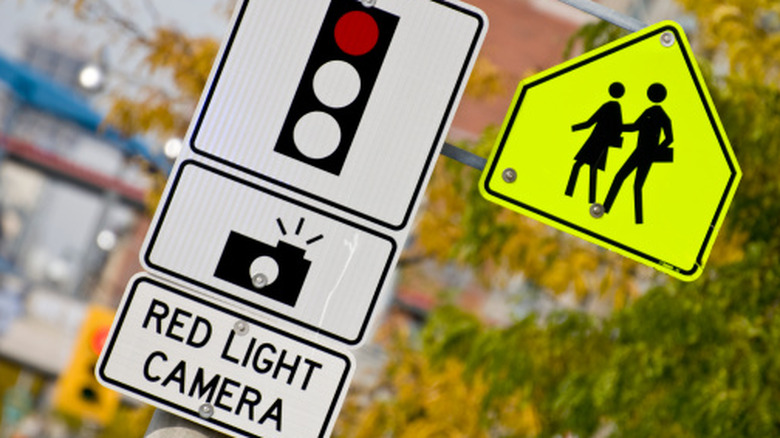
Regardless of a state's red light camera laws, there's no denying it: More than one in four crash deaths in the United States happen at signalized intersections, and drivers running red lights are to blame more often than not. While red light cameras are certainly one way to help stop speeders, those opposed argue they're unconstitutional. The Fifth and Fourteenth Amendments establish due process, and critics are convinced red light cameras go against that. If the car's registered to you, you get the ticket... regardless of if you were actually the one driving or not.
Of course, there's also the elephant in the room: The amount of revenue generated by red light cameras. In Illinois alone, red light cameras raked in over $500 million between 2019 and 2023. Going back to 2008 when red light cameras were rolled out statewide, the grand total is over $1.5 billiona generous portion of which is surely being pocketed by the vendors that install, operate, and maintain the systems. Multiply that by the other couple dozen states that use red light cams, and you can imagine how much money's being brought in. It's a complicated (and controversial) issue, and one that's likely going to stay that way for the foreseeable future.