

Ways To Detect Deepfakes Are Only Getting Harder - Here's What To Watch For
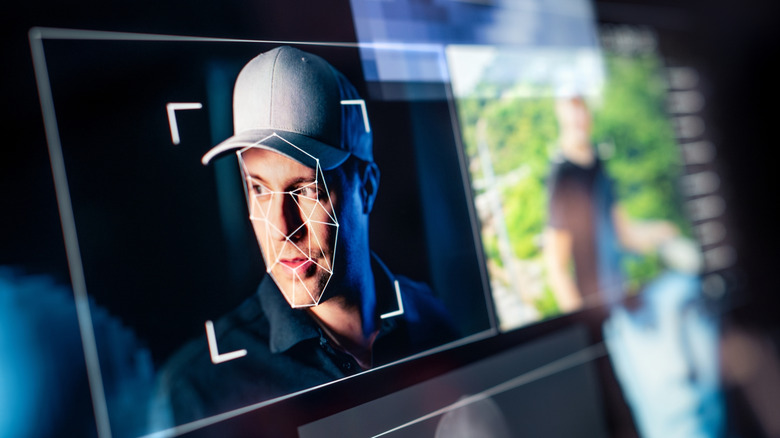
Artificial Intelligence has circulated far and wide, and at this point, it's safe to say that it's shaping everything around us. Major tech brands like Google, Meta, and OpenAI are pushing the boundaries of AI-powered tools and assistants, opening the door to endless use cases and possibilities. You can now use AI tools for small businesses to drive revenue, create some strange AI-powered gadgets, and even generate deepfake videos or photos for harmless fun.
A few years ago, AI image tools were mere curiosities, which struggled to produce convincing deepfakes. Today, AI has advanced to the point where you can use manipulation tools to generate high-quality, complex deepfakes that are almost impossible to detect. Even though this tech has some positives, unfortunately, it has also found its way into the hands of people with malicious intent. Think of criminals who might leverage deepfakes to disseminate misinformation, silence journalists, humiliate popular celebrities, and scam less tech-savvy people. Even worse, people are abusing deepfakes to the point that AI-fabricated and doctored evidence is making its way into courtrooms.
Knowing these risks, it's quite important that you know how to differentiate between a real and an AI-generated image. One of the best ways to tell if an image is AI-generated or the real deal is to use web-based tools purposely built for this task. These include deepfake detection tools such as Attestiv Video Platform, Sensity AI, Reality Defender, and Deepware Scanner.
There are tools that can help detect deepfakes
These tools use machine learning algorithms to analyze videos, images, and audio for subtle inconsistencies, such as mismatched lighting, color fading, and pixel inconsistencies. You can even use tools like SynthID detector that detects the presence of a watermark embedded on content generated by Google AI services, like Veo, Imagen, Lyria, and Gemini.
As amazing as these tools sound, they have some pretty big downsides. They can produce false positives or even say that the image is authentic, when it's actually a deepfake. This is primarily because of factors such as video quality, missing facial expressions, and training data issues. Continuous advancement of AI image generators and the vast volume of synthetic content online might also affect the real-world performance of deepfake detectors.
Considering that it can be a hit or a miss with deepfake tool detectors, when in doubt, Google tools can help you investigate. You can use Google Search to track down the provenance of a video or an image, or Google Fact Check Explorer to confirm the credibility of an image online. Alternatively, you can try Bing Visual Search. It's a good old reverse search tool that allows you to reverse an image to track down the original source, find similar images, match products, and access other related information.
Be on the lookout for these deepfake clues
As better detection tools are launched each year, companies behind deepfake creation tools are also finding more advanced ways to generate deepfakes that evade detection. Knowing this, the next time you see a video or an image, and you're worried it has been made by AI, you'll want to look for tiny body motions we normally do without conscious thought. When it comes to videos, you may notice small inconsistencies in blinking. A healthy adult is supposed to blink somewhere between 15 and 20 times per minute, on average. So, if you're watching a video and you notice that they're blinking too much, that's probably a deepfake.
Another way to tell if a video or audio file is created by generative AI is to look for tell-tale signs, such as mismatches between speech and lip movement, visual inconsistencies, and facial anomalies, like distorted teeth. In addition, if you're suspicious of a video call, you can determine if it's fake by asking the caller to do a complex hand gesture or just turn their head. Even the best AI-image generator apps can't handle those kinds of fine details, and if it's a deepfake, the face may warp, ears might stretch, and glasses and jewellery might become unstable.