

This Clothes Washer Type Uses The Least Amount Of Water And Energy
When combined with tumble dryers and dishwashers, the Energy Saving Trust reports, washing machines account for approximately 14% of a household's energy bill. In a time when it's more important than ever to be mindful of our consumption, those in the market for a new clothes washer will surely wonder which type to opt for.
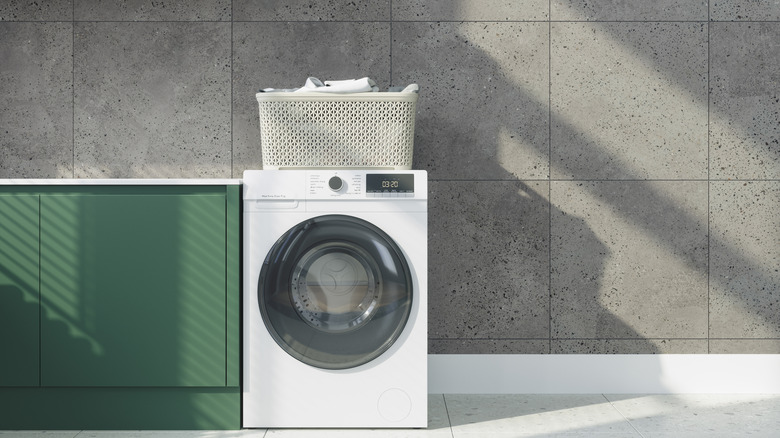
There are two primary varieties to consider: Top-loaders and front-loaders. At a glance, the difference between the two is immediately obvious. What you can't tell from this, though, is that not only can this have a marked impact on the average lifespan of a washing machine, but front-loading machines will typically use considerably less water and energy than their top-loading counterparts.
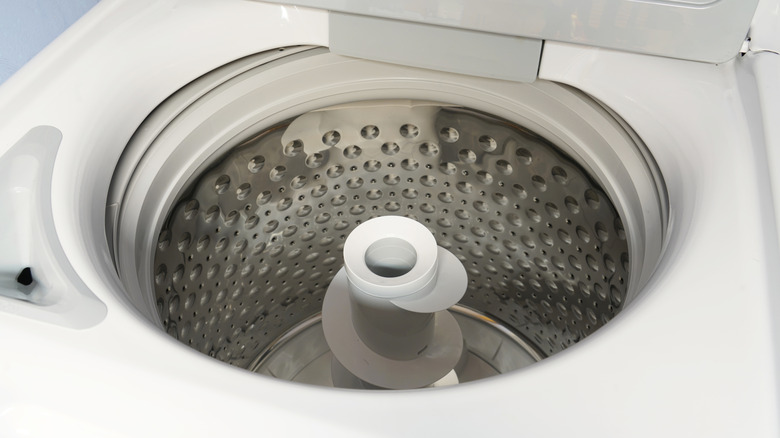
This is primarily due to the different ways the two types of appliances operate. As Consumer Reports notes, a front-loader only requires a water level below the machine's door height because, during the washer's cycle, clothes are submerged in that water over and over as they're spun. Their top-loading counterparts, meanwhile, will typically fill with water and then use technology such as an impeller to move the clothes around within that water and against each other. Less water to heat, broadly speaking, means less energy used. The difference between the power and water used by the two different types of washers can be stark, but top-loaders have made considerable strides in efficiency, as JD Power took into account when crowning its best-quality major top-loader brand.
The difference between front-loader and top-loader consumption in numbers
A simple comparison from Consumer Reports gives an idea of just how wide the gulf between the two types of clothes washers can be: A front-loader could use 8 gallons of water, while a top-loader may use 45 gallons, almost six times as much. This is far from telling the whole story, though, because the outlet notes that this is a comparison between the most efficient top-loader and its least efficient counterpart. The average machine with a front-opening drawer, it goes on, was found to use approximately 10 gallons, and the average for a top-loader with an agitator was 20 gallons. Perhaps even more importantly, sophisticated new high-efficiency models of the latter type can cut that difference down considerably, using approximately 13 gallons.
Meanwhile, in terms of electricity consumption, Ohmatic Electrical in the U.K. states that a top-loading washing machine can use up to 1.5 kWh per cycle, while a front loader would consume up to 1.0 kWh. This depends on a lot of factors, though: a hotter wash uses up to around four times as much power as a cold or eco one. More broadly, the specific efficiency of your model, regardless of its type, will have a big impact. We can conclude, then, that a front-loading machine generally has an advantage in water and electricity use. This won't always be true in every scenario, though, and it doesn't mean that they're necessarily a 'better' choice. It's the way they're used that really makes the case for one type over the other.
A more complicated question than you may think
More efficient models use features such as sensors, which help the machine to use the appropriate amount of water for the job rather than filling indiscriminately. As Choice notes, because of factors like this, listed energy star ratings and water consumption for a given appliance can vary from actual consumption in your home.
As Haven Energy CEO and co-founder Vinnie Campo explained to Home Living Handbook, "Heating water accounts for about 90% of the energy used in a typical hot wash." Now, top-loaders are generally considered to use more energy because they require much more water. When running a warm or hot cycle, they pull heavily from your home's hot water supply, which translates to a massive spike in your water heater's energy consumption. While front-loaders also access your home's hot water line, they use significantly less of it, often relying on built-in heating elements to efficiently boost and maintain the temperature as the cycle runs.
When the water doesn't need to be heated, though, the outcome can be different. According to Choice, it found that during its cold-wash tests, top-loaders actually used less energy overall, for several reasons: They can complete cycles faster by more thoroughly submerging the washing load, and their components aren't necessarily working as hard to rotate the clothes.
You'll typically find that overall water and electricity consumption is higher with a top-loader than with a front-loader, given that both heat water to comparable temperatures. There are important cases for both, though, such as the generally faster drying associated with the latter type (because they spin so quickly). Ultimately, the choice is all about understanding efficiency values and how your household uses your specific machine.