

This Driver Learned The Hard Way That Toll Transponders Don't Always Work
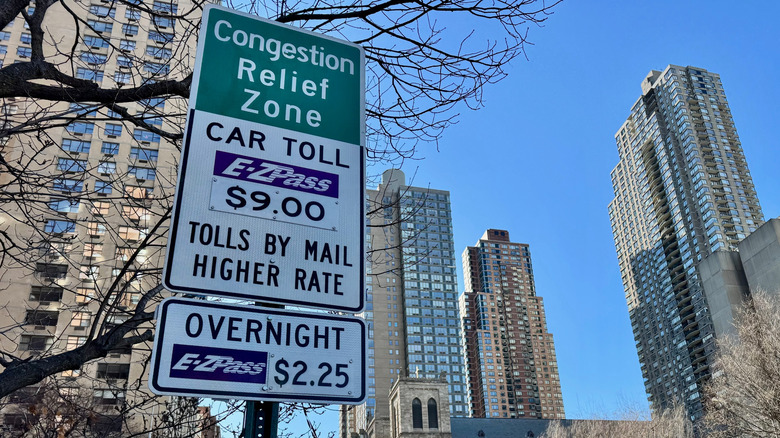
While New York might no longer be America's most congested city, driving in the city still comes with plenty of challenges. One of them is navigating the toll roads that are virtually inescapable for drivers looking to get in and out of Manhattan. Resident drivers can take some of the hassle out of toll payments with an E-ZPass account — assuming the E-ZPass transponder actually works as intended.
A recent report by CBS News found that some drivers are ending up with huge bills from the Metropolitan Transportation Authority (MTA) even when they've been monitoring their E-ZPass accounts. The report cited the case of Luis Corporan, a professional driver in New York who was recently handed a registration suspension for allegedly failing to pay his tolls. Corporan had been driving for a decade until that point, and said he always kept an eye on his account to ensure any tolls were correctly paid.
He was shocked when he received a suspension notice from the Department of Motor Vehicles (DMV) in February 2026. Later, he was informed that he owed the MTA around $14,000. He told CBS News that some of the allegedly missed toll payments were from years ago, with $2,134.71 of his debt made up of missed tolls and the remaining $11,900 charged as late fees. Corporan said the E-ZPass transponder seemed to be working at some tolls but not others.
The MTA disputes the allegations
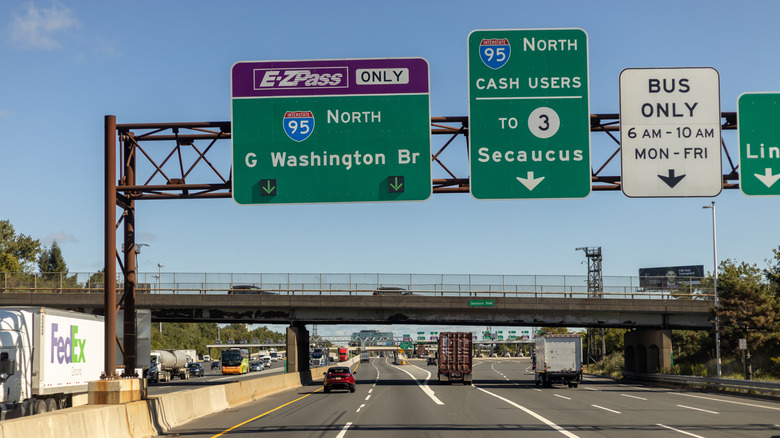
According CBS News, the MTA has previously struck deals with drivers who have been sent similar charges to reduce their overall debt. CBS reported that in Corporan's case, the agency "offered to settle for roughly $8,000 but only if he paid by the end of the day." When the outlet approached the MTA for comment, it reportedly did not receive any comment relating to Corporan's case. A spokesperson instead told the outlet that "people who pay their tolls don't pay fines."
The report doesn't offer any suggestions as to how a driver like Corporan could rack up such a significant bill without noticing, and for now it remains unlikely that the MTA will investigate these cases further. As a result, there's little that drivers can do for now aside from keeping an eye on their E-ZPass accounts and ensuring that the battery for their E-ZPass transponder isn't dead. If it does die, then contacting the issuing agency for a replacement as soon as possible is advisable to reduce the risk of missed tolls. According to E-ZPass, most transponder batteries last for around a decade "under normal usage conditions."