

Last-Minute 'Shortcut' Left US Navy Fuel Ship Ran Aground
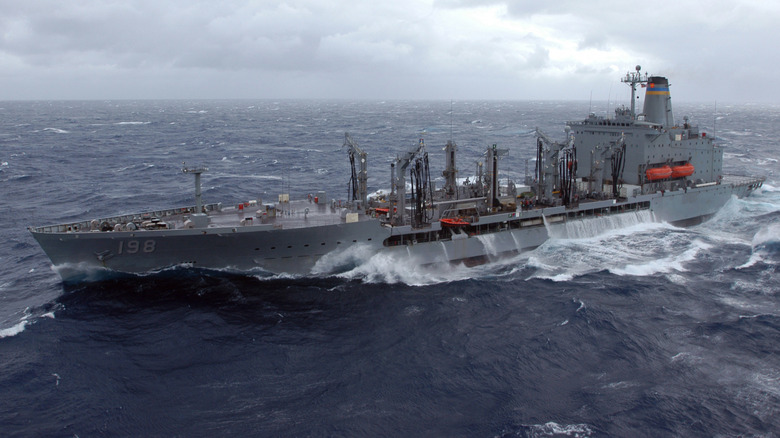
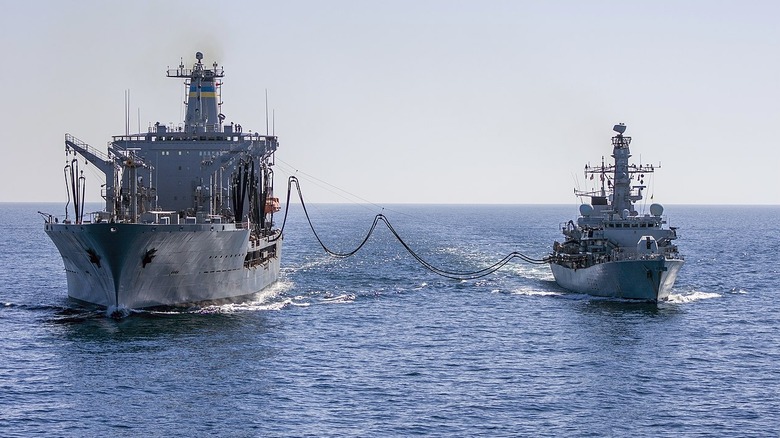
In September 2024, the USNS Big Horn (T-AO-198) was operating in the U.S. 5th Fleet area of operations (off the coast of Oman) as part of the Abraham Lincoln Carrier Strike Group. The job of the 677-foot, 42,000-ton Kaiser-class replenishment oiler was to refuel and resupply ships in the strike group. Operated by the Military Sealift Command, the Big Horn is part of the U.S. Navy's underway replenishment (UNREP) capabilities, and it acts as a vital support and logistics cog that keeps the fleet operationally ready.
At the time, it was the only oiler in the Arabian Sea. When it ran aground — cruising at a clip of 17 to 18 knots (about 20 mph) — in treacherous and restricted waters, the accident exposed a major weakness in Navy logistics: There simply weren't enough oilers or qualified mariners to operate them. No injuries occurred, but internal support structures were damaged, as was the port propeller and port rudder. Additionally, the hull was breached, causing flooding in an aft engineering space. In all, $20 million was spent on repairs, including $7.5 million for towing it back into port, $8.6 million for the actual repairs, $1.9 million for offloading its fuel, and another $2.4 million in additional costs.
A post-incident Navy investigation determined the accident was entirely preventable, as the captain and crew made "a series of poor decisions" and failed not only to follow procedure but also to use proper risk calculations. Disciplinary action was recommended for the captain and several officers, but both the captain and the ship's navigator are still "employed" (per Military Sealift Command via Business Insider). However, it's unclear whether they were permitted to retain their positions.
The Big Horn learned a big lesson
The Big Horn was supposed to return to the Duqm port in Oman after its refueling mission. The navigator began planning route options, one of which had them going through deeper, safer water, but added 10 miles to the journey. The second option shaved off those 10 miles, but would take the ship through shallower water filled with shoals. The navigator expressed his concerns about the shorter option, preferring to go the longer way back. However, the captain decided to take the quicker route and "shoot the gap" through the shoals, intent on getting to Duqm's harbor to meet the harbor pilot who would have guided them safely into port.
When the navigator informed the captain about the keel's clearance, he reportedly said, "Rad," and, "If we cut corners we'll get there." The Navy concluded he failed to conduct the required navigation brief or review any paper charts. Furthermore, when safety alarms triggered, the sound was turned off (leaving only visual cues), but there was no indication that anyone actually acknowledged them. Furthermore, the investigation also discovered that music was playing on the bridge right up until the ship grounded.
The Big Horn is one of 15 Kaiser-class oilers, a dozen of which are single-hulled. At least six are being removed from service over the next five years. The USNS John Ericsson (T-AO-194) and USNS Pecos (T-AO-197) are set to be decommissioned in 2026 because they were deemed "environmentally vulnerable" after the single-hulled oil tanker — the Exxon Valdez — struck a reef and spilled 11 million gallons of crude oil in March 1989.