

Does Your Car Feel Super Shaky At 60 MPH Or More? This May Be The Issue

You've probably experienced one or two instances where your car feels super shaky while driving at speeds of 60 MPH or more on the highways. And no, 60 MPH isn't normal. We often use this standard benchmark for measuring a vehicle's acceleration on highways because of how rotational dynamics work. At lower speeds, say below 45 MPH, you'll barely notice any shaking because the tires aren't spinning fast enough to create any noticeable vibration. But when you reach highway speeds, the rotating assemblies, such as the wheels, tires, and axles, will be rotating so fast that even small imbalances will get amplified, and you'll probably feel your car shaking during acceleration.
Of course, a mild shake that fades as you slow down might result in nothing worse than a brief worrisome moment. If it becomes harsher, however, there's a good chance that you'll be terrified or frightened. After all, that unnerving shaking sensation means you have less control over your vehicle, and this increases the likelihood of crashing as well.
With the dangers involved, it's understandable that you'll want to know what might be wrong with your car. This way, you might be able to diagnose the problem yourself or have a leg up when you take it in for service. And while there are many reasons why your car might shake on the highway, say, brake problems, damaged suspension, and engine problems, one of the most common yet overlooked is worn-out or fallen wheel weights.
Loose or worn-out wheel weights are the most common culprits of car shaking at highway speeds
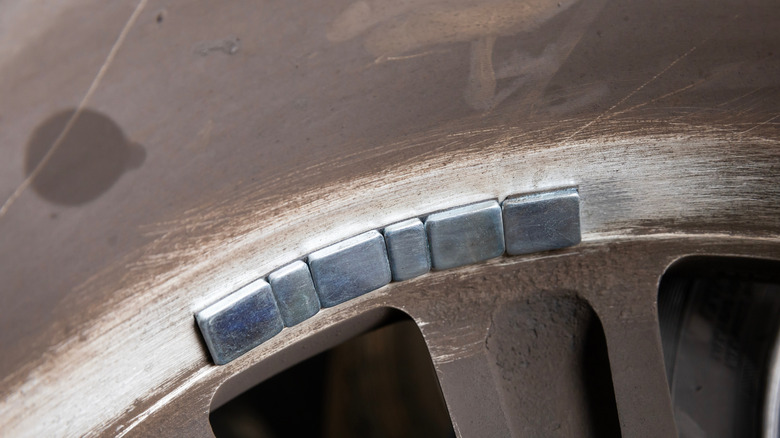
Generally speaking, new tires, presumably fresh from the factory, may look perfect. But they are not. They've slight weight imperfections, which can cause excess vibrations, steering issues, and excessive tire wear. And when you take time to inspect your tires, alongside numerous numbers, letters, lines, and codes, you will notice that they have little metal squares fitted behind the wheels.
On some tires, they might be tucked into the rim's exterior edge, while on modern alloys, they might be hidden behind the spokes for a clean, aesthetic look. These tabs, commonly known as wheel weights, help counterbalance that slight weight imperfection. On top of that, they will make your tires last longer, improve your ride comfort, and, even better, protect your steering wheel from harsh vibrations.
While wheel weights are designed to be durable enough to withstand hard knocks, it's worth noting that they're not immune to problems. They can wear out, become loose, or come off completely, especially because of poor driving habits and poor installation. And when this happens, not only will your ride suffer, but also your wallet. Your car might burn more fuel than usual, generate odd noises when driving, or even worse, shake and vibrate excessively when you hit 60 MPH.
The good news is that the fix to this problem is simple: visit your local repair shop or tire and lube shop for wheel balancing services. They will replace worn-out wheel weights with new ones to balance your wheels and prevent excess vibration while driving. And since a few other issues, including uneven tire wear and improper wheel alignment, can make your car feel shaky at high speeds, they'll also diagnose your car to rule out these problems.