

What's The Average Lifespan Of A Microwave? Here's How Long One Should Last
We may receive a commission on purchases made from links.
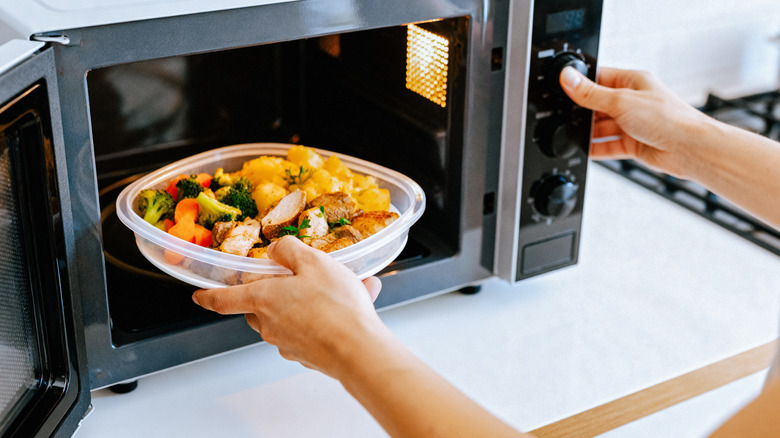
A microwave can easily be your best friend in your kitchen. It's one of the most convenient kitchen appliances, as you can use it to preheat leftovers for lunch and thaw a variety of foods. You can even use it to bake single-serve muffins or cook a raw chicken breast in just a few minutes. However, just like any other appliance in our homes, microwaves are not made to last forever. You might get the best microwave on the market from the most reliable home appliance brand, but even if it lasts an impressively long time, eventually, it'll break down or become obsolete.
According to the European Environmental Agency, microwaves have an average lifespan of up to nine years. This is not necessarily what you should expect, of course, because these numbers can change drastically. Some people might report several years of reliable service, while others might experience reduced performance much sooner. Considering how expensive buying a quality microwave can be, with models like the Panasonic HomeChef 4-in-1 microwave oven retailing at $540 on Amazon, it makes sense to know some of the factors that affect a microwave's lifespan.
Factors that can affect your microwave's lifespan
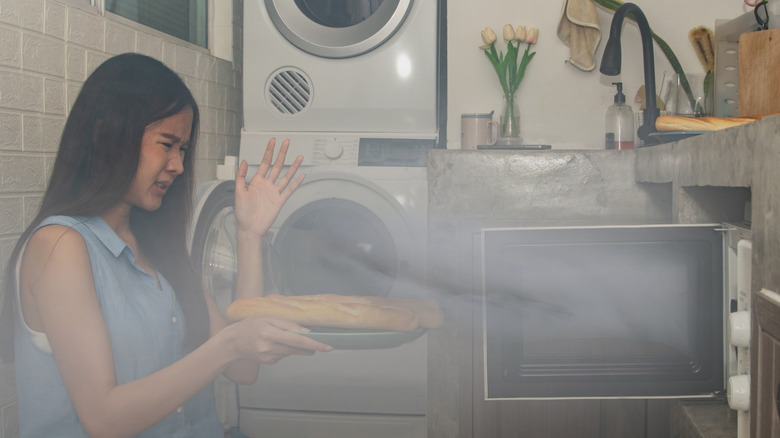
As with any home appliance, there are countless major microwave brands, all of which have reputations that vary. Some reputable brands will offer great value because they'll likely offer microwaves with a longer-than-average lifespan and an excellent warranty (say, a 5-year warranty). Others might be budget-friendly, but you might expect to receive less than a year of reliable performance.
That's not to say that you should avoid cheaper microwaves completely, however. You can find the best microwaves for under $100 from the most trustworthy and reliable brands that can withstand the test of time. Also, there are some major brands that, although they have been around for decades and offer expensive products, you'll want to avoid if you want to save your future from constant headaches. To purchase a microwave that you can count on, read expert reviews and customer ratings and check out the brand's return and warranty policies. Sometimes shorter warranties are a sign of lower-quality construction and material.
Besides quality, how you use and maintain your microwave can affect its lifespan, too. Overloading your microwave, either by running it dry or filling it with too much food, could strain the machine and possibly lead to your appliance overheating or shutting down. Additionally, using your microwave in a tight, enclosed area, such as directly against a wall or inside cabinets, can shorten your appliance's lifespan by blocking airflow. You also don't want to plug your appliance into an ungrounded circuit or an overloaded extension cord. Microwaves require much higher power thresholds, and a random jolt from unstable power could fry internal components or start a fire.
Tips to prolong the lifespan of your microwave
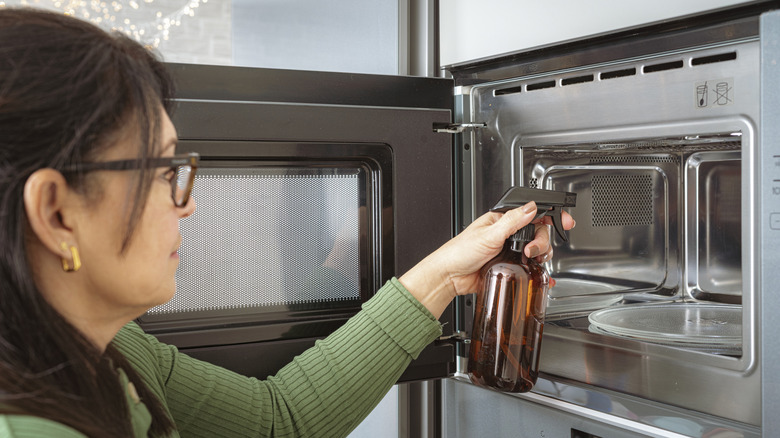
From grease splatters and food spills to melted butter, your microwave sees a real beating when it comes to messes. These messes can affect your food's taste, leave your kitchen smelling funky, damage your microwave, and, in the worst-case scenario, create a fire hazard. To say goodbye to those stubborn microwave stains, you just need to use a hot sponge or rag to get rid of most of the residue. You can even steam clean your microwave with a mixture of water and lemon juice, or just use one of the best handheld cleaners for deep cleaning your home.
Along with cleaning the inside of your microwave, you'll also want to clean and change the grease and charcoal filters regularly, if yours has those. This way, you'll protect the fans from overheating, improve indoor air quality, and prevent potential kitchen fires. You'll also improve your microwave's performance and ensure that it runs smoothly for years to come. To know when to clean the filters, check for telltale signs like grease buildup, unpleasant odors, or damaged mesh.
You might get away with reheating food stored in metal containers with your microwave, but in case you're tempted, you'll want to think twice; it's not safe. Microwaves use electromagnetic radiation to heat food. This means that household items like aluminum foil and metal containers can easily cause arcing in the microwave, creating dangerous sparks that can damage your appliance and create a kitchen fire. Instead, use bowls or microwave-safe plates when reheating your food.