

'Vanlords' Are Taking Over California As More And More Residents Live In RVs
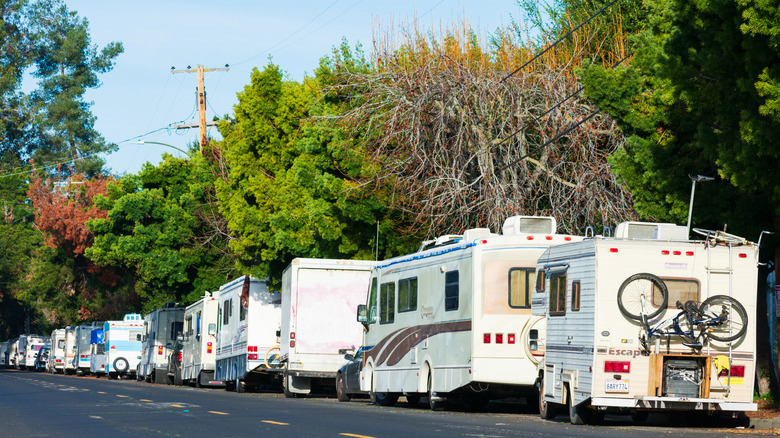
Even as many U.S. citizens are tightening their belts and trying to spend less, the cost of goods and services seem to be perpetually on the rise. That is, perhaps, no better displayed than in the housing market, where the cost of owning or even renting a safe, comfortable space to call home is getting prohibitive for some.
In California, the cost of living has risen so sharply in recent years that many are abandoning brick-and-mortar homes altogether. They are instead taking up residence in RVs, also known as recreational vehicles. These mobile homes are common to see parked along the side of the road throughout the state, particularly in metropolitan locales like Los Angeles and the Bay Area. However, not all of those vehicles are owned by the people residing in them. Some of them may also be less than functional, lacking sanitary facilities, electricity, or even clean running water. Moreover, those RVs are sometimes illegally parked in dangerous, high-traffic areas.
Despite those facts, the owners of those RVs — dubbed "Vanlords" in some circles — are still at times charging outrageous prices. Such arrangements aren't strictly legal, either, particularly when undertaken outside the confines of a designated RV park. On top of that, living in an RV can be dangerous for numerous reasons. Still, with the state's housing crisis showing no sign of slowing, many will continue to risk it in order to keep calling California home.
Some states have outlawed RV living
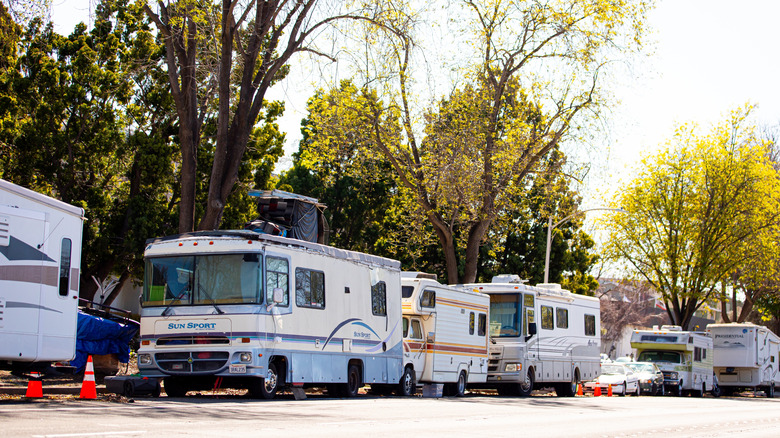
Despite the hardships that can accompany living in a RV in California, weather is one that doesn't always factor into the mix due to the state's generally temperate climate. Similarly, there's no particular shortage of handy gadgets that can make RV life more tolerable in the right situations. Even still, I don't envy residents forced to deal with those infamously crisp Bay Area evenings. As for the heat in L.A., I can tell you from experience that it can make RV life uncomfortable, though the relative lack of rain does make things considerably easier to manage.
Still, authorities throughout the state of California are attempting to regulate the practice of street parking, in part by simply enforcing established traffic laws. Other U.S. states have outright banned living in an RV. That list includes Hawaii, Indiana, Delaware, and Michigan, though it is worth noting that frigid winters would hardly make those last three states ideal for year-round "camping."
In most circumstances, citizens are not allowed to register RVs as a personal residence. However, some folks in California are reportedly staying in their RV despite these regulations by setting up shop in one of the state's registered RV parks. However, even those parks tend to have restrictions on lengths of stay, so you may not be able to call them home for very long.
What to consider if you're looking at RVing short or long term
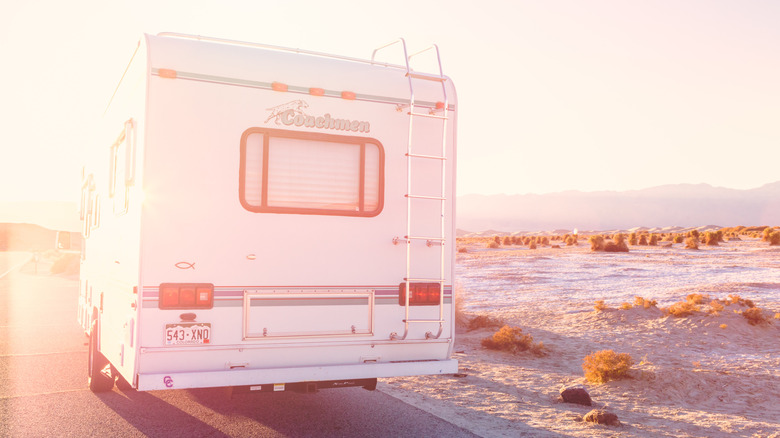
Weather is a primary consideration for choosing the RV life. Still, I found that even the L.A. heat can be manageable if you're off to work in the morning and back to the RV after sundown — though a good, rechargeable fan is a legitimate must-have. Cold is a whole other matter, however, as space heaters can be dangerous in RVs and may consume considerable power.
Parking locations and "neighbors" should also be taken into account. As for the first factor, you always need to ensure your vehicle resides in a legal parking spot. As I learned the hard way, you also need to obey any street-sweeping signs and move your unit during posted hours, lest you get ticketed or towed. On the subject of "neighbors," there are obvious safety reasons to consider with other RVs parked in your "neighborhood." Apart from safety, I can tell you my own RV experience in L.A. became problematic when I discovered one of my street "neighbors" owned a rooster that crowed every day at the crack of dawn. So yes, you may need to think about their pets, too.
If you are dealing with a "vanlord," you need to ensure the rental unit is livable, and that both the electricity and plumbing are functional. Water supply, in particular, is worth considering, as you likely won't have a direct water source to connect to and any on-board tanks will need to be filled periodically. Similarly, the sewage-containing "black water tank," will regularly need to be emptied, or life will get unpleasant quickly.