

Looking For A CRT TV Like Many Others? Avoid Making These Crucial Mistakes
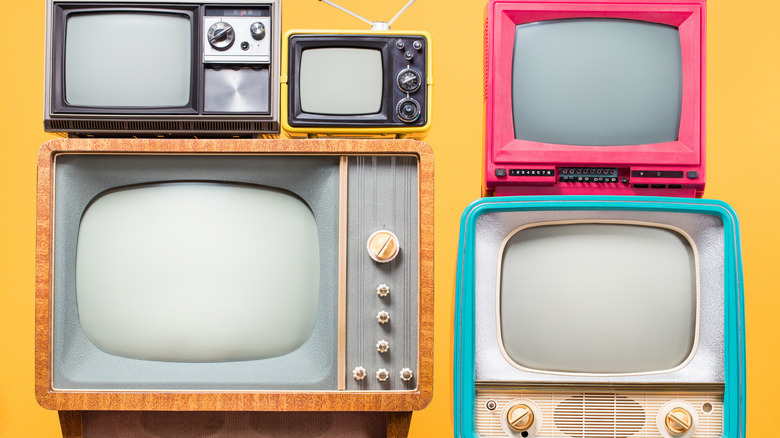
Over the past few years, chunky old CRT TVs have been making a comeback in living rooms, gaming dens, and cozy bedrooms alike. You may have noticed this if you spend much time on TikTok or Instagram, with tons of videos of retro set-ups complete with CRT TVs flooding social media. Although the trend might seem a little unexpected, with so many newer and higher-quality TVs being available cheaply, it's not really that hard to see why people might want them. The warm glow emitted from older sets is hard to resist, and the connectivity they offer make them more convenient for hooking up old-school hardware like retro consoles and VCR players.
Even though you can easily find them in thrift stores or on online marketplaces like eBay or Craigslist, buying a second-hand CRT TV isn't as easy as you might expect. There's a lot to look out for, from technical issues to compatibility concerns. You need to plan your purchase carefully, too, by considering what kind of inputs and resolution you need for the best experience.
For example, your shiny not-so-new CRT won't be of much use to you if it doesn't have the right inputs for your console — and things might get expensive if you need to pick up a suitable converter or modify your TV to get set up properly. Retro tech is also often heavily pre-loved, and could've sat around in someone's garage, basement, or loft for a good few years before it makes its way to you, so it's important that you know what faults to look out for.
Don't shop without knowing the connections and resolutions you need
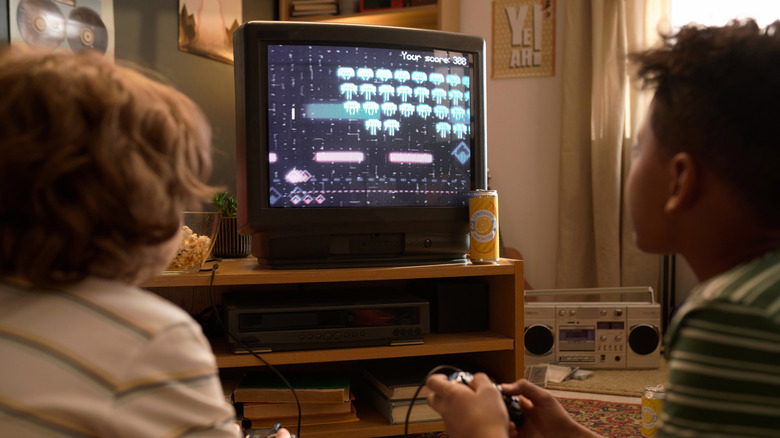
CRTs vary greatly, and some won't be very useful for you at all, depending on your needs. Whatever use you have in mind for the CRT of your dreams, you're almost certainly going to use it as a display device. With that in mind, you want to figure out what kind of connections you need and what kind of display you want. Unlike modern devices, which tend to rely on HDMI, old TVs and consoles can use all kinds of different connections, making it crucial that you know what you're looking out for.
To illustrate, if you want a CRT to use with a Nintendo 64, you need one that supports either composite or S-Video, or have money set aside for a converter. You might have some wiggle room here, though. Some of yesteryear's consoles offered multiple outputs, like the PlayStation 2, which offered both an optical and AV multi out connector, meaning it's compatible with a wide range of connections. However, earlier consoles like the Atari 2600 are more limited only offering a VHF antennae connection. Planning your CRT hunt around your needs can save you money later.
Similarly, consider whether you want a color or black-and-white set. In all likelihood, you're probably after a color TV if you're planning to use it for gaming, or watching old DVDs or VCRs. Resolution is another consideration: HD CRTs offer higher-resolution visuals, making them a solid choice for later-gen consoles or watching TV and movies. However, some CRT aficionados have noted that SD CRTs can be better with older consoles, as any HD upscaling may introduce latency and lag. If you're hoping to use older-generation consoles, light guns, or a dance mat, this could be pretty important.
Avoid buying an untested TV
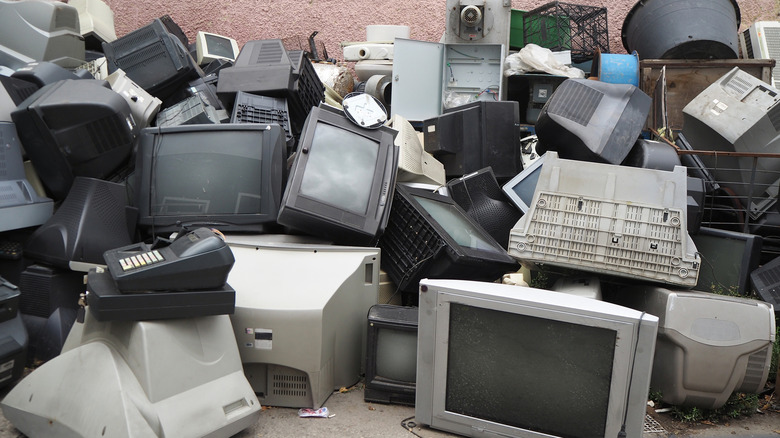
Vintage tech hangs around for a long time past when it'd be expected to still work, so it's not uncommon to come across issues while shopping for secondhand devices. Sadly, CRT TVs are no exception. Try not to make the mistake of picking up a faulty set while trying to score a bargain. Replacement parts can be hard to come by if a TV has been out of production for a few years, turning repairing what seems like a minor fault into a surprisingly difficult, dangerous, and expensive experience. For that reason, don't make the mistake of sinking a lot of money into a CRT that hasn't been tested by a reputable seller or that you can't try out yourself.
Although the exact problems you run into will vary, some problems to look out for include screen burn, broken inputs, power supply failures, dead pixels, and significantly warped images. For the most part, you'll probably notice these issues as soon as you switch an old TV on: visuals may look visibly distorted, the colors could be all wrong, or it might just fail to power up altogether.
Buying an untested TV means you won't know if any of those things would happen until you plug it in and try it out yourself. Generally, most online listings will mention whether the TV has been tested. Steer clear of listings that state they're untested, since you don't know whether you'll receive a functional device. Equally, if you're hunting down a TV in person, make sure to ask the seller if it works, and maybe even try to get hands-on with it yourself to make sure you don't end up buying a lemon.