

You Shouldn't Be Using Old HDMI Cables - Here's Why
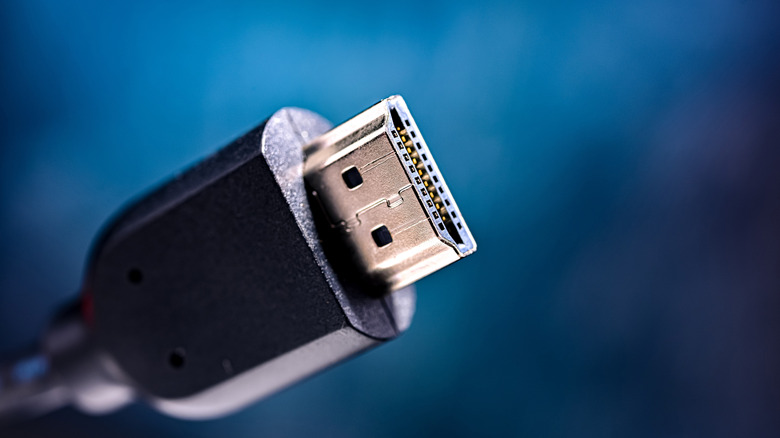
Among the dozens of connector types in use today, HDMI is perhaps the most recognizable. It's become the gold standard for transmitting audio and video signals between devices. Although thin-and-light laptops like the MacBook Air have adopted USB-C for most of their connectivity needs, including display output, nearly all modern gaming consoles, computers, and televisions rely on HDMI as their primary media interface (although gaming PCs can also use DisplayPort).
Unlike the many confusing generations of USB, HDMI has only received a handful of major upgrades since its launch in 2002. It still serves the same purpose: carrying high-quality video and audio feeds from an output device like a computer to a display like a monitor or TV. However, over the years, newer generations of HDMI have enabled support for higher video resolutions, faster refresh rates, and features such as variable refresh rate and high dynamic range. If you're still using an old HDMI cable, you might be missing out on these features.
As of 2026, HDMI 2.2 is the latest generation, with an impressive bandwidth of 96Gbps. This enables an output of up to 16K at 60Hz, 12K at 120Hz, and 8K/4K at 240Hz. You are likely not going to find commercially available 16K screens, but there are plenty of 4K 240Hz OLED monitors that can benefit from the bandwidth that HDMI 2.2 provides. Realistically, though, an HDMI 2.1 cable should be more than enough for most setups.
Features that old HDMI cables lack
Typically, when you buy a device that uses HDMI, you also get an accompanying cable of the appropriate specification. However, if you're swapping devices and don't select the right HDMI cable, you might miss out on several features, depending on the hardware involved. Some issues, such as those involving video resolutions and refresh rates, you'll likely notice instantly.
For instance, HDMI 1.3 and older cannot output 4K video signals, making them unsuitable for modern TVs. HDMI 1.4 can do 4K, but only up to 30Hz. While this may be enough for movies, current-generation consoles like the PlayStation 5 Pro use HDMI 2.1 or newer to output 4K 120Hz for smoother gameplay. Newer generations of HDMI also introduce support for variable refresh rate, which lets your display automatically adjust its refresh rate to match a game's framerate. HDMI 2.1 and newer also support Auto Low Latency Mode, which reduces input lag and makes gaming feel more responsive.
HDMI 1.4 and older will also prevent you from enjoying 4K HDR content on your TV, which is available from many streaming platforms like Netflix. The bottom line is, you should make sure you use at least HDMI 2.1 cables for your gaming and TV setup. That said, just buying a new cable will not add any of these features; it'll only let your devices take advantage of them. Thus, your devices need to support the same HDMI standard (and its features) as well.