

5 BMW Engines You Should Steer Clear Of

BMW is a company well-known in automotive circles for many reasons, not all of them good. Luxury, understatement, performance, complexity, expense, a grille that seemingly keeps finding more real-estate to grow every model year, and iconic straight sixes — all of these points can work to BMW's favor in one form or another. But historically, one of the unequivocal caveats about owning a BMW was reliability. Sentiment holds that BMW didn't produce terribly reliable cars unless you were willing to throw money at them.
But that reputation's changed recently; more BMWs than ever pass by the mechanic instead of pulling in (or get towed in). Consumer Reports even states that the German marque holds fifth place in new car reliability and sixth in used car reliability — though its infamous expense remains the same, with a rather abysmal 25th in maintenance and repair cost. But that's not a huge issue if you don't need a mechanic too often, right?
Like every manufacturer, BMW isn't perfect, and neither are its engines. Whether it's due to complexity, some sort of design flaw, recalls, or poorly thought-out design choices, even this company that's normally known for quality has its occasional slip-ups. Many of its engines are swimming in increasingly complex electronics, precision-built parts, fragile systems, and more that normally last the test of time with careful maintenance. But there's a reason why the phrase "German engineering" sometimes strikes with more derision when referring to these sorts of engines; it's five of these bad apples we'll be exploring today.
N47 I4 diesel: timing chain failures

Typically found in European markets, the N47 diesel engine is either a single or twin turbo diesel inline-four produced in various outputs and two displacements — 1.6L and 2.0L — around the late-2000s to early-2010s. These were by all accounts your average, basic diesel engine, being quite economical in smaller vehicles like the BMW 1-series coupe and hatchback, and normally they don't have all that many specific maintenance requirements (not exactly a given with German luxury cars). So why is this relatively modest engine on this list? Two words: Timing chain.
For some perspective, a timing chain is a crucial component for an interference engine like the N47. Such engines require extremely precise timing to keep the valvetrain and pistons in sync. If something happens to the timing chain or the gears it runs on, the timing can get thrown off. And if that happens, then the valves may be open when the piston hits top dead center, resulting in that piston smashing into the open valves. Needless to say you don't want parts hitting each other inside the engine, which is why these chains are often quite robust; repair shops claim you'll get about 100,000 miles of life with a typical timing chain before needing a replacement.
The problem was that BMW, for whatever reason, didn't think that the timing chain would need servicing for the lifetime of the car. So instead of making it accessible, the company placed this component at the very back of the engine, requiring expensive and time-consuming labor to even access. Instead of a recall, BMW issued a "technical campaign" to replace the chain and tensioner to save face, but the ergonomic issue obviously still remains on any car with this engine.
N63 V8: Early variants were a hot mess
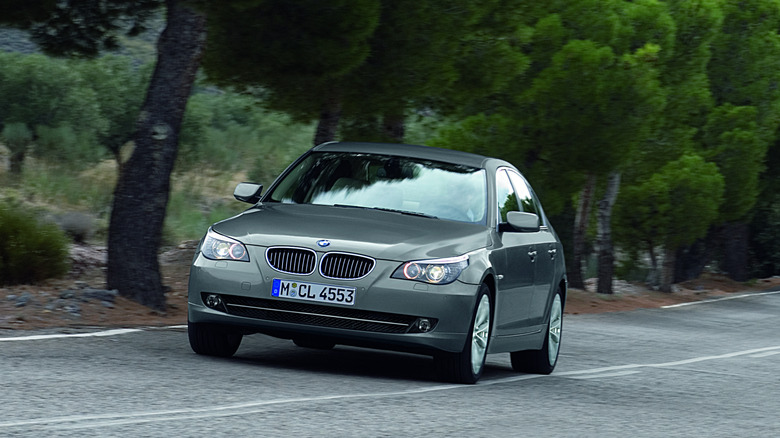
BMW's N63 V8, a high-performance engine commonly found in many models throughout the 2010s, is a uniquely bold creation, and that's because of how it handles its turbochargers. The N63 is a twin turbo engine, with one for each cylinder bank; this is commonly called a biturbo in such a configuration. Because of the way turbochargers work, they run off the exhaust gases of their respective cylinder banks, and these gases can get hot — really hot, to the point where turbos can glow orange under certain circumstances. And the further the turbo is from the exhaust manifold, the further gases have to travel, so the more turbo lag you get.
Logic dictates, then, that one might place the turbo on the manifold itself. But not BMW; the N63 is a "Hot-Vee" engine, meaning the turbos are within the intake channel — the "V" of the V8. Being BMW's first biturbo engine, and the first modern Hot-Vee configuration, it was bound to have teething issues, in this case related to heat and oil consumption.
Early N63s were plagued with issues, including turbos overheating and failing, valvetrain problems leading to excessive oil consumption and oil burning, heat stress including pre-ignition (knocking), and the engine overheating. Thankfully these were ironed out over the next several variants of the N63, with its reputation nowadays pointing towards it being a far more reliable engine. The N63 is still found in cars today, so make sure to avoid them in anything made before the 2012 update, ideally. Or if you do, be aware of the temperature gauge and check the oil level religiously.
S85 V10: Pay to play
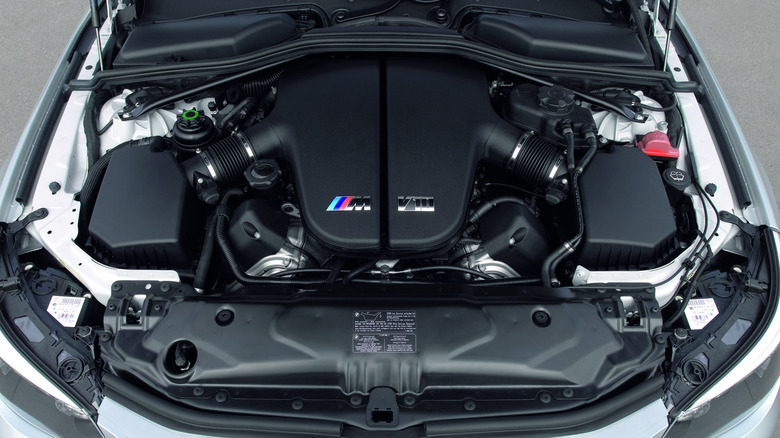
There's something magical about a high-revving V10 screaming at full-throttle. See also: The Lexus LFA and its engine note that puts the singing voice of angels to shame. But unlike the Yamaha-developed 1LR-GUE adorning that halo car, BMW's take on the refined V10 is decidedly more budget-friendly — so long as it never enters a mechanic's shop. While this engine is absolutely beautiful to witness, that beauty is only skin-deep; the S85 V10, according to owners and mechanics, is less reliable than that one person in a high school group project that does none of the work but expects all of the credit.
The main reason for this engine's poor reputation is its connecting rod bearings, critical components of the S85's bottom-end. A connecting rod's job is to link the piston head to the crankshaft; it's the "arm" of the piston. The bearing sits in between the rod and the crankshaft, providing a wear surface that's constantly lubricated in oil to prevent damage from either the conrod or the crank (both of which are far more expensive to replace). The S85's conrod bearings wear at an accelerated rate in comparison to other engines, leading to potential bottom-end failures.
Forums and blogs frequently post pictures of this engine's bearings, either post-preventative maintenance or post-failure. Coupled with the skyrocketing maintenance costs associated with such a specialized engine, and the S85 equals something which is an engine of extremes by most accounts. It's extremely fun to drive but also extremely expensive and demanding with maintenance, which makes sense given the engine's racing heritage.
N54 straight six: rock-solid engine, terrible everything else

Here's one liable to generate some controversy, especially from the tuning crowd. The N54 straight six is a beloved engine, widely-known for its power potential and plethora of aftermarket accessories, making it a favorite among enthusiasts. Common sense dictates an engine with good power potential to be overbuilt; the more power you produce, the more demanding it is on internal parts. If the internals were unreliable, then the engine wouldn't be as famous for tunability as it is. So why is it on the list of the least reliable BMW engines?
In reality, there's nothing inherently wrong with the engine itself, at least from a mechanical standpoint. Sure, modified examples may blow up, but a factory one with decent maintenance is perfectly reliable. The accessories, however? Those are another story. The engine is plagued with issues surrounding everything attached to it.
Starting from the beginning, the high-pressure fuel pump tends to fail, starving the engine of fuel and causing it to run extremely lean or not at all. Next, the fuel goes to fuel injectors, which are prone to leaking on the N54, disrupting the air/fuel mixture. This then enters the valvetrain — guess what? Leaky valve covers. And, to finish off, the engine is prone to boost leaks and turbo issues. Other accessories also show signs of leaks or breakages, like the water pump, which owners have reported needs frequent replacement.
It may be a legendary engine (and certainly more characterful than the V6 that BMW has never used), but that doesn't mean it's a reliable one. Ultimately, it doesn't matter what part fails if you're stuck on the side of the road with engine trouble.
N73 V12: German overengineering
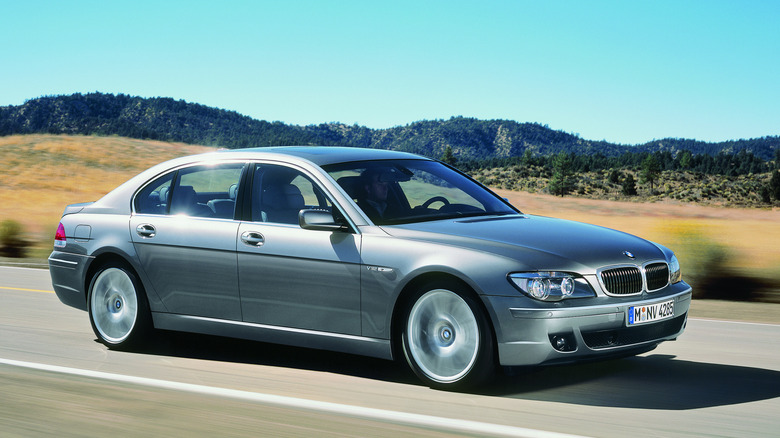
BMW is widely known for its straight six engines, typically sat on a slant, used inside everything from performance coupes to pedestrian crossovers. So what do you do if you want to be distinctive? Shove two straight sixes under the hood on a common crankshaft, and that's the N73 V12. Truthfully, the engine is a technological marvel, packed with enough innovative design to make it smooth and powerful, perfect for high-end executive cars like the Rolls Royce Phantom and BMW E65 7-series. However, underlying this reality was an incredibly complex groundwork, one sadly riddled with (expensive) potholes.
Much like the N54, however, there's not actually anything inherently wrong with the engine itself. The N73's known as a reliable powerplant among owners and industry professionals alike; it's the accessories that seem to be the issue here. Again, like the N54, the N73 suffers from unreliable high-pressure fuel pumps, valvetrain carbon buildup, leaking coolant pipes, and more, even as the internal components are relatively strong. Moreover, unlike a straight six, there's simply less real estate to actually work on a V12, so it's likely going to be more costly to actually fix these problems.
Owners cite the expense of owning V12s to be a major downside, and the BMW E65 7-series does nothing to alleviate these concerns. While everything within the engine is generally all right, it takes careful maintenance to keep these engines running; with twice the cylinder count (and the complexity of being a flagship engine) comes skyrocketing amounts of labor to diagnose and access faulty components. It's a beautiful and highly-advanced engine for its day, but that comes at a hefty price, often felt at the shop.
Our methodology

In order to formulate this list, we examined engines that primarily fit within the timeframe of about 15-20 years old to allow for enough examples to have shown common threads for unreliability. Newer engines may likewise have their own issues, but it takes time for these to crop up; similarly, older engines are hit-or-miss depending on ownership and condition.
We used various sources on this list to substantiate our claims, ranging from recognized, authoritative bodies like Edmunds to YouTube videos of specialist engineers, forums, long-term ownership reports, journalistic blogs and reviews, and more. In short, we tried to cover all the bases from top to bottom, providing a comprehensive picture focusing on the end-result for the owner in the form of maintenance costs, common complaints, issues with accessing parts on the engine, and so on.
The issues we address are specifically related to the engine and its function, including all accessories and peripheral components necessary for the car to run. Other issues, such as transmission and running gear (and their associated costs), are not addressed in this article, and vary depending on the year and model. Always double-check to make sure the car has no active recalls, and bear in mind that mileage extremes may exacerbate these known issues and maintenance requirements.