

Are V8 Engines Better Than Turbocharged V6s?
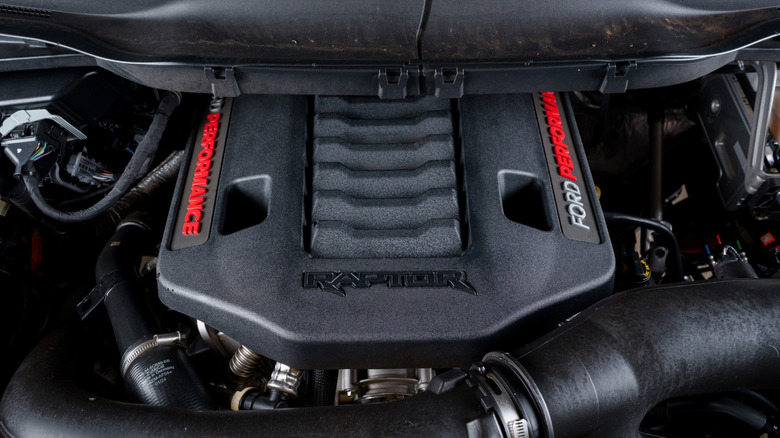
The iconic naturally aspirated V8 engine represented the backbone of the American auto industry for decades — and still does, for many enthusiasts. Though no longer as prominent as they once were, American automakers still produce V8s in large numbers yearly, with most finding homes in full-size pickup trucks and SUVs, along with performance models like the Chevrolet Corvette and Ford Mustang GT.
The big reason why V8s aren't as plentiful in today's market as they used to be is the rise of the turbocharged V6 engine. These smaller forced-induction six-cylinder engines have replaced the naturally aspirated V8 in many applications, including pickup trucks and SUVs, and it's all part of the broader trend of engine downsizing across the auto industry. Ford's current lineup is a great example of this. The company still makes capable, naturally aspirated V8s, including the 5.0-liter Coyote V8 and the highly unique 7.3-liter Godzilla V8, but, for over a decade now, turbocharged V6s have constituted the majority of the engines in vehicles like the F-150.
So are the tried-and-true V8s better than the new turbo V6s? That's a question that many new truck buyers struggle with — and one with no definitive answer. There are significant differences between the two engine types that can be either good or bad depending on your use case, ownership goals, and personal preferences.
Performance versus durability
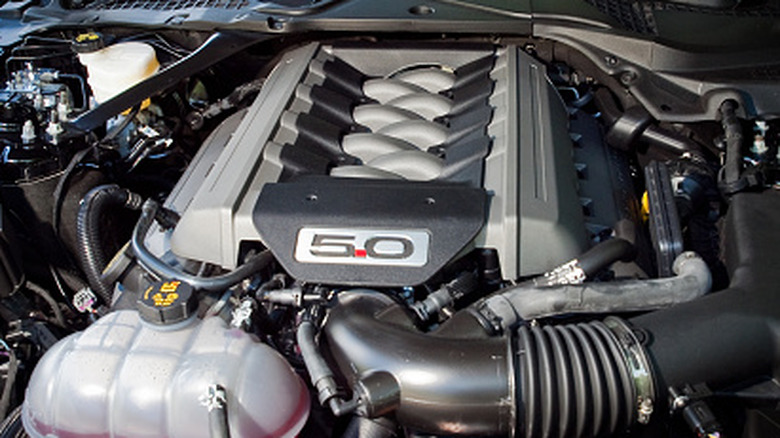
Why the move from V8s to turbo V6s? A number of reasons, with improved emissions and fuel economy being at the top of the list. On paper, and even from behind the wheel, the turbo motors do great. In Ford's case, the EcoBoost 3.5-liter beats out the 5.0-liter V8 when it comes to specs, with more torque (500 lb-ft versus 410), towing capability, and fuel economy. It seems like an easy win-win for truck buyers.
However, in the real world, the advantage of turbo V6 engines hasn't been so clear. The turbo engines in the F-150 might deliver better fuel economy numbers in those all-important EPA tests, but those numbers can drop quickly in real-world scenarios, especially when towing heavy loads. This could potentially mitigate any fuel economy advantages compared to V8s.
Then you get to the longer-term reliability and maintenance outlook. Results and opinions vary from model to model and engine to engine, but there's no escaping the reality that a twin-turbo V6 is more complex than a naturally aspirated V8. There are additional moving parts that could be prone to failure, and a turbo engine will generate more heat and could be more maintenance-intensive. During the first several years of ownership, this might not be a big deal, but as the years and miles pile up, the turbocharged engine could be more costly to keep on the road than a comparable V8.
Buyers have a choice
It's not just American automakers that have moved away from V8s to turbo V6s. Toyota, for example, dropped the extremely reliable 5.7-liter V8 powering the second-generation Tundra and Sequoia in favor of a 3.4-liter V6 in the third generation of both vehicles.
On paper, the Toyota turbo V6 easily outguns the V8 in horsepower, torque (479 lb-ft versus 401 lb-ft), and fuel economy. However, initial reception for the engine has not been great, with Toyota's V6 plagued by serious defects and costly recalls. While these could be early teething issues, the Toyota situation has shown that there are risks of replacing an aging, yet proven V8 with a newer, turbocharged V6.
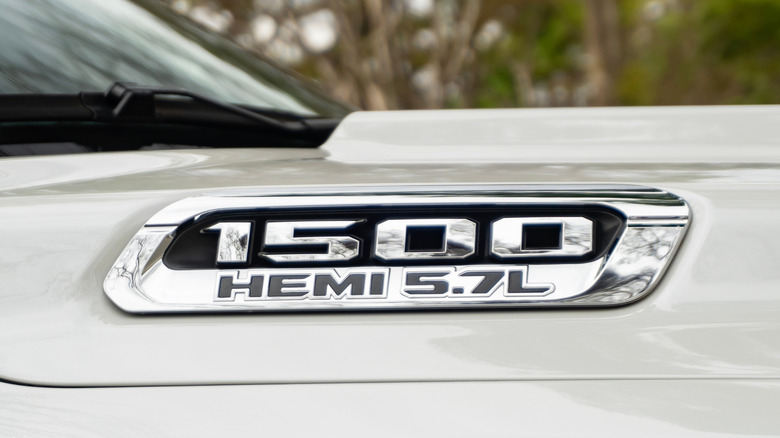
Then there's the emotional side of things. Though completely subjective, many simply have a hard time hearing a V6's engine note where a V8 would traditionally be. This is surely one of the reasons that Ford brought the V8 option back to the F-150 Raptor a few years ago. Elsewhere, brands like Ram are also bringing back V8s to their pickups, to be sold alongside existing turbo six-cylinder options. In the end, there may be no right or wrong answer to the V8 versus turbo V6 debate, and for the moment at least, many automakers are happy to offer buyers the choice between both.