

What Is The Most Common Cause Of Garage Fires?

Nothing causes more garage fires in the United States than electrical malfunctions. That's according to data from the U.S. Fire Administration, which reveals that electrical issues make up about 16% of all residential garage fires. Broadly speaking, that could mean anything from faulty wiring and overloaded outlets to damaged electrical cords and malfunctioning equipment. And because garages are typically the place people store their power tools, battery chargers, extension cords, and even their EVs, it's not hard to imagine why this issue is so common. (And, in the case of EVs, so difficult to put out.)
This thorough study of garage fire causes comes from data between 2009 and 2011. During that period, U.S. fire departments responded to an estimated 6,600 residential fires annually in attached garages alone. Of those thousands of calls, fire departments reported 30 deaths, about 400 injuries, and upwards of $450 million in property damage each year. And even though garage fires only represent about 2% of all residential building fires overall, that 16% is still something to be aware of, especially in light of those statistics on garage fire injuries, damages, and fatalities.
To reduce your risk of a garage fire (especially one caused by a faulty electrical system), you should always store your flammable materials carefully. Also, cut down on the number of devices plugged into outdoor outlets, avoid using extension cords as long-term power sources, keep combustibles away from any appliances, and keep clutter to a minimum.
Why garage fires are so dangerous
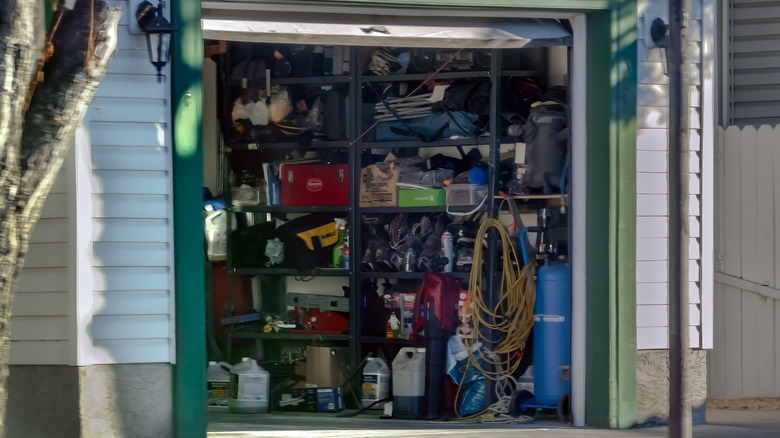
If garage fires are only a fraction of a fraction of all residential building fires, then why be concerned? Before you ask that question, consider the fact that garages have some unique dangers compared to other areas of your home. Vehicles (whether they're gas-powered or electric), power tools, cleaning or weed-killing chemicals, paint cans, and fuel for lawn equipment are all extremely flammable. Combine that with the paper products, cardboard boxes, and other combustible materials in your trash and recycling, and it's not hard to understand why a single spark, like from an electrical malfunction, could cause a fire to get out of hand quickly. You might be better off never storing these things in your garage to begin with.
And remember: Very few building codes require you to have smoke alarms inside a residential garage. And even if you do have one or two in there, it's one of the worst places to install smoke detectors in your home. Also, plenty of garages face the kinds of extreme temperature swings that can make traditional smoke detectors unreliable. That's why so many garage fires don't get discovered until after the smoke spreads into the rest of the house. At that point, it might already be too late.