

7 Helpful, Unexpected Uses For A Hot Glue Gun Around Your Home
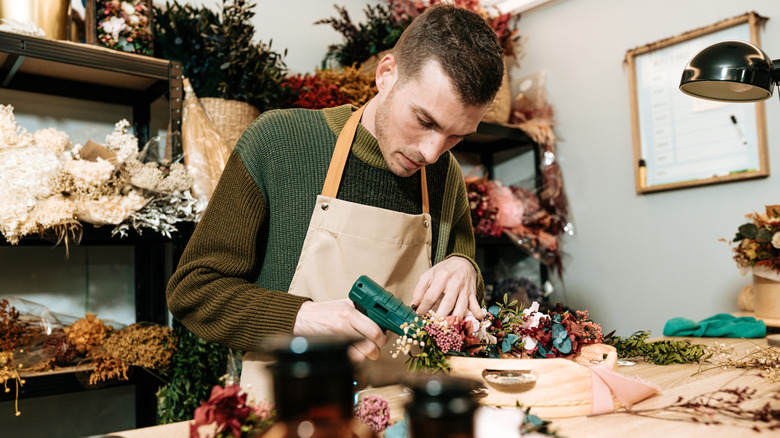
If you like to work with your hands and happen to be artistically inclined, you probably have a hot glue gun lying around somewhere in your home. There's always some project or minor fix that could use a bit of adhesive to join two items together, especially if you don't particularly like working with double-sided tape — any form of exposure to moisture could put whatever you're working on in jeopardy, and its durability can be questionable at times. The hot glue gun provides a neat alternative to this, and it's surprisingly versatile.
From regular household repairs to crafting and DIY projects, you can use a hot glue gun to make an easier job of joining items. All you need to do is plug it into a power source, insert a glue stick in the gun, and wait for it to reach the right temperature. It uses heat to melt solid glue, which allows you to apply it as a liquid to a desired surface through the gun's nozzle.
Hot glue guns have a wide range of everyday home applications. They're mostly used in run-of-the-mill uses like fixing broken objects, but there are a handful of other practical applications, too — it was even trendy to clean USB phone ports with them at one point. Here are seven other safe uses.
Adding grip to hangers and glasses
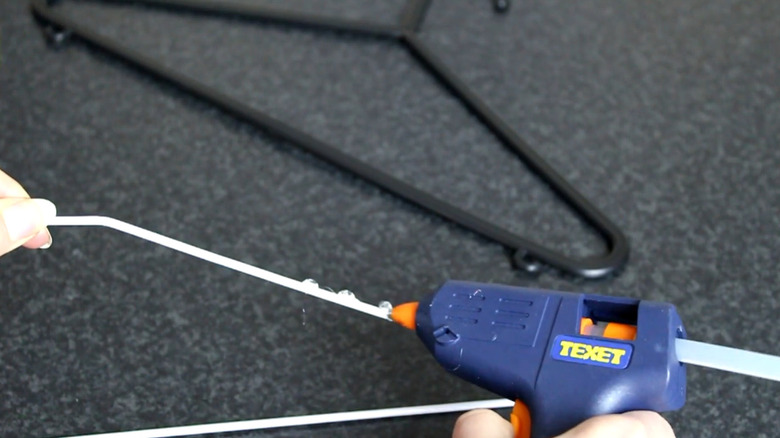
Ever experienced the frustration of having one of your favorite shirts constantly slip off its hanger? Some hangers come with notches to solve this problem, or others come covered in velvet (though they cost more). But if all you've got to work with is a basic plastic hanger, a hot glue gun can help.
By adding just a few blobs of hot glue to both arms of your hanger and letting them solidify, you would effectively create a non-slip surface for your fabrics to rest on comfortably.
The same situation applies to the domain of glasses. They can fit fine when you put them on in the morning, but if you start to sweat on a hot day, you may notice yourself frequently reaching up to your face to push your glasses back on the bridge of your nose. It doesn't matter whether they're made of plastic or metal, either; depending on moisture and frame size, they could easily become a nuisance in your day-to-day activities.
Just like with the hanger, target the insides of each arm and add a few blobs — specifically on the portion that goes behind your ears. The extra solidity will keep them from slipping and sliding around your face as much.
Making rugs and carpets less slippery
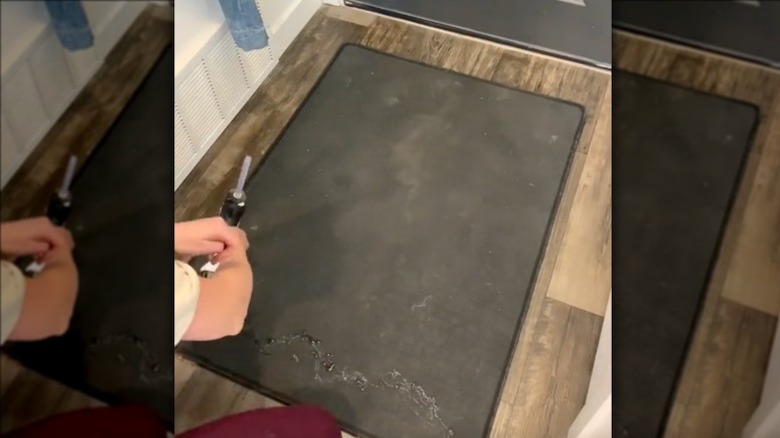
If you've ever stepped on a carpet and felt your feet go out from under you, you know the risks associated with having a rug with poor grip. For your safety and that of other occupants in the house – particularly if you have children or elderly people living with you – you need to ensure a sure footing.
To do that, there are multiple factors you need to consider. Rug placement is a major determinant for foot security; a carpet in the living room is less likely to be a fall risk than one in, say, the kitchen or bathroom. This is especially true of washable rugs. As they soak up water, they can start to slide and shift, which makes them dangerous.
Now, one way to mitigate the risks of slippage is to buy an anti-slip rug or a rug pad. However, those can be expensive, and a hot glue gun to get similar protection (at least in the short term). Simply flip your rug over and go to work on the underside with the glue gun; you'll want evenly spaced lines for maximum protection. The plastic-like texture of dried glue will provide that extra grip to prevent falls around your home. The same logic extends to the WeatherTech StairEdge, one of the many useful products the brand makes other than car mats.
Resizing rings
It's no news that bad-fitting jewelry can be intensely uncomfortable. Whether they run too large or small, there's a self-consciousness and lack of ease to your natural charisma when your pieces of jewelry don't fit just right. If it runs too small, we don't recommend you wear it; there isn't much you can do other than go to the store to look for a replacement or hire a jeweler to resize it for you. However, if it's loose, you can do a little resizing yourself.
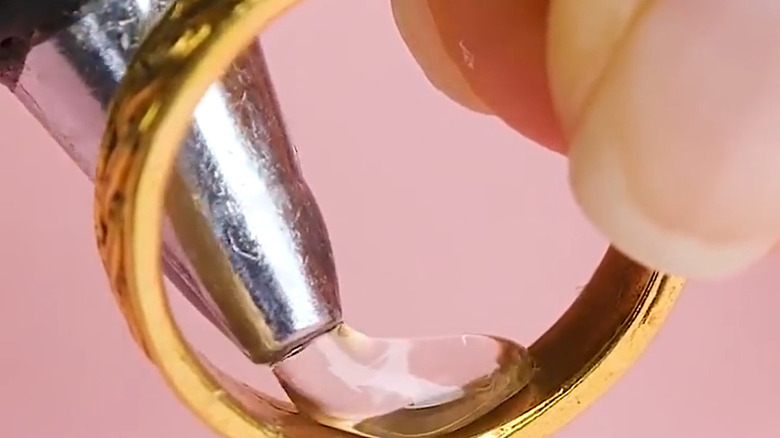
You might be thinking of more conventional methods to achieve this — using a temporary ring guard, or adding a tighter-fitting ring to serve as a buffer. However, a hot glue gun can also come in handy here. What you'll need to do is to squeeze a few blobs of glue from the nozzle and dip the back of the ring into the pool while it's still hot and liquid.
Take a cloth and wipe any excess while shaping the glue you'll work with around the inside. It'll form a clear, crescent-like shape that'll rest against the base of your finger, effectively resizing your ring without changing its appearance. Once this is done, let it cool and dry for about 15 minutes before testing the fit. Note that you should view this as a temporary fix — frequent handwashing while wearing the ring may diminish the adhesive effect.
Non-damaging hanging and keeping frames in position on walls
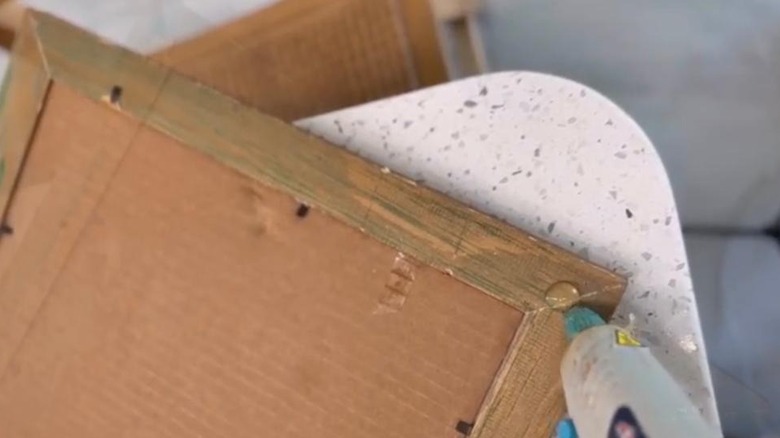
Decorating might be a great way to spice up your home and make it feel lived in, but some types of decor damage the walls they hang on. Think about it, how many of the paintings in your living room or bedroom hang on nails? What about clocks and the like? I'd wager it's quite a number, and those can be a pain when you're renovating, or even hurt your home's resale value, depending on how many there are and how much damage the walls have borne.
A hot glue gun is a great way to avoid drilling holes over and over again, especially if you have lots of temporary decorations you like to hang on special occasions. You'll need to use the glue gun in conjunction with a strip of masking tape for this. Smooth a piece of tape on the wall and apply glue generously to make whatever you're hanging stick to the wall for whatever duration you need it to. This way, you can peel them off the wall without leaving any damaging residue on the surface.
Similarly, if you're a bit of a perfectionist, having picture or painting frames that don't sit perfectly straight can be an annoyance. For any number of reasons; length of hang wire, nail shape, or even wall texture, your decor could slant awkwardly. A bit of glue applied to the back of the errant frame will keep it straight.
Organizing metal objects with magnets
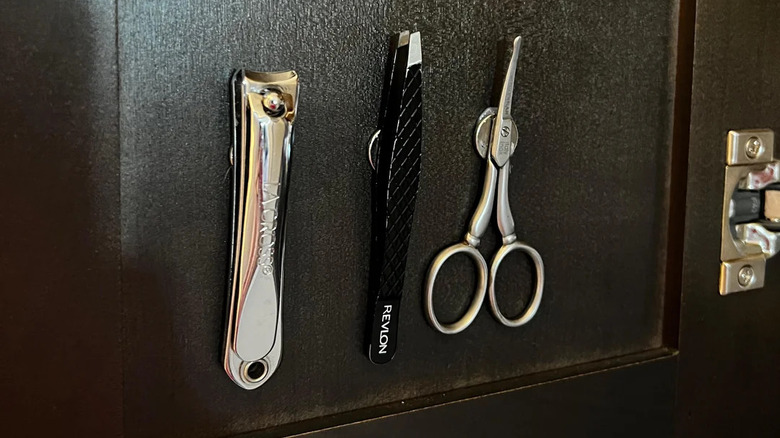
It goes without saying that having a lot of tools can get messy. If you don't run a tight ship in terms of organization, you're bound to have equipment lying around in unwanted places. The ideal thing to do would be to invest in dedicated cabinets to house your equipment, which is one of the projects to upgrade your workshop that we previously outlined.
However, if that's too much of a commitment for you, you could always get creative with your hot glue gun to keep your surroundings tidy. You'll need some round magnets to make this fix stick, though. It's pretty simple; apply some glue to the round magnets and pick up any small, metal objects that can easily fly under the radar and have you searching for them for hours. Stuff like tweezers, screws, nuts, and even nails could be picked up by these magnets and safely stored away for when you need them.
Although this method of organization is a bit crude, you might be surprised at how many items you stop mysteriously losing. You'll need to be mindful of the type of finish you stick your magnets to, though. Lacquered surfaces might hold up just fine, but removing the magnets from drywall or other materials can leave unsavory marks.
Plugging nail holes
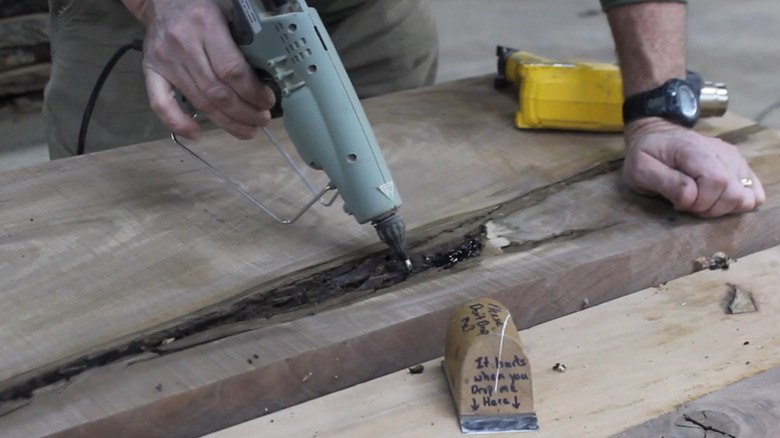
Earlier, we discussed the damage that constantly using nails to hang decor on walls brings. Now that you know you can achieve the same results without using nails every time, you're more likely to preserve the integrity of your walls. But what of the damage already done?
Old nail holes are another area to deploy your hot glue gun. Even though it might seem like a headscratcher as to how to do this neatly, it's actually pretty simple. Fill your hole to the brim with hot glue (take care to avoid overflow) and smooth a piece of painter's tape as flat as possible over it. You'll need to be extra careful to avoid burns while doing this, so observe all necessary precautions and use gloves.
Once the glue cools down, you can remove the tape and use sandpaper to even out the texture. You should also limit the amount of contact between the hot glue gun's nozzle and your wall — especially if you're using this hack on drywall or wood. The last thing you want is to burn visible marks onto your wall surface.
Makeshift clamp for woodworking projects
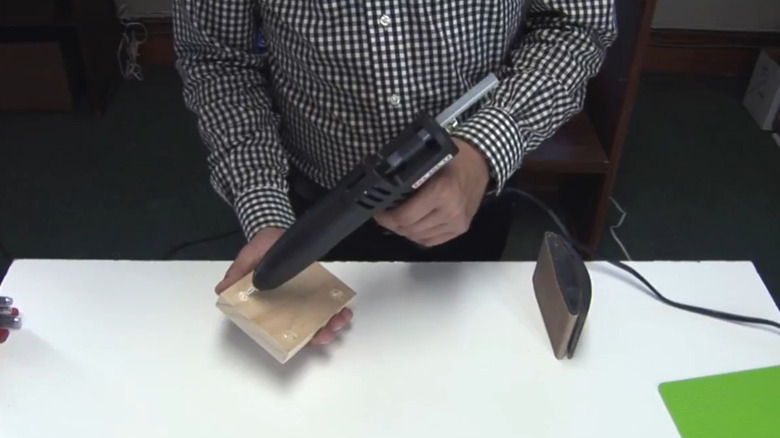
We're tending toward more orthodox applications of the hot glue gun with this one; you'd probably expect to use it in and around the workshop, especially on woodworking projects. There's always pieces of wood that need to be joined together, and nails might not necessarily give the aesthetic finishing touches you're looking for. This isn't about its joinery uses, though.
Maybe you're working on a piece of wood that's so small you don't have any clamps of commensurate size to secure it. Or, you could just want the entire top surface uninhibited so you can work on carving the wood according to your personal taste. In both of these scenarios, a hot glue gun can serve as the solution to your very niche problem. Squeeze a few blobs of glue from the gun onto your work surface and plaster the piece of wood on top of it, let it dry, and voila: You have a makeshift clamp that will hold your inventory steady until you're done working.
When you're done, you can pry the piece free with a screwdriver or knife and then chisel off the loose glue strings on the bottom. That way, you can save precious minutes that you would otherwise spend awkwardly manipulating your wood piece.