

What's The Average Lifespan Of A Spark Plug? Here's How Long One Should Last
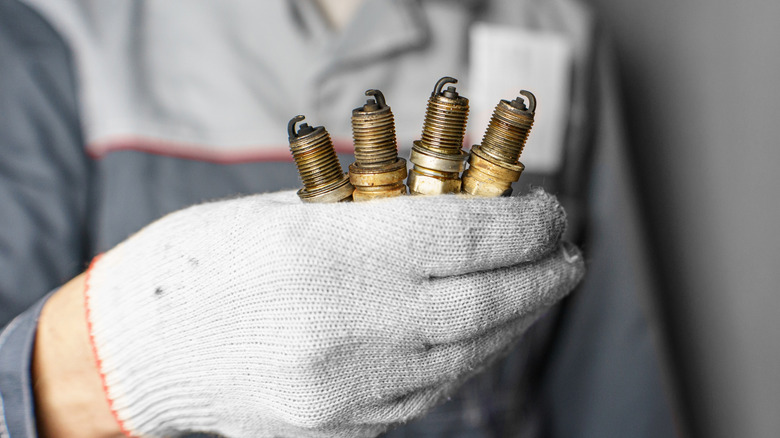
Spark plugs play a key role in igniting the air-fuel mixture that enables the engine to transition from cranking to running on its own. Considering the relatively lengthy service life of these small car components, you'll probably neglect or forget about them entirely. Before you put off changing your car's spark plugs, you should note that, irrespective of how robust they are, they will eventually give out, and you might have to deal with light misfires, lackluster acceleration, poor gas mileage, and, in the worst case scenario, potential engine damage.
To best avoid these frustrations, you may be wondering just how long new spark plugs should last. The answer isn't that much straightforward as there are different types of spark plugs out there, which, though they are designed to do one job, wear out at different rates. Copper spark plugs, which are best for classic cars built before the 1980s, for instance, have an average lifespan of about 20,000 to 30,000 miles, while their platinum and iridium counterparts can go 60,000 and 100,000 miles, respectively.
It's worth noting that your mileage may quite literally vary. You might need to change your spark plugs sooner, but you might also get away with waiting a little longer, as there are a lot of variables at play.
What causes spark plugs to wear out prematurely
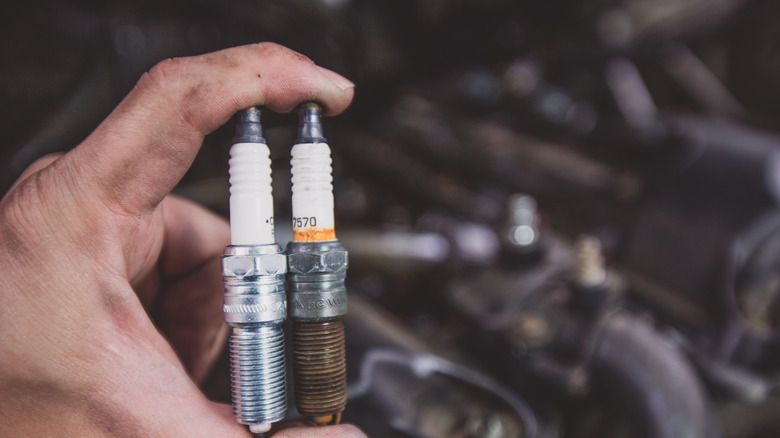
The interval standard for how often you should change your car's spark plugs will almost certainly vary depending on your car. If you're using platinum spark plugs on a high-performance car, for instance, you might end up changing the plugs more often than usual, as they might not withstand the pressure and heat of the engine. That's why experts often recommend that you consult your vehicle's manual for proper maintenance schedule recommendations.
When changing spark plugs, it's also wise you stick to the plugs that originally came with your vehicle. After all, the price of the spark plugs doesn't really make a huge difference, as cheaper plugs still deliver reliable performance for less. Your driving habits also play a significant role in determining the average lifespan of your spark plugs. Poor driving habits like frequent short trips under ten miles, engaging in a lot of stop-and-go traffic, and aggressive driving can all lead to carbon buildup, which is one of the culprits of premature spark plug failure.
Using contaminated or cheap fuel can harbor foreign substances like metal and dirt, which can result in faster spark plug degradation and increased engine wear over time. Your spark plugs might also degrade due to oil leaks into the combustion chamber and not changing your engine's air filter. If you do decide to change your plugs at home, which requires a few different tools, make sure you properly install them, as a bad installation can damage your plugs and negatively impact your engine's performance.
Signs that it's time to replace spark plugs
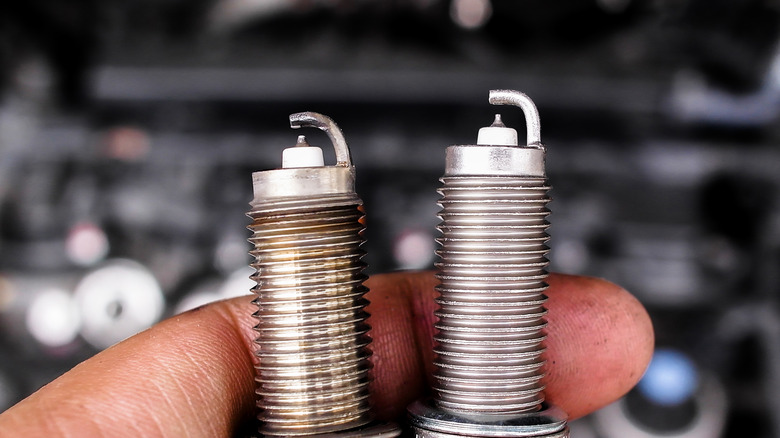
Luckily, your spark plugs usually give you a few clues that they are about to fail. For instance, you might notice something is off when the engine idles, or that cranking time extends when you try to start the engine. If you manage to start your car, you might experience slight misfires, and the check engine light will illuminate. However, you should keep in mind that there are a variety of reasons why your check engine light might be on. Think of loose gas caps, a damaged catalytic converter, and faulty sensors; it doesn't always mean bad spark plugs.
In some cases, you might experience sluggishness when trying to accelerate, which might be accompanied by unusual sounds and reduced fuel efficiency. Given that some of these signs might mimic other symptoms and can mislead you into suspecting other issues, like dirty air filters, it's quite important that you physically inspect your spark plugs if you think that one or more of them is bad. Check for physical damage, black soot on the tips, melted electrodes, and oily fouling. Finally, you might want to get the car inspected professionally, just so you can avoid spending money on unneccessary repairs.