

You'll Want To Know This Rule Before Upgrading To Bigger Tires

For the majority of vehicle owners, changing or replacing a set of tires is a relatively simple affair. Some drivers might replace their tires at the advice of a dealer service department or tire shop, or they make the decision themselves after encountering some of the warning signs of tires that need to be replaced. Whether you yourself know exactly what size and type of tires you need, or are leaving that decision to a professional, the manufacturer recommended size replacement tire is pretty straightforward.
On the contrary, if you are intending to change the size of your tires or wheels, the decision gets a lot more involved, with a lot more factors to consider. One of those factors is the so-called 3% rule – a well-established guidance that says you should always aim to keep the total diameter of your vehicle's tires within 3% of their original, factory specification.
The primary, and most obvious reason for this is to keep your vehicle's speedometer accurate, but there are plenty of other ways in which larger (or smaller) tires can affect a vehicle, and the farther you go from the original size, the larger those effects will be. If you want to better understand the reasoning behind 3% rule, you need to think about how tire sizing works and how a tire's overall diameter can impact both speedometer readings and other vehicle characteristics.
What goes into picking a tire size?

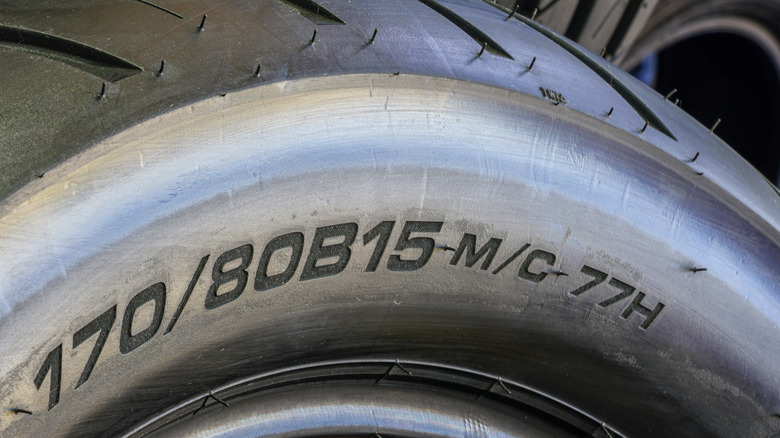
While every tire has a measurable outside diameter, specific tire sizes are designated by the three main numbers you'll find on the side of every tire. First is the section width, which is the tire's width in millimeters, followed by the aspect ratio, the height of the sidewall as a portion of its section width, and finally the diameter of the wheel the tire mounts to. As each of these numbers changes, so too does the total outside diameter of the tire, which is what's used in the 3% rule.
Most vehicles measure speed by the number of tire rotations, so changing the overall diameter of the tire from its original, calibrated size will make the speedometer reading inaccurate. Taller tires will result in slower speed readings than actual, while shorter tires will display faster speed readings than actual. For factory replacement, a tire within 3% of the original diameter is considered within the accepted threshold, both for an accurate speedometer reading, and for other driving characteristics that can change with different-sized tires.
The 3% rule and its speedometer accuracy issues are one of the big factors to consider before adding larger tires, but it's not just big, oversized tires where the rule comes into effect. The same rule naturally applies if you're switching to tires over 3% shorter than stock — it's just the opposite effect.
3% can mean a whole lot
The good news is there are useful online tools that can help you calculate and compare different tire sizes, so you know exactly how much the outside diameter will change and how that will affect your speedometer. For most vehicles, as long as you do your research in advance, you can easily change to wider tires or different-sized wheels without breaking the 3% rule.
Beyond the 3% rule and its effect on speedometers, there are other reasons why you might not want to upsize your tires too much, namely the reality that you'll be lowering your vehicle's fuel economy. Likewise, tires that are too large could rub on bodywork, decrease acceleration due to their extra weight, and also put extra wear on the drivetrain.
This isn't to say that you cannot or should never put larger tires on your vehicle. Lots of car and truck enthusiasts regularly change their tire diameter beyond the recommended 3%. For example, just look at all the big-tired 4x4 builds out there. The key with those is that their owners are likely accustomed to the realities of modified vehicles, and they know what they're getting into beforehand. Whether you're a seasoned enthusiast or simply looking for a subtle tire upgrade, it's important to do all of your research and be familiar with any possible performance, drivability, or fitment issues before making a decision.