

3 Common Causes For Low Tire Pressure (And How To Recognize Which Is Which)
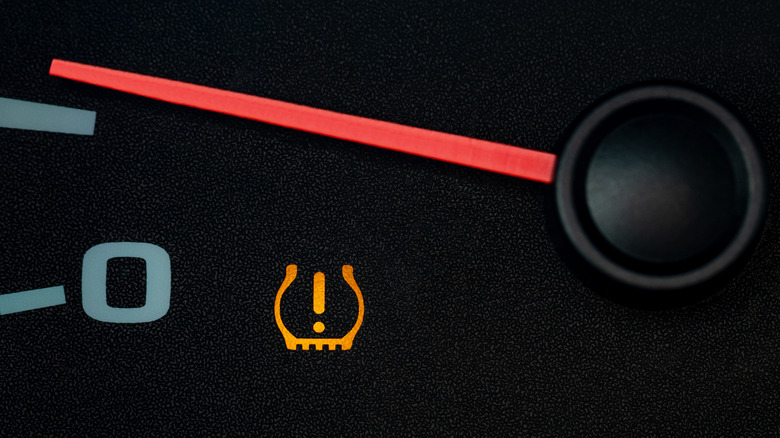
It often happens when you're in a rush, late for work or a dentist appointment: that little horseshoe-shaped icon with the exclamation point in the center lights up on your dashboard. That odd symbol, meant to resemble a tire, lets you know that the air pressure in one or more of your tires is low.
If you're a new driver or cars simply aren't your thing, you may not even realize that your tires have an optimal pressure. Tire pressure refers to the air volume inside the tires and is measured in PSI, or pounds per square inch. The recommended tire pressure for your vehicle is found in the owner's manual and often printed on a sticker placed inside the driver's door jamb. Maintaining the correct tire pressure not only prevents wear and tear on your tires, it can also affect the performance of your vehicle.
Overinflated tires don't present much of a risk but can contribute to faster wear. Under-inflation, on the other hand, is problematic for several reasons. It can affect your steering and handling, reduce fuel economy, and even lead to blowouts. Many modern vehicles monitor tire pressure and can even let you know what the PSI is of each tire. Here are three reasons your tires are low, how to tell, and how to fix it.
Cold weather

If your car tire pressure changes on a cold day, don't be surprised. Changes in temperature are one of the most common reasons for fluctuations in tire pressure. Warm weather tends to cause the PSI level to increase, but cold weather leads to dips in pressure. This is because the air inside the tire contracts when it gets cold.
If it's a particularly chilly morning and your tire pressure is reading low, it's a safe assumption that it's likely a result of the cold. The warning light may even turn off on your way to work as your tires warm up and the air inside expands again. If it doesn't, stop at your local gas station or use your portable air compressor to add air, but make sure to double-check the readings in each affected tire with a gauge first. Even if your vehicle has a tire pressure monitoring system, it's important to make sure those readings are accurate before you add air. If the warning light does not disappear within a few driven miles after topping off the air, the low pressure may have another cause.
A puncture
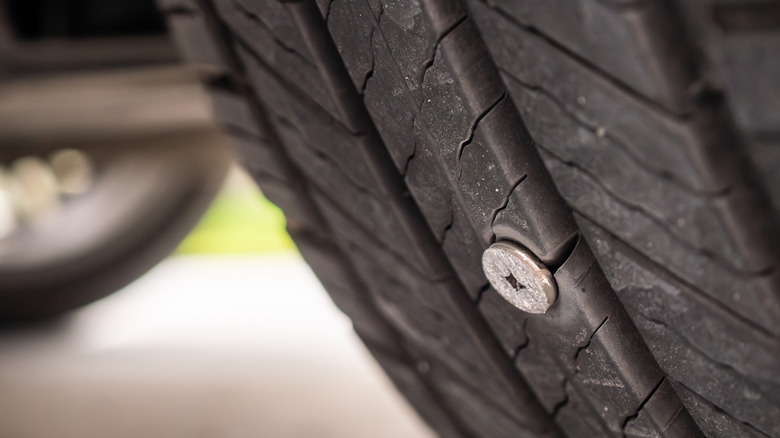
If your system starts warning you on a warm spring day, it's probably not the weather. You may want to check your tires for a potential puncture, especially if the tire pressure monitoring system is only alerting about one individual tire.
Driving over glass, nails or screws, or other sharp objects can often cause a sudden loss of pressure, but they can also cause a slow leak, especially if the item is stuck in your tire. Most punctures are small enough to only release air very gradually. Check your tire for any foreign objects or damage. If you find something, don't remove it unless you're capable of repairing the tire yourself. Otherwise, you may lose additional pressure before you can get your vehicle to a repair shop.
If you don't see anything and your tire continues to lose air even after you top off, make an appointment to have that tire checked out. Most small punctures can be repaired with a patch or a plug, and you may not have to replace the tire.
Bead damage and valve stem issues
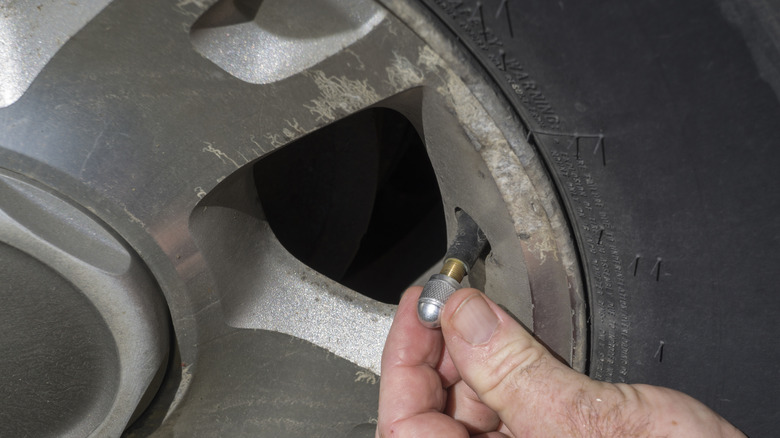
Another culprit for low tire pressure is damage to the tire's valve stem. The valve stem is the small tube that protrudes from the tire to allow you to add air while also preventing the tire from leaking as you're doing so. The valve may simply degrade with age, but over-tightening can also damage this part of the tire.
Another frequent trouble spot is the bead area, which is where the tire meets the rim and forms a seal to hold in air. This part of the time can sometimes corrode over time and eventually fail, leading to a loss of tire pressure. It can also be damaged by rocks or other debris on the road and bent tire rims. Damage to your tire bead is typically only repairable if it's minor, and you may have to replace the tire entirely.
These issues may also be harder to diagnose than punctures or low pressure caused by the cold. You may notice an issue with the valve stem when you stop to put air into your tire, but bead damage may take a more skilled eye to find. If you notice a slow leak or a wobbly ride and you can't pinpoint the cause, you should make an appointment to have an expert check for damage.