

This Bizarre Motorola Gadget Was Made To Be Swallowed (And The FDA Cleared It)

The idea of attaching gadgets to our bodies isn't an unusual one. Wearables like smartwatches have become mainstream, and various smart rings are available for tech enthusiasts who find them worthwhile. If strapping a computer screen directly to your face sounds appealing, you could also drop a few thousand dollars on an Apple Vision Pro. However, putting gadgets inside our bodies is a different matter altogether.
Swallowable gadgets might still sound like science fiction, but back in 2013, Motorola thought the idea was worth exploring. At the AllThingsD D11 conference, Motorola's advanced technology team showed off a new swallowable pill developed in conjunction with Proteus Digital Health. It could use the acid in your stomach to generate a current, which would allow the pill to emit a signal after it had been ingested. Motorola suggested that the pill could be used as an authenticator, allowing you to unlock your phone by having it pick up the signal from the pill in your stomach.
Motorola's advanced design chief Regina Dugan said at the conference that swallowing the pill "means that my arms are like wires, my hands are like alligator clips — when I touch my phone, my computer, my door, my car, I'm authenticated in." She said that the technology could help reduce "the mechanical mismatch between humans and electronics." At the same conference, she also showed off a digital tattoo that could be used to store and emit authentication keys, and even had a prototype version tattooed on her arm.
The Motorola pills never made it to market
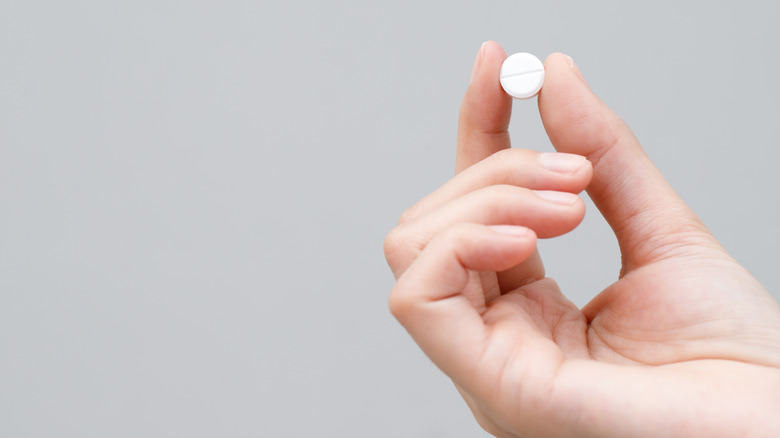
In the end, neither Motorola's swallowable authenticator pill nor its digital tattoo ever made it to the consumer market. Nonetheless, Motorola's partner in the project, Proteus Digital Health, continued to work on its pill design. When Motorola debuted both gadgets at the conference, Proteus had just received clearance from the FDA to market the pill. The collaboration between the two companies later fizzled out, but Proteus later partnered with Japanese drug manufacturer Otsuka and attempted to launch a smart pill containing aripiprazole, an antipsychotic medication.
Rather than use the pill as a password like Motorola planned, Otsuka planned to use the pill's signal emitting capabilities to let doctors and healthcare professionals verify that a patient had taken their medication as prescribed. Otsuka and Proteus submitted an application for approval to the FDA in 2015, but it was initially rejected in 2016. The FDA later reversed its decision, approving the pill in 2017. However, Proteus eventually ran out of cash in 2020 and declared bankruptcy. Its assets, including the patents for its swallowable pill, were subsequently bought by Otsuka.
The two companies hold a string of patents related to the design of ingestible smart pills, and so even if a tech company wanted to pick up where Motorola left off today, it would face some big hurdles. It would potentially need to license the smart pill designs from Otsuka, and even if it did, it seems very unlikely that such a pill would become popular with consumers.
There are many more convenient options available today
Motorola was always going to have had its work cut out to convince anyone that it was worth swallowing a digital pill to avoid needing to remember their password. However, in some respects, the idea wasn't quite as outlandish as it might seem. People did indeed want to have a contactless digital authentication method that allowed them to access their electronics — they just didn't want to have to swallow anything in order to do it.
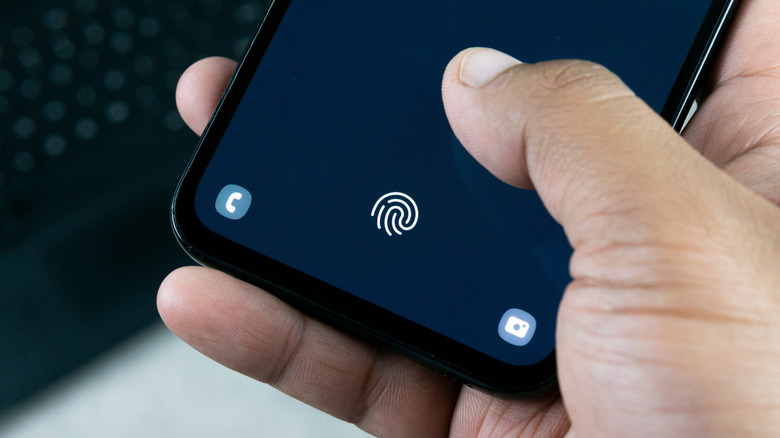
Rather than rely on a pill in your stomach, smartphone users today have the option of unlocking their device using biometrics. The Face ID feature on iPhones can unlock a user's phone just by them looking at it, while fingerprint sensors are an equally convenient alternative. Using a fingerprint to unlock a phone also reduces the chance of accidental unlocks, which would surely be almost inevitable with an ingested pill.
At the 2013 conference, Dugan said the digital pill could allow her to open doors and unlock her car simply by touching them. Again, tech with a similar functionality exists today: digital car keys allow drivers to use their phones to unlock their cars with their smartphones, and although they're not without their risks, they're considered to be slightly safer than wireless key fobs.
Global hotel chains like Marriott and Accor also allow guests to open the door to their room using their smartphones rather than a conventional key card. Using a phone as an authenticator instead of a pill is just as convenient, and crucially, there's no swallowing required.