

MWC 2026 Day 2: Sports, Phones, And Automation In 3D!
Day two of MWC is in the books, and I was able to see some devices I'm very much looking forward to and others that probably could have used more time in the oven. I can assure you, if the latter is the case, I'll point it out. That said, trade shows can be for dreamers as much as they can be product showcases — no shade for shooting your shot.
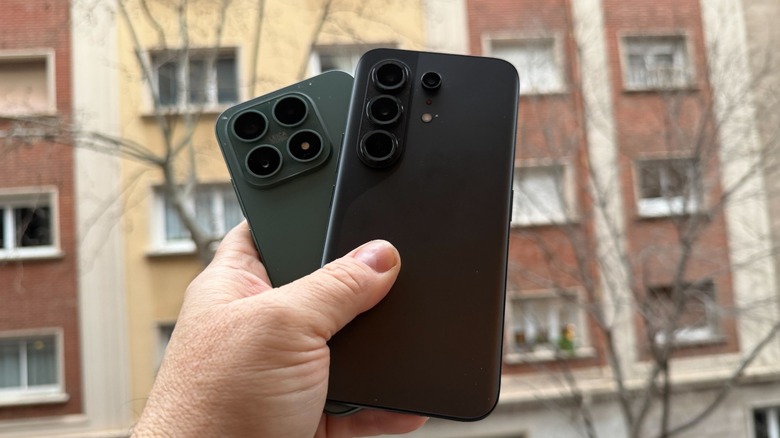
There were also some impressive new phones, with offerings from Tecno and Xiaomi launching this week. I've been hands-on with both for a while now. Beyond those, AI devices, of course, are also part of the picture.
Then there's one final device that I'm particularly excited about. It's a device category that isn't exactly new to the U.S., but it's new enough that most people haven't experienced it yet, and that really needs to change. This company is trying to fix that, and if that's not enough of a teaser, I don't know what is. So, here's all the tech I saw on the second day of MWC 2026 in Barcelona.
Tecno Camon 50 Pro
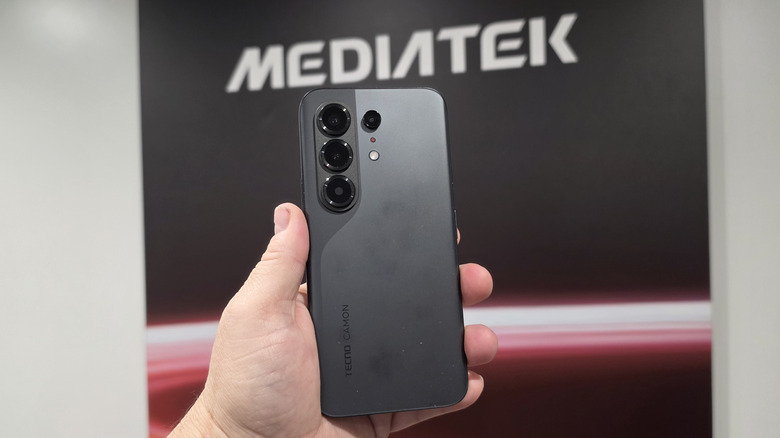
Tecno is always good for a few concept devices, and it's very much like the phone equivalent of Lenovo in that regard. But in addition to those concepts, Tecno also launched a phone that you can buy. I've had it in hand for the past couple of weeks, but I haven't had much time to spend with it due to everything else launching at the same time. But I have played with it for a bit and can give you some overall impressions.
Let's start with the specifications. I received the Pro model, which is not the top-tier version. It runs on a MediaTek G200 Ultimate processor and 8GB of RAM — more about that in a moment. There's also 256 GB of storage. The phone has two 50-megapixel cameras — main and telephoto — along with an 8-MP ultrawide camera. It has a 6,500 mAh battery and is just 7.38 mm thick, although it feels a lot thinner due to its rounded sides.
The cameras are pretty decent, even in low light, although the ultrawide loses a ton of detail and can have difficulty focusing at times in darkness. The phone runs very slowly and lags quite a bit due to the processor and RAM, and feels very much like a midrange phone. It's also limited to 4G, which is mostly okay these days, but still worth keeping in mind. Overall, it's hard to recommend, but then it's not really available in the U.S., either, so you probably won't be considering it anyway.
Eufy C15 mower
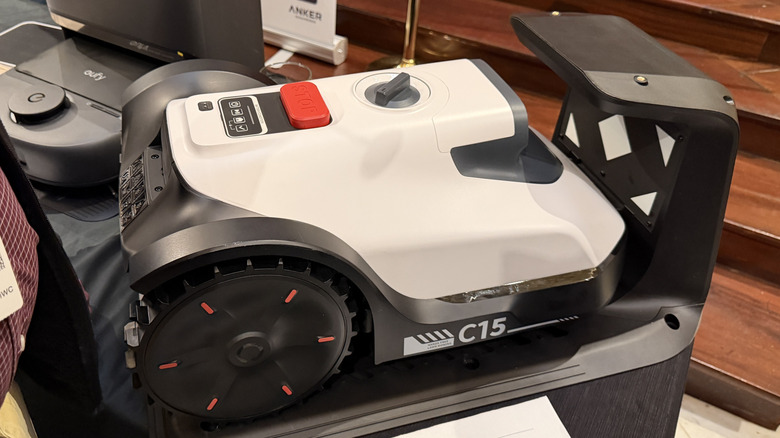
I had the pleasure of testing several robot lawnmowers last summer, and they were literally life-changing. Robot lawnmowers eliminate the need to go out and cut your grass every week. They go out, by themselves, as often as you want (I have mine do it three times per week) and work in silence. Meanwhile, your neighbor still has to go out and push his noisy mower around his yard, wearing his silly ear protection... You know the type. Anyway, of the 10 mowers I tested last summer, Eufy's E18 was one of my favorites, mostly because I had it mapping out my yard within 20 minutes of taking it out of the box.
Without going into too much detail about GPS and RTK beacons, the Eufy C15 takes a page from its predecessor by eliminating the need for a strong GPS signal. It does this by relying mostly on computer vision to navigate, hence why it was so quick to set up. The C15 is designed for smaller lawns of around 0.2 acres (which should cover most lawns in the U.S.), but what's more important is the price.
Eufy hasn't released final pricing yet, but this mower looks to be under $1,000. That sounds like a lot, but when you consider the amount of time and effort you save over a single summer, it suddenly sounds pretty worth it. Most robot mowers are priced at $1,500 and up, so offering one in the triple-digit price range is huge. The fact that it's dead-simple to operate is a big bonus. This is absolutely a robot mower to watch if you're even slightly curious about the category.
Cresento smart shin guards
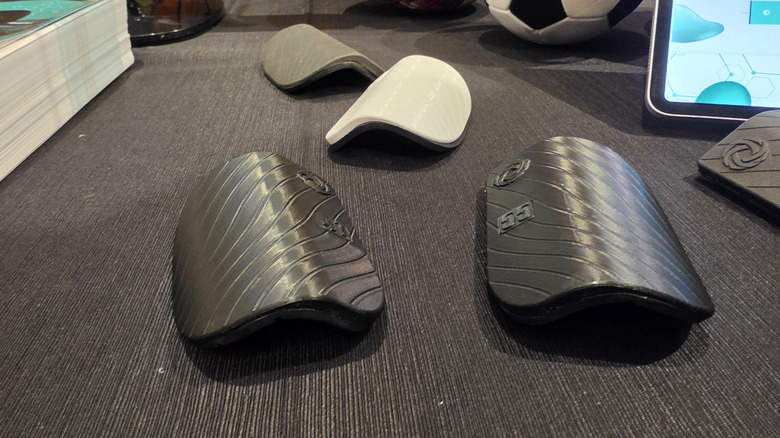
Soccer, or as it should be called, football, is one of the most popular sports in the world, so it's no wonder that there are companies looking to give teams a deeper understanding of the sport and its athletes. Cresento is one such company, and to that end, it has developed a set of smart shin guards. For those not familiar with the sport, shin guards are typically thin sheets of material designed to protect your shins from impact, such as when another player tackles you. I haven't played football in 40 years, but trust me, I remember how much it hurts.
Cresento built a set of smart shin guards that track activity, similar to a smartwatch or ring. They can give teams insights into how much a player is running, when they're getting tired, or if they're lollygagging and don't deserve that contract extension. I'm kidding about that last one, but only a little bit. In the future, the shin guards will track shooting and passing metrics as well.
Cresento is designed for teams at the moment, not for general consumers. Licensing costs about $5,000 per team, or about $17 per player per month. It's an interesting look into sports tech whose data could be coming to your TV screen in the not-too-distant future.
Scople
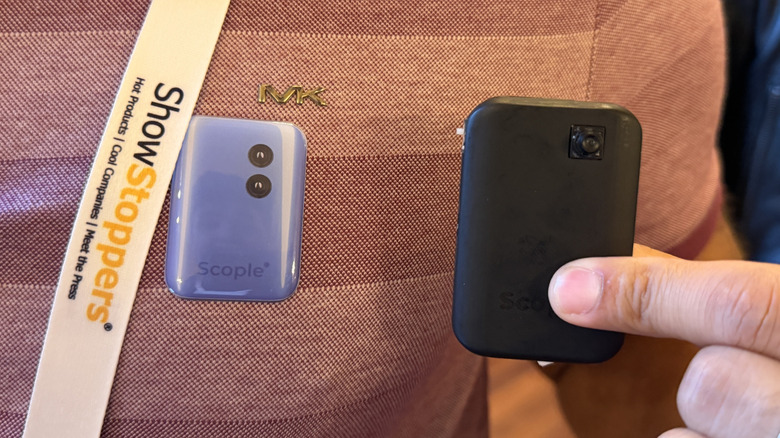
If you are socially awkward and totally inept at reading people, like me, you can find yourself in uncomfortable situations without even realizing it. Scople is designed to help you with that. It's a wearable AI pin — wait, don't go anywhere — that has a camera. The camera does not record — Scople was very clear about that — but instead serves as eyes to take in the scene. From there, the AI kicks in, tracking other people's reactions to you.
Some of the scenarios we discussed include how the device can notify you if the person you're talking to seems disengaged. Also, it can alert you if you're walking or jogging and someone nearby seems to have bad intentions toward you.
The device is meant to be worn all the time. The creators anticipate you'll get roughly two hours per charge, with a quick-charging battery case that will top you off in just 15 minutes. Including the case, battery life should be about 24 hours.
The company only had a 3D-printed prototype on hand, not a production unit, which, if I'm honest, makes me a little nervous. I love the idea, but I would prefer to see a more complete device before I recommend it. The device is also heading to Kickstarter, so prospective buyers should definitely beware. That being said, I could see getting some use out of a device like this, if only so I can be alerted if I become annoying — which is a thing I can do from time to time without realizing it.
Xiaomi 17
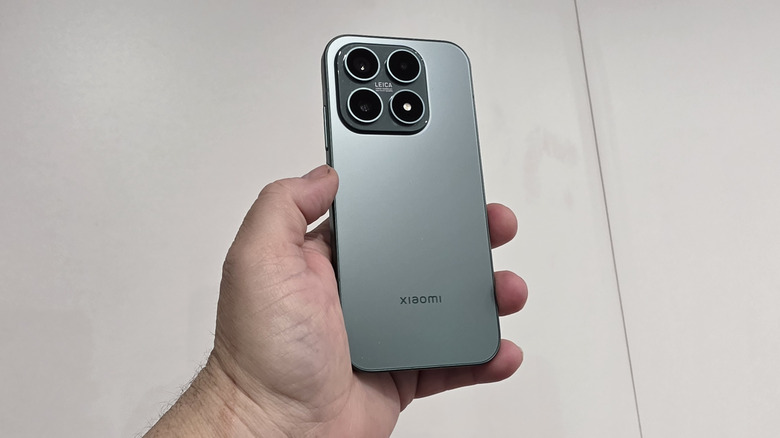
Xiaomi has also launched a few phones, and similar to Tecno, I have had one for a couple of weeks. Last year, I had the pleasure of reviewing the Xiaomi 15 Ultra with the camera kit. This year, I got the Xiaomi 17, which, while not the top-tier version, is still a very good phone in many ways.
This phone runs on the Snapdragon 8 Elite Gen 5 platform with 12GB of RAM and 256 GB or 512 GB of storage. It has a lovely 6.3-inch display, which is my new favorite display size, and a 6,330 mAh battery. The cameras are all 50 megapixels, and while they're mostly good, the focusing and capture time can be a mixed bag in low light. There's also a bit of a color difference between the main lens and the zoom.
The phone itself is quite fast and punchy — a credit to its processor. This is another of those phones that I wish could be sold in the U.S. because it is a small powerhouse, which isn't a common sight these days. I'm also fond of this green colorway.
Immersity 3D technology
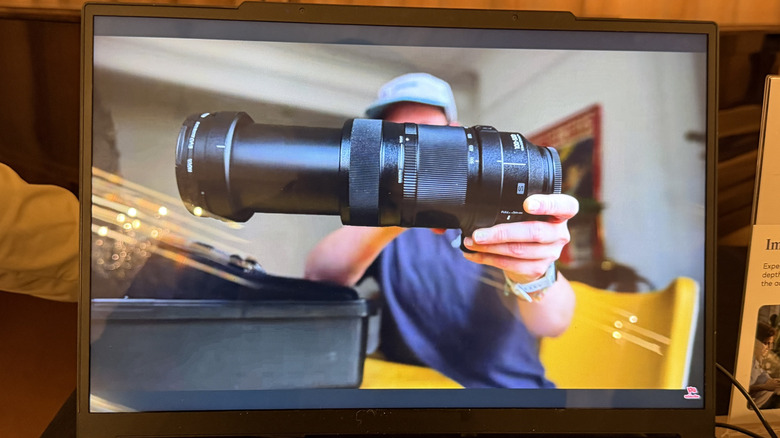
3D tech is getting better and better, now that we've eliminated the need for glasses and headsets. Immersity's demo is arguably the most impressive one I've seen, but I, of course, can't show it to you because photos can't capture what it does.
The first thing to know is that Immersity is not making a consumer product. This company licenses its tech to companies like Redmagic — makers of the world's first liquid-cooled smartphone — and Samsung to build into their smartphones and gaming monitors. Immersity has developed a screen-level hardware layer that can be integrated into current devices, along with software to bring the screen to life. Paired with eye tracking from the front-facing camera, the 3D effect was good enough to make me go "Wow!"
For 3D-designed content, the screen is mindblowing. One 3D render had a game character pointing a gun that I could have sworn extended over a foot in front of the screen. You could manipulate and rotate however you needed, similar to Lenovo's 3D tech I saw on day one of MWC 2026. Immersity also developed software that can generate 3D content from 2D videos. I sampled this by opening a Becca Farsace YouTube video, and it was absolutely stunning — more so than usual, I mean. 3D tech has come a long way, and it's a really exciting frontier.