

The World's Largest Battery Will Actually Use Rust To Power Google's Data Center

The race to secure energy supply for AI data centers has reached a feverish pitch, to the point that tech giants are investing in nuclear projects and even plonking cash into experimental tech. The latest name on the list is Google, which just committed a hefty one billion dollars to a company offering a unique battery that essentially relies on rust for energy storage and conversion. The player in question is Form Energy, which supplies the iron-air battery stack that can deliver 300 megawatts of electricity with an impressive 100 hours of operational run time. While the output is itself impressive, it's how the tech works that truly boggles the mind. This iron-air battery essentially breathes to produce electricity, and yes, just like humans, oxygen is involved.
In February, Google announced that it had invested serious cash to secure 1,400 megawatts of electricity from wind power projects, 200 MW from solar farms, and 300 MW from the Xcel Energy grid. Not only is the tech cutting-edge, but the scale is massive, as well, and Xcel Energy sounds pretty bullish about it. The company says its iron-air battery system, supplied by Form Energy, is "the largest battery project by gigawatt-hour energy capacity announced to date in the world."
The iron-air battery stack can discharge over a period of 100 hours and feed to the grid, while storing energy when there's less consumption stress, and production is high. This is one of the world's first large-scale deployments of an iron-air battery, ditching conventional lithium-based battery packs that power everything from electronic gadgets to electric cars. The shift comes at a time when solid-state and sodium-ion batteries are gaining momentum, especially in China. But is iron good for batteries?
Rust as an energy source
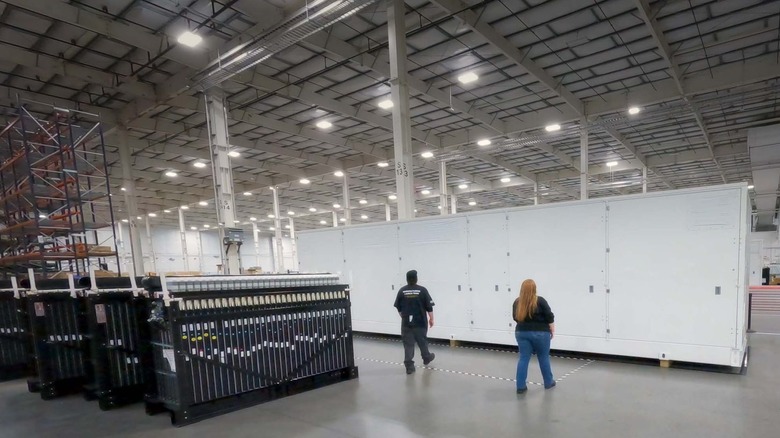
In October 2025, Form Energy began the commercial shipment of its 100-hour iron-air batteries. The company highlights a few crucial benefits, and they just might shift the tide in the segment. Unlike lithium-based battery storage units, which can typically supply energy for up to four hours at peak capacity, iron-air batteries can last for days. Another crucial edge is the cost factor. Lithium comes with electrochemical risks, it's expensive, and its supply chain is highly volatile. Iron, on the other hand, is abundant and relatively cheaper. Other key ingredients and catalysts for the iron-based batteries are water and air, both of which are pretty abundant, as well.
.@FormEnergyInc's iron-air batteries store power cleanly and affordably using abundant iron — no lithium or rare materials. CEO Mateo Jaramillo sits down with Ashley Grosh of Breakthrough Energy to talk partnership, innovation, and scaling as manufacturing begins. pic.twitter.com/XXKDd4k7g5
— The Earthshot Prize (@EarthshotPrize) December 17, 2025
So, what's the working principle? Reversible rusting. Usually, when an iron-based material gets rusty, you either remove the top layer of eaten-up metal or discard it. And to protect it, a layer is applied on top so that it doesn't come into contact with oxygen and get rusty again. Form Energy is actually banking on rust, but instead of wasting material, the batteries go through a cycle of rusting and de-rusting. When the iron-air battery is discharging electrical energy, it simultaneously pulls in oxygen from the air. This leads to oxidation and turns the iron into rust.
When the battery is depleted and plugged in for recharging, the electrical current turns the rusted material into pristine iron, and oxygen is released. Rust is basically an oxidized version of iron, which means adding or removing it also changes the material form. The battery cell includes iron–based electrodes and a water-based electrolyte that is also non-flammable. The battery cells are packed in giant enclosures that are roughly the same size as a shipping container. A cluster that generates one megawatt takes nearly half an acre of land.