

How To Clean Your Car's Grille Properly, No Matter The Style
We may receive a commission on purchases made from links.
If you are among the millions of car owners in the world, you almost certainly have some specific opinions about not only keeping that vehicle clean, but also how often you need to clean it. For many, those factors require little more than a quick run through a drive-thru car wash once or twice a month. For others, the washing of a car, truck, or SUV is a semi-religious ritual that should be undertaken at least once per week.
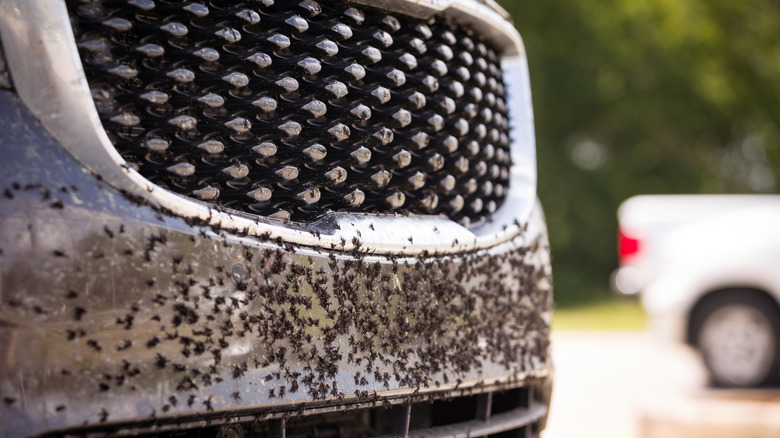
If you count yourself in that particular faction, you likely already eliminated some of the more common car washing mistakes from your ritual. Cleaning your car's front grille may still be a constant source of aggravation. It is, after all, a work-intensive undertaking, as that part of the vehicle is subjected to literally anything that comes your way when you're cruising down the road, including dirt, grime, tar, and, of course, bugs and bug guts.
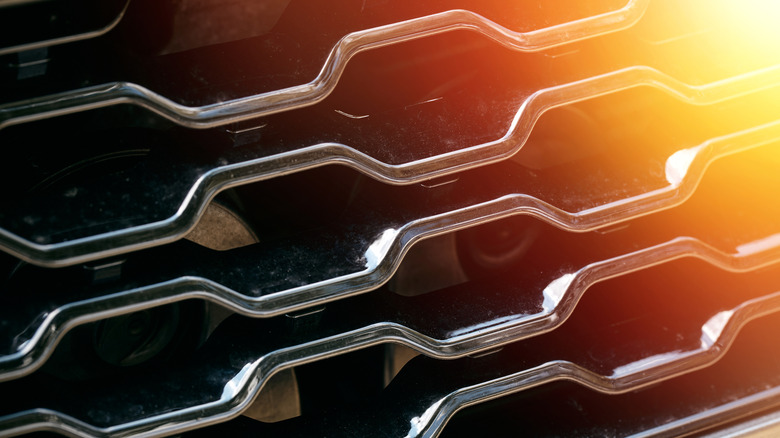
Grilles on certain vehicles have also become quite ornate. That doesn't necessarily make them more difficult to clean, but some drivers may strive to put extra effort into properly maintaining them to show them off on the road. Vehicle owners can typically touch up their grille with the car cleaning staples like soapy water, and a sponge or soft-bristle brush. However, excessively dirty grilles with accumulated bugs may benefit from specific cleansers. If your car's grille is in need of such a deep clean, here are a few steps that might help maximize the shine.
Steps to properly clean the grille on your car
Before you get into cleaning your grille, you'll want to ensure you've got the aforementioned car cleaning paraphernalia handy. If you're in need of a bug-specific cleanser, you should be able to find a solid option at your local auto shop or through Amazon. Just as an FYI — WD-40 may also aid in the removal of bugs and guts. With those items in hand, follow these steps to properly clean your car's front grille.
Cleaning the grille with a bug-specific cleanser like Griot's Bug and Smudge Remover:
- Apply the bug cleanser to visibly dirty areas while the front grille is dry.
- Allow the cleanser to set for the specified amount of time. If you're uncertain, check the directions on the label.
- With a soapy sponge, towel or soft bristle brush, scrub the grille in its entirety, ensuring you get into every crevice.
- Using your hose, rinse the grille thoroughly.
Cleaning the grille with just soap and water:
- Use your hose to spray down the vehicle's front grille, removing any loose dirt and bugs.
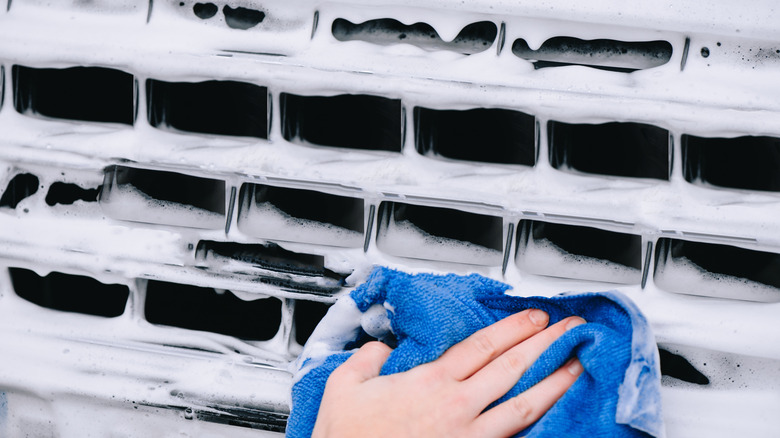
- With a wet sponge, rag or soft-bristle brush, pretreat the grille with soapy water.
- Allow the soapy water to soak in for several minutes. This is a good time to work on wet-cleaning tires and wheels or other parts of the car.
- Clean the grille with the soft scrubbing option of your choice, working into every crevice.
- Spray the area completely clean with your hose.
If the grille is still dirty, repeat the steps as listed. Once the grille is clean, dry it with a microfiber cloth to prevent water spots.
What to be careful of when cleaning your car's grille
Even as some front grilles aim to elevate design aesthetics on a car, truck, or SUV, it is important to remember that there are a few vital engine components positioned behind the grille and under the hood, including the radiator and its cooling fins. Given that fact, you should only clean the grille on your vehicle when the engine is cool.
Depending on the make and model of your vehicle, there may also be sensors and electrical components hidden out of sight. Those components are designed to withstand a certain level of wetness, as your vehicle might endure during heavy rains on the road, but there's a limit to what they can take, so be careful to reduce the water flow when spraying the grille down for cleaning.
Finally, it is important to only use a sponge, rag, or soft-bristle brush when you are scrubbing the grille. This is because abrasive scrubbers may cause irreparable damage to the materials used in the grilles themselves, as well as any protective coatings that may be present. In short, clean those grilles with the same care you likely use for the rest of your car.