

12 Temu Home Improvement Products You Didn't Realize Existed
We may receive a commission on purchases made from links.
Temu is an online retailer that exploded in popularity after a series of commercials during the 2024 Super Bowl. It's known for selling a wide variety of products, often at deeply discounted prices. The company is owned by PDD Holdings, founded by billionaire Colin Huang. Temu connects buyers directly with suppliers, and products are shipped from all over the world, many of them coming directly from China. Part of the reason prices are so low is that the platform and its users take advantage of low-cost labor and manufacturing in China and other parts of the world.
Shopping on Temu can be a little risky. Over the last three years, the company has received nearly 6,000 Better Business Bureau complaints. Temu has a B rating, with 2.3 stars out of 5 based on customer ratings, and is not accredited, meaning Temu hasn't agreed to the Better Business Bureau standards or passed the vetting process. After handing over your credit card information, you might open your package to discover it's not quite what you expected. That's if your package shows up on time or at all.
You can get craft supplies, makeup, clothing, toys, gadgets, and just about anything else you might want to buy, often at deeply discounted prices. You might not know you can also get tools and home improvement products. The following list is for inspirational purposes only — SlashGear does not recommend the purchase or use of any products found on or shipped by Temu.
Right angle screwdriver
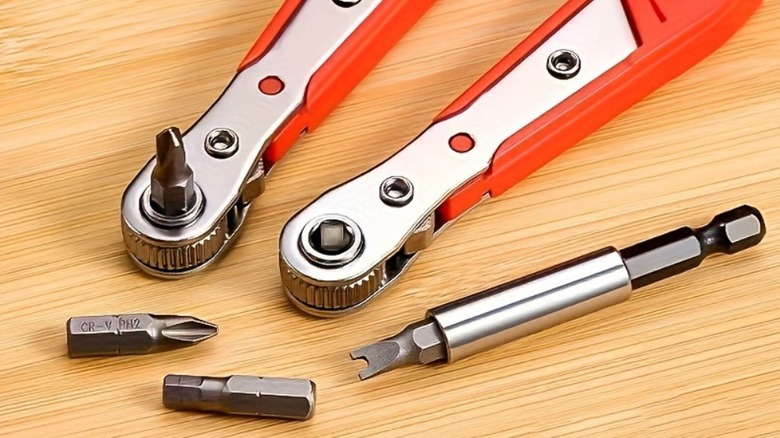
When you need to fasten or unfasten a screw, you usually reach for a screwdriver or a drill. Those tools, however, require a certain amount of clearance to use. If you need to fasten a screw in cramped quarters, a right-angle screwdriver can be a game changer. Because it puts the driving bit at a 90-degree angle to the handle, it can get into areas with much less clearance to do jobs an ordinary screwdriver or drill can't do.
This right-angle screwdriver from Temu sells for just $3.39, and that's if it's not discounted. At the time of writing, buyers are getting an additional 25% off, bringing the price down to $2.52. The screwdriver is not powered, but it does have a ratcheting mechanism with forward and reverse modes. It measures just 4.3 inches long and only 1.2 inches thick, including the length of the bit. According to the website's own data, this item has been purchased more than 200,000 times and has received more than 1,800 reviews with an average rating of 4.7 stars.
You probably shouldn't expect too much from a three-dollar screwdriver, but if consumer comments can be believed, most buyers are satisfied with their purchase.
Disposable battery tester
While many gadgets these days are powered by built-in rechargeable batteries, some devices still take disposable batteries. Usually, they are small toys or gadgets with low power demands, like television remote controls, and the batteries only need to be replaced infrequently. Despite incredible improvements in battery technology in recent years, many of us still have a few packages of disposable batteries at home.
Unless you're unfailingly organized, those batteries are probably floating around in a junk drawer with your old receipts, antiquated charging cables, and other assorted items. When it's finally time to reach for some batteries, you might not be sure how old they are, if they've been used before, or if they have any charge left.
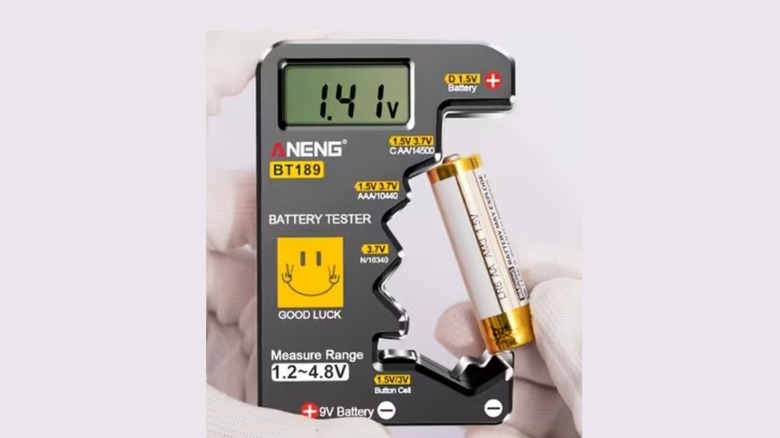
This battery tester from Temu can read the charge of most common disposable battery types. You place one end of the battery down at the bottom and click the top into the appropriate port to get a voltage reading. There's a spot for testing button cell batteries, commonly called watch batteries, a slot for AA batteries, AAA batteries, and others. There's even a 9V battery tester on the underside. Just toss it in your junk drawer alongside the batteries and you'll never wonder if your batteries have juice again.
Wireless soldering iron
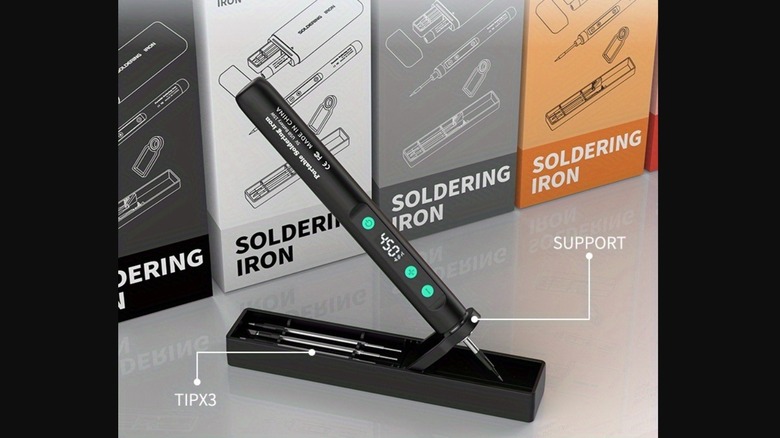
A soldering iron is a popular purchase among DIYers who want to try their hand at electronics. This soldering iron from Temu has a built-in rechargeable battery, so you can solder anywhere without needing access to an outlet.
It features a 1,100mAh battery and a ceramic heating element. The iron can achieve temperatures between 180 and 450 degrees Celsius (356 to 842 degrees Fahrenheit) in as little as eight seconds. It has a simple layout with a power button, a digital LED display that shows you the operating temperature or charging status, buttons to increase or decrease the temperature, and a charging port on the bottom.
It charges using a USB-C charging cable, and you can even continue to use the soldering iron while it's charging. It's only about 7.5 inches long, weighs just 50 grams, and comes in a carrying case. Inside the case, you'll find the soldering iron alongside a USB-C cable, three replacement tips, and a support stand. Of course, it might not be the best soldering iron for beginners.
Drill dust collector
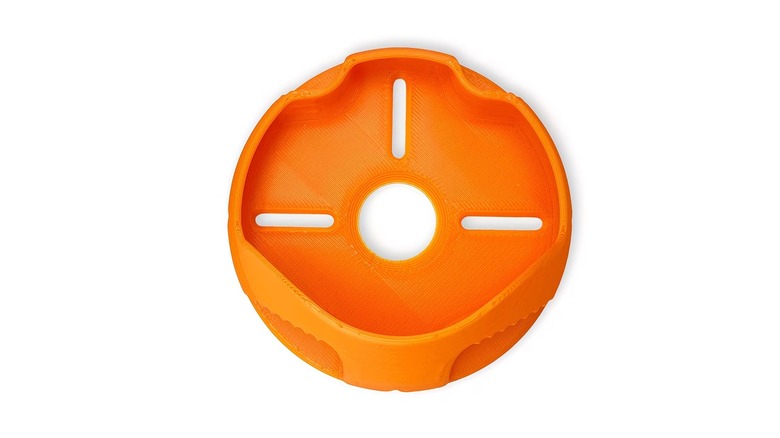
Tools are typically designed to make it easier to perform a task, but in the course of streamlining your workload, they can cause their own problems. A hammer can drive a nail, but it can also smash a finger or ding a wall. A drill can drive a fastener or drill a hole, but it also creates a mess. If you've got a bunch of holes to drill, you're likely to end up with several small piles of drywall and wood dust littering your floor.
A drill dust collector is designed to catch the mess so you don't have to pick up the broom after a hard day of drilling. This drill dust collector is a pretty straightforward but useful product. It's a circular piece of plastic a little more than three inches in diameter, with a collecting cup along the bottom and a hole in the middle.
You can hold the collector against the wall, place your drill bit through the center hole, and drill. Any dust generated from drilling drops into the collecting cup, where you can easily dump it in the trash. A piece of plastic and a little preparation up front can save you from ending your day with a monotonous chore.
Center line finder
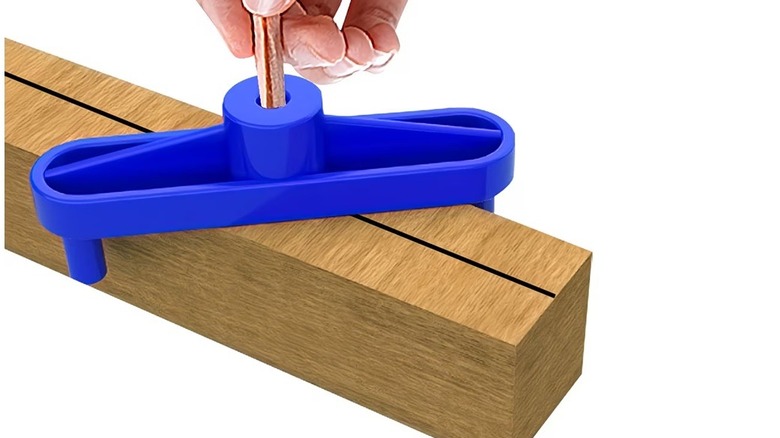
Maybe you're drilling into a narrow piece of wood and you don't want to split it. Maybe you want to split a piece of wood into two equal pieces. When you're working with wood, you often need to find the center line. You can do it the old-fashioned way, using a tape measure to make marks along the length and a straightedge to connect them, or you can use a center line finder.
This little gadget is made of ABS plastic and facilitates finding the center line of materials in a cleverly simple way. You simply straddle the jig over your piece of wood and rotate it until both ends of the jig hit the sides of your material. Once that's done, the center hole will be right in the middle, and you can use it to guide your tools. The jig measures five inches long from end to end but only has a 3.62-inch interior space. If your material is more than 3.62 inches wide, you'll need to find another solution.
If you need to drill a narrow hole, you can slot your drill bit through the center hole of the jig and use it to guide you. Alternatively, you can slot a pencil through the center hole and drag the jig along the length, making a line right down the center.
Drill guide
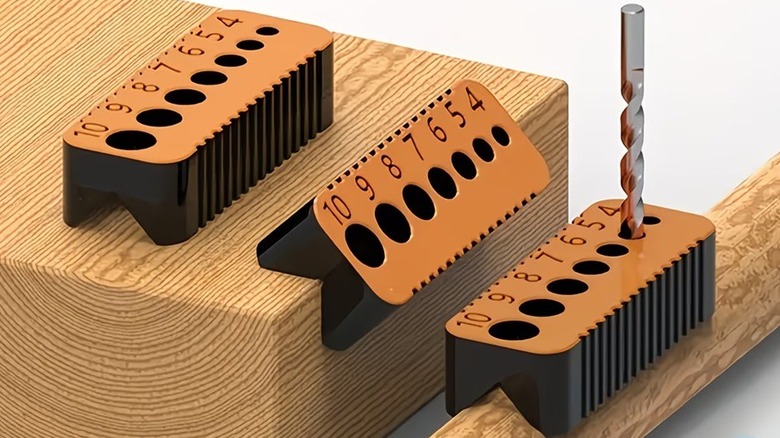
When trying to place a fastener or drill a hole, you've only got a couple of tries to get it right. Drilling and fastening are both destructive processes, and if you misfire too many times, you can ruin the integrity of your material. That's why it's important to do it right the first time.
A drill guide can help keep your drill running straight and true in a variety of situations. This drill guide from Temu is made of plastic, measures 3.15 inches long, 1.18 inches wide, and 0.79 inches tall, and has guide holes for drill bits between 4 and 10 millimeters. The guide features a unique design with a concave triangular section removed from the bottom. The design allows it to sit flat on a board, nestle perfectly onto a corner, or sit perched atop a round bar.
The drill guide seems especially helpful in the latter two scenarios, when drilling into a large dowel or into the corner of a board, both tasks that are difficult without a guide. This is a simple tool you may not need to use very often but that could save you from a headache when you do need it.
Paintbrushes with edge guides
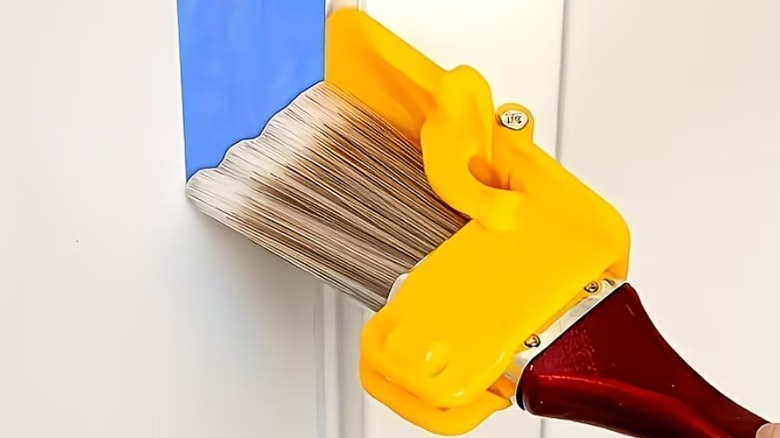
Painting is one of the easiest and more affordable ways to breathe new life into a space. It's also one of those jobs where the last 10% takes 90% of the time and effort. Painting the interior part of a wall or ceiling is relatively easy, but painting the edges without going over takes precision. You could spend a bunch of time running painter's tape along each edge before painting, or you can use a paintbrush guard.
These paintbrushes from Temu come with protective plastic guards running along one side, so you can paint edges confidently without worrying about going over the line. The brush is 7.8 inches long and 2.36 inches wide on the bristle end. The protective guard hinges to the side so it's out of the way when you're dipping it into the paint can. Then it bends back into place when you're ready to paint. Moreover, the brush and guard are two separate pieces, so you can remove the guard and attach it to a new brush when it's time for a replacement. It's a simple change that could save you a lot of time, especially if you're painting a large area with a lot of edge space.
Lift and move kit
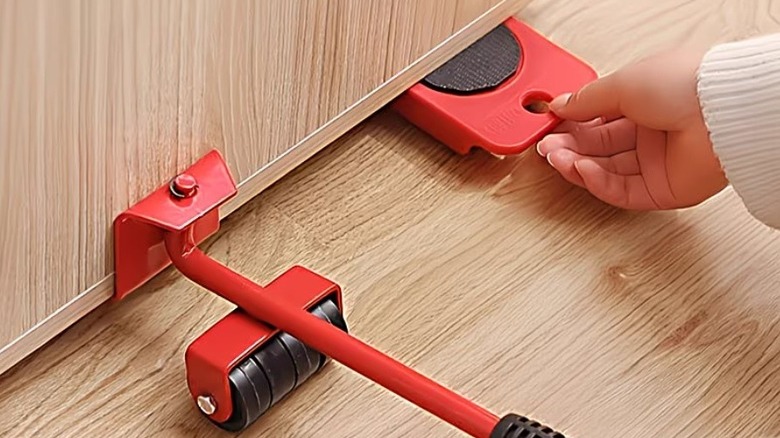
Before you can start swinging hammers on a home improvement project, you often have to prepare the space. That might mean putting down tarps or cushioning fragile items, and it often means moving heavy furniture out of the way. That's not the only time you might be called upon to lift something heavy. Hanging a door by yourself can be difficult if you have to hold the door off the ground and screw the hinges into the frame at the same time.
This five-piece furniture moving kit can help with both situations and any other scenario that asks you to carry or move heavy objects. The kit comes with a levered pry bar and four wheeled trolleys. To use it, you'll wedge the pry bar beneath your refrigerator, clothing dryer, or door and lever it upward, then slide one of the wheeled trolleys underneath. Repeat that process as many times as necessary to get beneath all four corners or hold up your object. Once your trolleys are all positioned, you can fasten the door hinges or move heavy furniture to your desired location.
Oscillating multi-tool
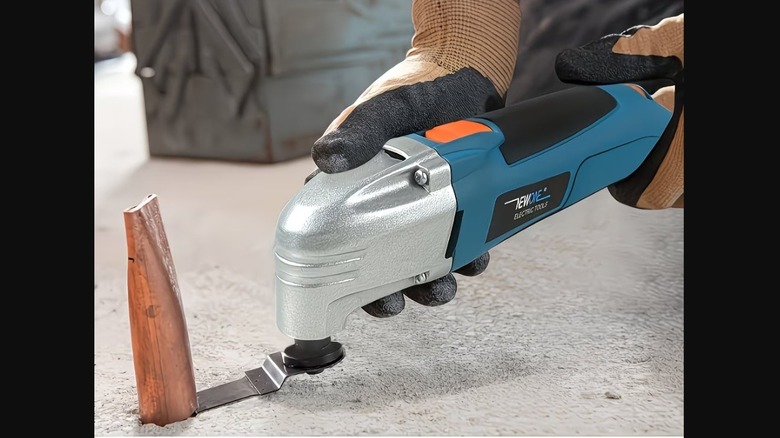
The oscillating multi-tool, also known as the oscillating saw, traces its history back to the 20th century medical industry. It was originally designed in 1967 by German tool manufacturer Fein to remove plaster casts without injuring the soft tissue inside. While a rotating blade will cut pretty much anything, an oscillating blade will only cut rigid materials. The cutting ability comes from a combination of the blade's movement and resistance from the target material. Press it against a hardened plaster cast and it will cut through, but press it against flesh and it jiggles back and forth without cutting.
A relatively recent addition to hardware store shelves, the first oscillating multi-tools outside of the medical sphere were introduced in 1985. Over the years, additional attachments were developed and the functionality of the multi-tool expanded. When Fein's patent expired in 2009, other tool manufacturers got in on the action and the multi-tool quickly became a favored gadget among DIY aficionados.
This oscillating multi-tool from Temu is a little more than 10 inches long, features a six-speed switch, and comes with a collection of eight different blade attachments. With a multi-tool, the right attachment, and some beginner multi-tool knowledge, you can cut things, sand things, lift tiles, and more.
Fillable paint roller

Painting can be fun, but it can also be monotonous. You spend a lot of time moving back and forth from the wall to the paint bucket or paint tray, dipping your brush or roller. Then it's back to the wall for your next few strokes before you have to repeat the whole thing over again. Worse, each one of those trips is an opportunity to drip paint on the floor, on your clothing, or elsewhere.
This fillable paint roller from Temu offers another option, courtesy of a paint compartment in the middle. You pop the cap off one end and fill the interior compartment with paint, then the roller draws paint from the inside. You can pour more paint into this roller than a typical roller picks up, so it requires fewer refills. In fact, a single fill-up provides enough paint to cover an entire wall, according to the posting's documentation, though the dimensions of that hypothetical wall are unclear.
The roller is about 7.87 inches across and 8.27 inches long, though you can add a longer handle to increase your reach. Video of the item in use also suggests that it prevents paint splatter, even if you're moving the roller around aggressively. It's a variation on a familiar tool that makes painting more convenient, with less effort and less mess.
Laser level
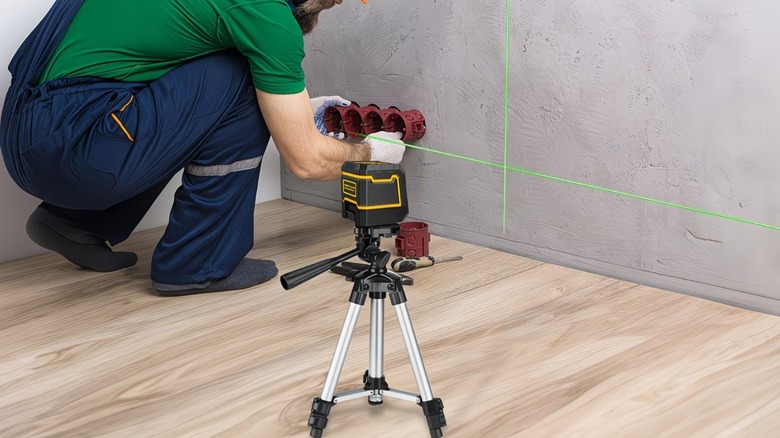
Bubble levels are among the most common solutions for making sure things are lined up correctly, but they aren't necessarily the best for every situation. A bubble level can be useful for leveling individual objects, like a single picture frame or TV mount, but if you want to level and align several objects across a large area, that's when a laser level comes in handy.
This laser level from Temu comes on a tripod, can self-adjust up to plus or minus four degrees, and creates a plus sign of green laser light so you can square things horizontally and vertically. Using manual mode, you can even skew the level by tilting it side to side or up and down, in case you want to create a wall collage or even paint a pattern with complex angles.
It's battery-powered and can run for up to eight hours on a single charge. There are three levels of brightness, and the tripod holds the level at a height between 30 and 60 centimeters (roughly one to two feet) from the ground.
Miniature table saw
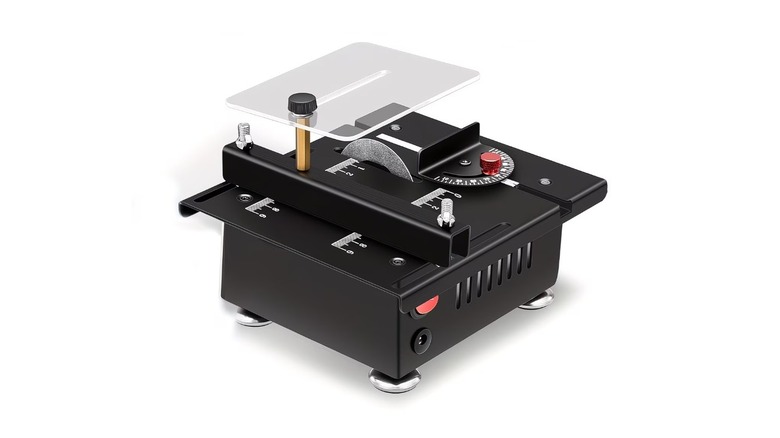
Power tools can be a big investment in both money and space. If you want to have more than a basic tool set, you usually need a garage or workshop to store your tool chest, work tables, and large power tools like table saws. If you don't have the space or you want to dip your toe in the power tool pool before committing, you could consider this miniature table saw from Temu.
It measures seven inches long, six inches wide, and just four inches tall, small enough to fit easily on any vacant table or counter space and compact enough to be tucked away in a closet or drawer when not in use. It can be used to cut small pieces of wood, PVC pipe, metal, resin, and other materials, provided you're using the appropriate saw blade.
Saw blades spin up to 6,000 RPMs on the fastest of the saw's seven speed levels, and a guide lets you set the angle of your cut between 0 and 90 degrees. There's a sanding pad on the side and a handheld rotary tool you can use to shape, grind, or engrave materials. It's a multipurpose tool in miniature for the DIYer with limited space.