

If You Ride A Harley, These Are The Only Types Of Tires You Should Be Using
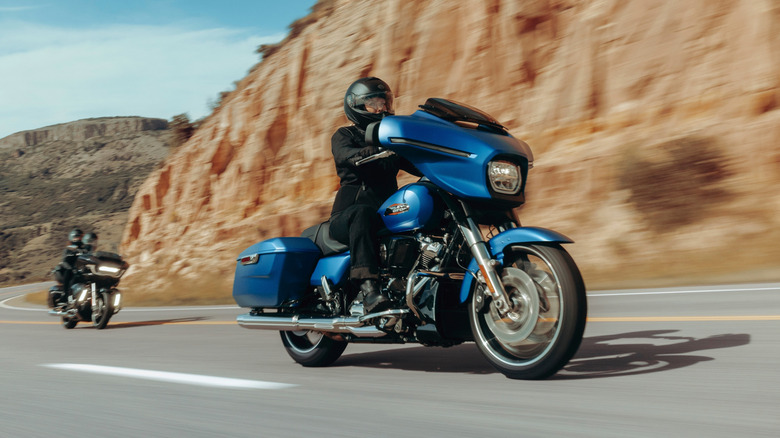
It can be easy to overlook the condition of your motorcycle's tires, but they're crucially important — they are, after all, the only thing that keeps you firmly stuck to the asphalt when you're on the road. Eventually, even the best tires from major motorcycle tire brands will wear out and need to be replaced. If you're looking for new tires for your Harley-Davidson, there are plenty of forums and social media threads where owners offer their opinions on the best tire models for particular types of bike. However, H-D's official advice is to only stick to tires approved by the brand itself.
That list of approved tires can be found in the company's tire chart matrix and fitment guide, which was updated in 2026. It lists every major variant of every model in its lineup alongside the stock tires that were fitted when it was new. In many cases, it also includes optional tire models that have been given the Harley-Davidson seal of approval for use on certain bikes.
According to the brand, it's not advisable to mix different models of tires on the front and rear of a bike. If you do so, or if you use unapproved tires, H-D says that it can lead to stability issues that could cause a major accident. The tire fitment guide covers all model years stretching back to the '80s, but if you own a Harley-Davidson that's outside of that range and aren't sure which tires to use, it's best to consult your nearest H-D dealer for advice.
All the key details are in Harley-Davidson's tire fitment guide
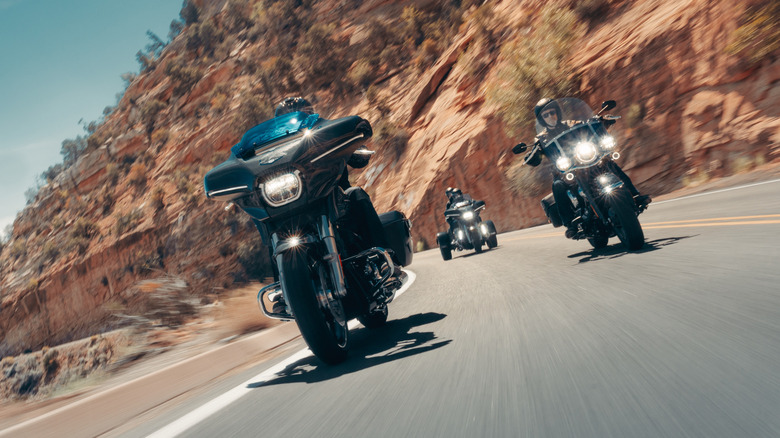
As well as detailing the brand, model, and size of each approved type of tire, Harley-Davidson's fitment guide also includes corresponding part numbers and information about the sidewall style of each. Many of those approved models are blackwall tires, but the guide also includes whitewalls of varying thicknesses, so there's some room for personalization should you want to switch up your bike's look a bit. The guide also lists suggested retail prices for each model.
Even if you have Harley-approved tires, they won't perform their best unless they're inflated to the correct pressure. In order to know what PSI your tires should be, you'll need to look at the owner's manual for your particular bike, since recommended pressures vary between models. Owning an accurate tire pressure gauge is vital to ensure you don't overfill or underfill your tires; if you don't already have one, Harley-Davidson offers its own gauge. It's listed in the tire fitment guide as part number 12700096A and is exclusively available at dealers.
When is it worth replacing your Harley-Davidson's tires?
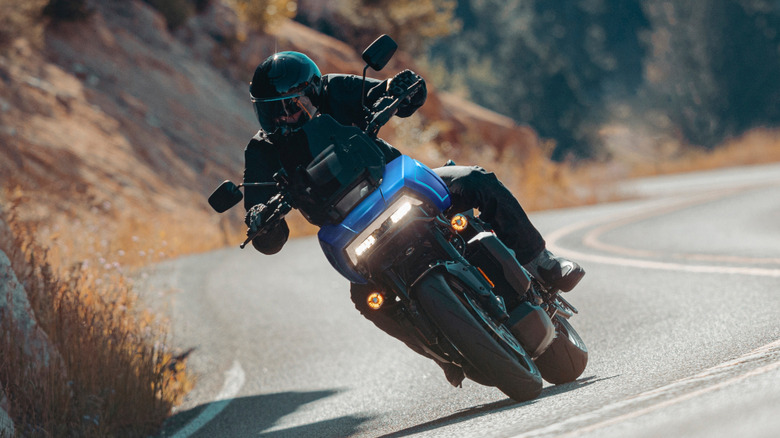
While a Harley can last for decades and travel tens of thousands of miles before needing major repairs, its tires will need replacing long before then. According to H-D, it's best to replace them when their tread depth reaches a minimum of 2/32 inch.
Since many tire models have wear indicators, it shouldn't be difficult to keep track of when they need replacing. As soon as the tread gets close to the level of the indicator, it's best to switch out that tire. The brand says that any tread depth of 1/32 inch or less should be considered unsafe and replaced immediately.
A tread depth that's below the minimum requirements is the biggest telltale sign that a motorcycle's tires are at the end of their life, but there are a few other things to watch out for. The first is the manufacturing date of the tire, which can be found on the sidewall. If it was made more than six years ago, it's recommended to replace the tire, regardless of its tread depth.
Any tire that's suffered a puncture should also be replaced as soon as possible, even if it has been repaired. If you spot uneven wear or cracks appearing in the tire, these could also be signs that it's time for a replacement. Any significantly uneven wear can potentially be an indication that your motorcycle's tires need to be re-aligned, so it's best to get them checked by a professional.
How to break in new motorcycle tires
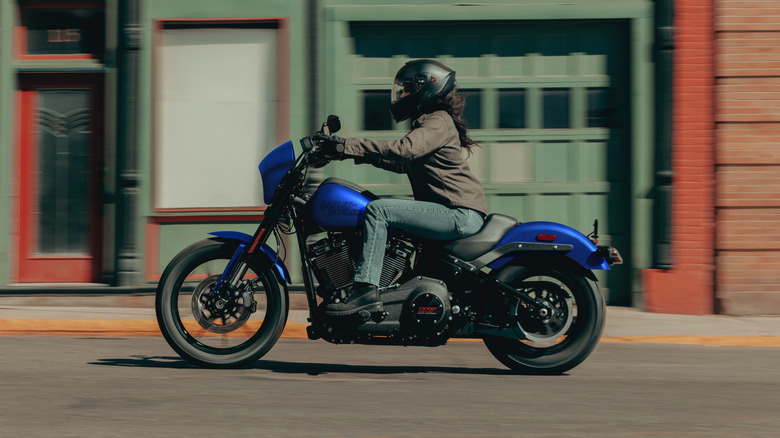
Once you've replaced aging or worn motorcycle tires, you'll need to break in your new ones before you can get back to riding as normal. Harley-Davidson advises that the breaking-in procedure should be observed for the first 100 miles after the tires are changed. Thankfully, this process doesn't involve making any major changes to the way you ride. Instead, it's more about being careful and cautious, and not accelerating too hard or cornering too fast.
In part, that's so you can adjust to the way the new tires feel on the bike. The conservative riding style also allows any coatings left on the tire from the manufacturing process to fully wear off. As it wears, your tire should slowly increase its ability to grip the road effectively. Harley also advises riding on a variety of roads during this period to ensure that all parts of the tire get broken in evenly. Perhaps use it as an excuse to try out the backroad loop you've had in mind for a while, but don't plan to take your motorcycle on any long road trips until the tires have been broken in.