

Can A Cold Air Intake Really Boost Your V8's Horsepower?
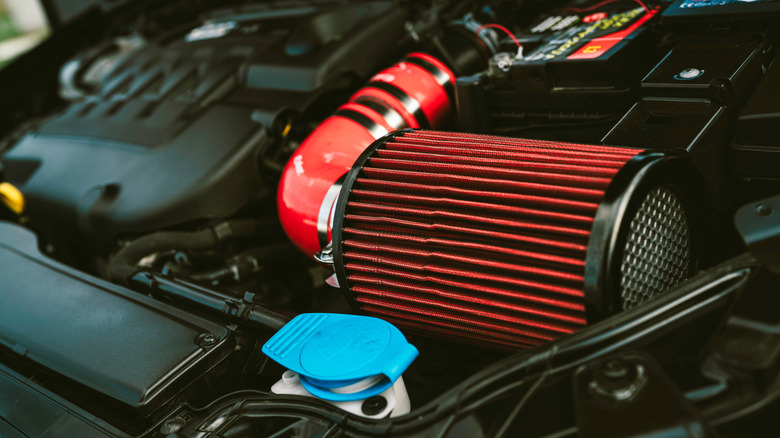
Driving a V8, an engine that already has its pros and cons, means getting a level of power and capability that just isn't available in vehicles with fewer cylinders. This means aftermarket modifications aren't necessary for many drivers who are happy with what they have. But for others, the decision to add an aftermarket mod like a cold air intake is an easy one, as it's all about getting even more out of their vehicle. But while this mod can technically boost your horsepower, it's a bit more nuanced than that.
A cold air intake (CAI) replaces the original air intake and works by pulling cooler air from outside the vehicle into the engine. In contrast, factory intakes draw in warmer air from within the engine bay, which is less dense and carries less oxygen. Because of their design, CAIs can indeed generate a performance boost by packing more combustible oxygen into the engine, but the increase is typically only around 5-15 horsepower. However, this increase largely depends on the vehicle and the CAI itself. If it's a cheap design, or if its air filter is low-quality, there may not be even that much of a bump in performance.
Engine design also plays a role, as it may not create the ideal environment for a CAI to work effectively. For example, smaller engines are designed with decreased airflow to begin with, and those lacking a modern intake system won't necessarily benefit from an aftermarket CAI. Plus, a "cold air" intake truly benefits from colder air. This means that warmer climates may not allow a CAI to deliver the type of additional horsepower drivers are hoping for.
Cold air intake issues and maintenance
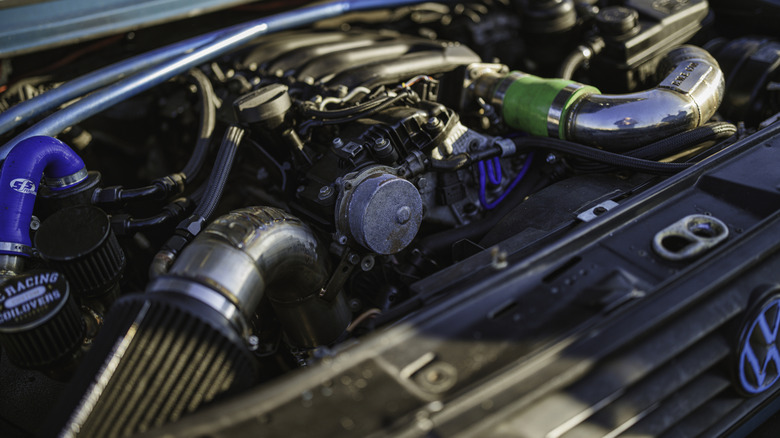
Though some drivers add a CAI to their V8 in hopes of increasing horsepower, this could also result in better fuel efficiency. This is possible because the vehicle's engine control unit (ECU) uses the cooler air when handling the fuel mixture to produce combustion that results in better gas mileage. But, much like the slight horsepower increase a CAI can provide, the difference in fuel economy can often go unnoticed. Other variables, like rough driving, can also easily erase any incremental gains in fuel efficiency from the use of a CAI.
Installing a CAI in your vehicle can indeed lead to performance boosts, especially, for example, if you drive a truck with a Cummins diesel engine. At the same time, you do need to be aware of your local regulations. For example, CAIs in California must have an exempt number from the California Air Resources Board (CARB). That's because all vehicles in the state must comply with CARB emissions standards, and the exempt number confirms that the CAI is safe to use. Without that verification, a CAI is considered illegal by the state, making the driver is subject to fines.
For drivers that have installed a CAI, there are still some steps to take that can better ensure proper performance. It begins with visually checking the system to confirm everything is tightly attached and not loose. You need to clean your air filter on a regular basis as well, to ensure that all-important airflow doesn't get restricted by dirt or debris. You'll also want to keep an eye on your dashboard, as a malfunctioning or improperly installed CAI can trigger your check engine light.