

Why GM Truck Owners Are Demanding Thicker Oil In Future V8 Engines
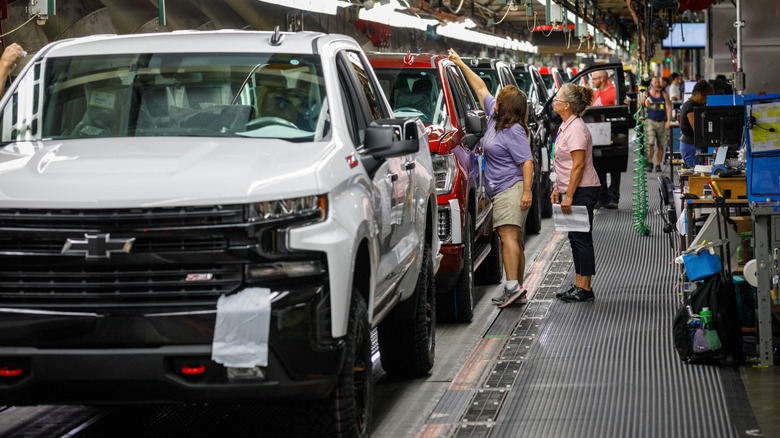
In 2025, Consumer Reports reported how General Motors (GM) issued a safety recall affecting nearly 600,000 full-size trucks and SUVs equipped with its 6.2-liter L87 V8 engine. The investigation into why GM recalled vehicles with the L87 centers on potential manufacturing defects with connecting rods and crankshafts that may contribute to complete engine damage or sudden engine failure. The recall covered various 2021 through 2024 models, including the Silverado 1500, the Sierra 1500, Chevrolet Tahoe, Chevrolet Suburban, GMC Yukon, and Cadillac Escalade.
Although GM initially specified 0W-20 oil for the engine, dealers were later instructed to switch to thicker 0W-40 formulations as part of the recall solution. Naturally, such a move has sparked a debate among owners who question whether ultra-low-viscosity oil was ever appropriate for the high-output, 420-horsepower V8. Many are left with questions about the effectiveness of the solution, especially since, according to AutoBlog, even engines replaced under the recall have experienced recurring problems.
This has resulted in more than 1,000 individual complaints, prompting the U.S. National Highway Traffic Safety Administration (NHTSA) to open a remedy investigation in January of 2026 to examine whether the recall actually addresses the real problem. Because of that, GM truck owners are now demanding thicker oil in future V8 engines. Here's how that came to be, if thin oil truly is the culprit here, and whether GM's L87 was doomed from the very beginning.
GM L87 V8 rod bearing and crankshaft problems
During an investigation of the L87 engine on its YouTube channel, technicians at Dave's Auto Center suggested the issue might involve microscopic machining and lubrication behavior in the engine's bottom end — the same mechanical region identified by plaintiffs in the class-action complaint filed against GM. To investigate the problem in detail, they stripped down two brand-new L87s. Their observations showed crankshaft journal surfaces that appeared "rigid or choppy" rather than well-polished, with one technician stating, "I'm looking for a mirror finish... and that looks not quite a mirror finish."
The team also highlighted large chamfers on the rod bearing surfaces, noting that "almost half the bearing is oil hole on that section," which may potentially contribute to oil film bleeding. They further suggested that material surface roughness could be to blame, stating that if "your RZ [mean roughness depth] is six times your RA [roughness average], you're starting to get out of control," meaning that small microscopic peaks and valleys might disrupt stable lubrication and cause problems.
According to Part 573 of the NHTSA's recall Safety Recall Report concerning the L87, engine teardown analysis suggested two potential causes. Specifically, the bearing damage could be linked to sediment in connecting rod and crankshaft oil galleries. Moreover, crank dimensions and surface finishing were found to be out of specification similar to what the technicians said. Although there are no official confirmations about what might be causing the problem, bearing failures are some of the most common problems with GM's L87 V8 engine.
Do thicker oils fix the problem?
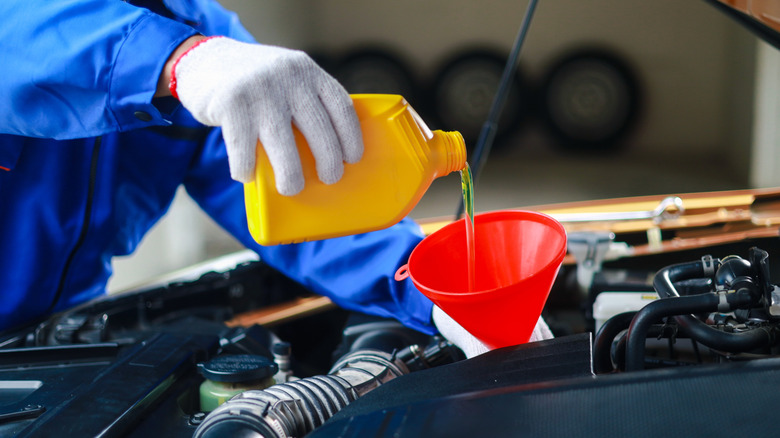
When GM Authority asked its readers what oil viscosity should be used in GM's future V8 engines, only 16% of people voted for 0W-20, meaning that the majority of readers were hoping to see thicker solutions. However, since these problems plagued engines that were recalled and equipped with thicker oils, it raises the question whether switching will actually lead to a meaningful benefit. This is also apparent in GM's official recall notice, where the remedy was not just switching to a thicker oil but also engine inspection and engine replacement.
A study published in Tribology Reviews analyzing bearing failure noted that lubrication is designed to separate surfaces and reduce wear. However, physical factors such as manufacturing defects are independent causes of bearing failure that lubrication alone cannot prevent. NHTSA's investigation, this study, and independent expert mechanics all mentioned manufacturing defects as potential culprits, and that is not something a thicker oil is expected to fully negate on its own.
Automakers these days use thinner oils to adhere to stricter emissions standards, but also because modern engines use better designs. Oil formulations have also improved over time. However, if the engine design isn't precise and efficient enough, switching to a thinner oil can do more harm than good. Since GM engines are still failing, and the U.S. government wants to know why, it seems like we will have to wait a bit and see how the story ultimately unfolds.