

How Do Harbor Freight's Tarps Stack Up To The Competition? This Test Found Out
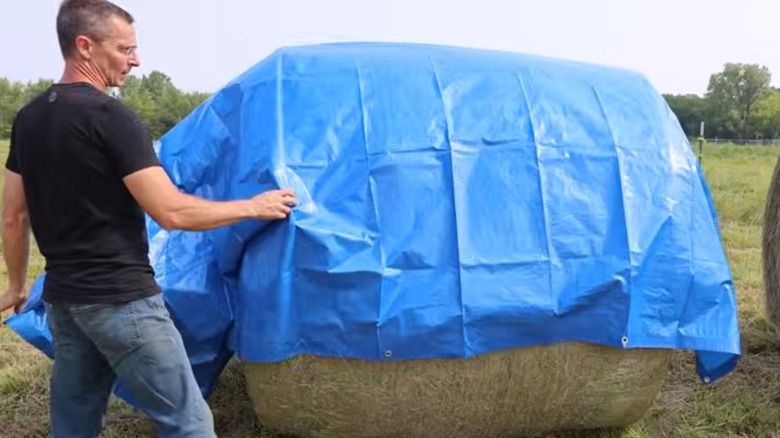
In addition to hand tools, power tools, and other equipment, Harbor Freight sells tarps with various duty ratings. Tarps are useful for many DIY tasks. They can act as a barrier against the elements, protecting equipment and supplies from rain, snow, wind, and ultraviolet light.
Tarps are one of those items you'll want to have if you're going off-grid for camping or to live long-term, but deciding which one offers the most value can be challenging. Options range from inexpensive tarps like Harbor Freight's $3.49 5.5-by-7.5-foot all-purpose weather-resistant HFT to waterproof canvas tarps that can cost nearly $100 for a similar size.
Project Farm, a popular YouTube channel with 3.78 million subscribers, embarked on a year-long test pitting 14 different 9-foot-by-11-foot tarps against the elements and themselves starting in July of 2024. Tarps from Harbor Freight, Vevor, Amazon Basics, Rugged Rhino, and Campmac are just a few of the entrants with prices ranging from $7.99 for the Harbor Freight light-duty blue tarp, to an $18 Harbor Freight Extreme, and a super heavy duty Campmac canvas tarp that's currently unavailable on Amazon but reportedly sold for around $50 when it was purchased for the test.
After performing strength and protection tests and assessing the damage from 12 months of exposure wrapped around hay bales outdoors, both Harbor Freight tarps stacked up well against the competition. The light-duty Harbor Freight tarp ranked higher in Project Farm's test than four higher-priced competitors, and the Harbor Freight Extreme placed mid-pack, ahead of at least one tarp that cost more than twice as much.
Harbor Freight's light-duty tarp
According to Project Farm's reported prices, five of the tested tarps are within $5 of the $8 Harbor Freight light-duty tarp. Listed in ranked order from low to high, these are: Vevor $12, Foremost Cut $13, Foremost Dry Top $9, Harbor Freight light-duty $8, Cartman $13, and Rugged Rhino $13. Harbor Freight kicks off the description of its all-purpose weather-resistant tarp with the words "Extra-tough waterproof tarp won't crack under freezing temperatures." To paraphrase Robert Duvall in the 1969 classic western "True Grit," that's pretty bold talk.
Project Farm weighed each of the tarps before strapping them to hay bales. The light-duty Harbor Freight tarp weighed 1,048 grams (2.3 pounds), which matches Harbor Freight's stated shipping weight. Harbor Freight specs show the all-purpose blue tarp is 4 mils thick and made of polyethylene, a widely used plastic found in many common household items. It's also the material used to make Yeti coolers.
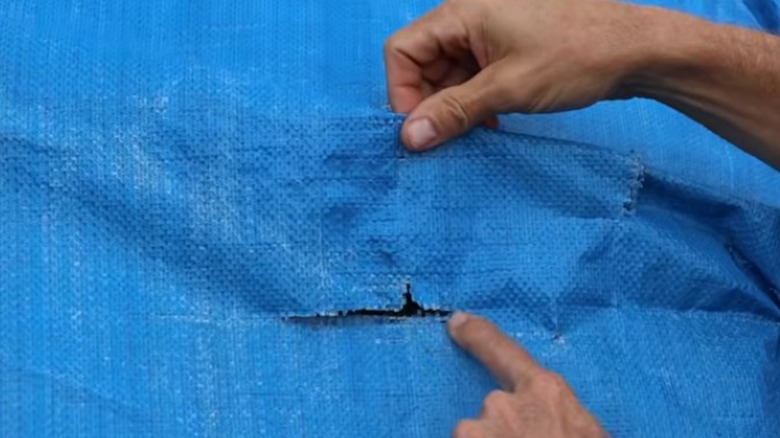
The light-duty Harbor Freight tarp started to show some signs of sun damage on the predominantly sunny south side of the hay bale after five months in the field. The north side, which received the brunt of the winds, held up well for the entire year, while the south side began to rip by the end of the trial. Still, tests performed on the year-old tarps after the trial show the inexpensive Harbor Freight tarp exceeding the performance of the $16 Grizzly tarp in all areas except waterproofness and puncture resistance, where they tied.
Harbor Freight's extreme-duty weather-resistant tarp
Project Farm paid $18 for the Harbor Freight extreme-duty weather-resistant tarp used in their test. While it ranked ahead of the more expensive Zuperia tarp ($45), it fell significantly behind others priced within $5, including Amazon Basics $23, King-A-Ma-Jigs $20, Rugged Rhino $13, and 2nd place overall, Campmac HD $22.
Harbor Freight no longer lists the $18 9x11-foot extreme-duty tarp for sale. The closest comparable tarp is a 10x12-foot silver and black extreme-duty weather-resistant tarp for $19.99. Like the light-duty version, the extreme-duty tarp is made from polyethylene, but it's three times thicker at 12 mils and has a listed shipping weight of 4.74 pounds.
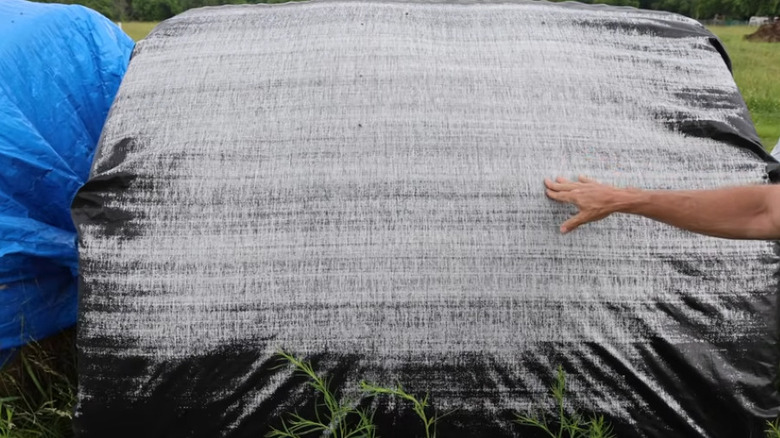
During the Project Farm test, the extreme-duty tarp started to show signs of sun damage after about four months in the field. At the end of the year, the host estimated it had suffered more sun damage than its cheaper light-duty storemate, but the shaded side still looked undamaged. The only cheaper tarp ranked higher was the Rugged Rhino. While both tarps had the highest subject wind durability scores, the Harbor Freight extreme-duty tarp had stronger eyelets and required more force to puncture and extend a tear when new. However, those same tests favored the Rugged Rhino after a year of UV exposure.