

This WWII Submarine Went Down With Toxic Cargo That's Still Dangerous Today
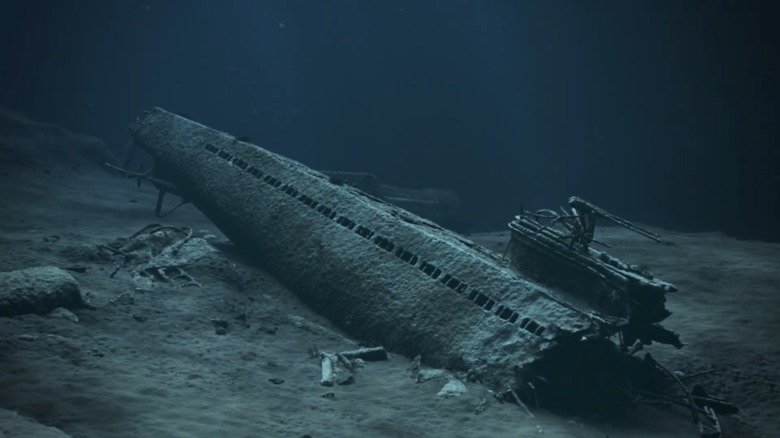
During World War II, the German Navy, also known as the Kriegsmarine, constructed and deployed 1,162 submarines to fight in the conflict. Most of these subs, which are referred to as U-boats, were used throughout the Battle of the Atlantic. This was the longest ongoing campaign of WWII, and for Germany, it was vital in striking Allied vessels carrying much-needed troops, supplies, and arms to Europe and Africa. Throughout the war, Germany lost 785 U-boats, while the remaining 377 were surrendered or scuttled.
While that's a huge loss for the Kriegsmarine, the U-boats sank around 3,000 Allied ships. When a U-boat was destroyed, in every engagement, it was either taken out by a surface ship or by another submarine on the surface. Only one in the history of naval warfare was sunk by another submarine when both were submerged: U-864. This occurred on February 9, 1945, when the British submarine, the HMS Venturer, engaged the enemy U-boat beneath the waves and delivered a fatal blow. This was long before the UK's Astute-class subs.
When a ship sinks, the first thought most people have concerns the people lost. While lives are important, another consideration is a wreck's environmental impact, and U-864 represents one of the deadliest. This isn't because of its store of diesel fuel, rather the 65 tons of metallic mercury it had onboard, which seeps into the surrounding water. This has created an environmental disaster that threatens all sea life in the area, as well as the people who could inadvertently consume seafood laden with deadly high levels of mercury.
The sinking of U-864
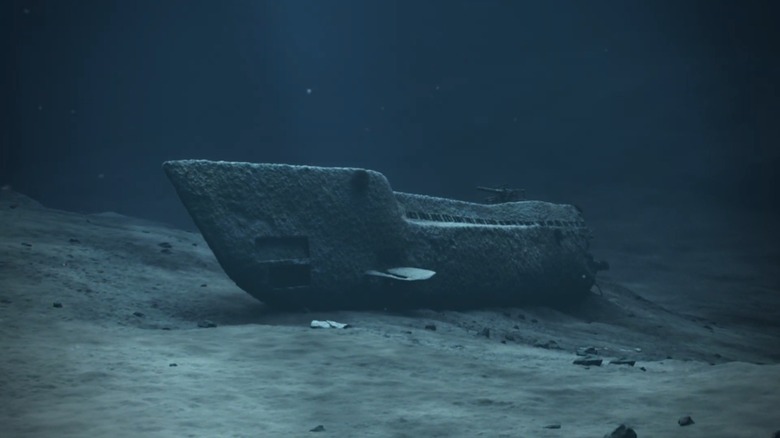
U-864 served for a brief amount of time after being commissioned on December 9, 1943. Korvettenkapitän (equivalent to a Lieutenant Commander in the U.S. Navy) Ralf-Reimar Wolfram commanded the submarine throughout its time in service, beginning on November 1, 1944, until its sinking. The boat was laden with as much metallic mercury as could be crammed inside its holds, which British intercepts of decrypted German naval communications revealed was meant for Imperial Japan during Operation Caesar.
The mercury, which was stored in large steel canisters, would have been used in the production of primers for Japanese explosives. Learning of the threat, Great Britain dispatched HMS Venturer, commanded by Lt. Jimmy S. Launders, from the Shetland Islands to intercept U-864. The sub was detected soon after 9:00 am on February 9, 1945, thanks to its engine trouble, which created a sizable sonic signature in the area. History then unfolded with the only successful submarine-on-submarine undersea combat ever recorded.
Over the course of three hours, the Venturer pursued its quarry, and in a desperate move, Lt. Launders ordered all of its four torpedoes launched at the same time. While this left the Venturer defenseless, it didn't matter, as U-864 failed to outrun the fourth torpedo, breaking it in half. The U-boat sank, taking all 73 men aboard down with it, marking a successful mission for the Venturer. It would be another 58 years before the wreck and its environmental impact were discovered off the coast of Fedje, Norway.
The environmental nightmare caused by the wreck
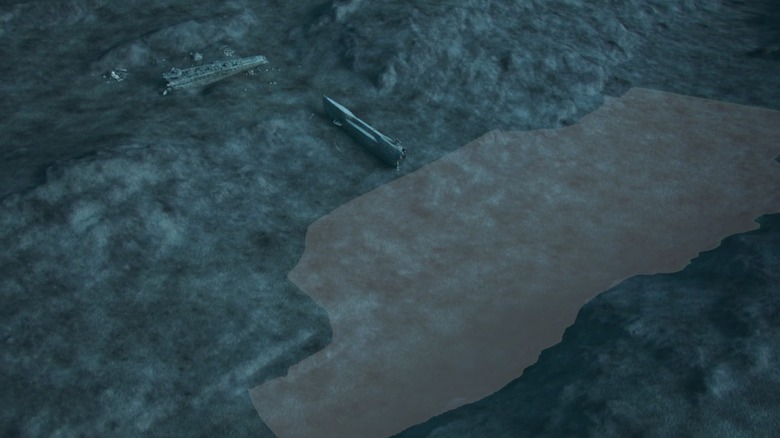
While the U-864 site isn't quite on the same level as the deepest shipwrecks of WWII, it took a long time to locate it where it lies, about 490 feet beneath the surface. The toxic cargo didn't immediately cause problems in the area, as many of the steel canisters remained intact. After more than half a century in the saltwater, those canisters are corroding. Norway initiated a no-fishing zone around the wreck site after it was learned that the vessel carried mercury, and tests of the surrounding water and silt indicated significantly higher levels than normal.
Raising the wreck was considered too dangerous, and exploring it was similarly too risky. It was decided that the safest option was to seal the wreck. After several considerations of options, it was decided to cover a 500-foot diameter area with 40 feet of material. Taking inspiration from the structure built to cover the destroyed nuclear reactor at Chernobyl, Norway opted to use several layers of sand, concrete, and nondescript rubble to cover everything dangerous and eliminate the mercury threat.
Only around 9 pounds of mercury leaks into the surrounding area every year, and just that small amount makes the surrounding water toxic. Capping U-864 was the only feasible way to manage the problem. Work on the covering began in 2018, costing an estimated $32 million. In 2024, the Norwegian government considered methods of retrieving what mercury it could safely remove while capping the rest. This effort should commence sometime in 2026.