

Federal Judge Says This Is Enough To Sue A Car Dealership For Fraud
As much as we wish it were otherwise, buying a car can be very stressful, and at times, a scam-ridden experience. And even more care needs to be taken when buying a used car from either dealers or private parties, where there's a greater likelihood of sellers hiding serious issues.
Fortunately, modern conveniences like Carfax reports have helped to take some of the risk and uncertainty away from purchasing a used vehicle, and can give buyers peace of mind about a car's history. But even with those tools at hand, there can still be risk involved — even when buying a used vehicle from a major, franchised dealership.
In January 2026, a federal judge allowed a lawsuit involving an Alabama Nissan dealership over an allegedly fraudulent sale of a used Nissan Altima to proceed. The lawsuit claims that the Altima had undisclosed issues with dual titles and uncertain mileage readings. The trial has yet to begin at the time of writing, and thus no verdict has been reached, but the situation nonetheless represents the ever-present problem of odometer and title fraud in America, even if the issues aren't always the result of intended malfeasance on the seller's part.
One car, two titles
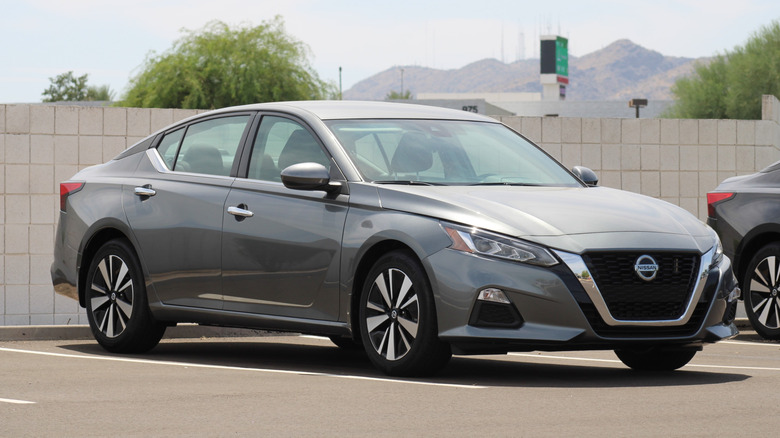
This particular situation began in 2021, when a man named Zachary Hopkins purchased a used 2019 Nissan Altima from Serra Nissan in Birmingham, Alabama. While the car's odometer and disclosure forms read 55,424 miles at the time of sale, the car had actually had two different titles issued for it. One was from Indiana, and the other from Alabama.
This usually isn't an issue, as cars often get new paperwork issued when they are moved to a new state. The problem was that both titles were issued at the same time, with the Indiana title showing that the actual mileage reading could not be verified. This meant that the car had a branded title in that state, due to concerns about mileage tampering.
According to Hopkins' court filing, he was only made aware of the branded title issue in 2022, when he went to trade the car. Both Serra Nissan and another Serra-owned dealership refused to take the car in trade because of the branded title issue. This isn't surprising, given how much a branded title diminishes a car's value, causing most reputable dealerships to steer clear of them. The problem is how and why Serra Nissan sold him a car with a major title issue in the first place.
Was the dealer in the wrong?
A title issue is obviously one of the major red flags to look for on a Carfax report, but the court ruling notes that Zachary Hopkins was allegedly only given the first page of the report to sign when he bought the Altima. This page did not disclose the dual titles or mileage issue, nor was he made aware of either problem otherwise. And even in a situation in which the dealer fully discloses the branded title, in the age of Carfax and other vehicle history reports, it's typically unusual for a major retail car dealer to have vehicles with major title issues on their lots.
It should be pointed out that mileage discrepancies on titles aren't always an example of fraud, and can be caused by paperwork errors during the titling process. Even then, such uncertainty still greatly diminishes a car's value.
While we don't know every detail of the case, including what Hopkins is asking for in damages or what the dealer's defense will be, it seems that the dealer would be better off settling here, especially given that it wouldn't even take its own used car back in trade because of the severity of the title issue. The trial is set to begin in April 2026, and, no matter the outcome, we can reasonably predict that this customer will probably not be purchasing another car from Serra Nissan again.