

The US Navy's New Flight Helmet Does A Lot More Than Protect Pilots
For decades, US Navy pilots have worn either the HGU-55P or HGU-68P helmets. Developed by Gentex Corp., the HGU-55P was first introduced in the 1980s, with the HGU-68P following in the 1990s. Since then, not much has changed.
However, in January, the US Navy signed a $22.6 million contract for 5,000 Next-Generation Fixed Wing Helmets (NGFWH). Again, it's Gentex that will be providing the hardware, and the company has used extensive feedback from military pilots to refine the design. The result is the PURSUIT helmet system, and under the contract, the helmet will support all Navy fixed-wing aircraft.
Of course, any helmet needs to protect a pilot's head as a prerequisite, and the NGFWH does that. But this isn't just a passive safety device that merely adds a layer of protection; it's an advanced modular platform that's designed to support the next generation of digital cockpit technology.
From a comfort perspective, the NGFWH has been engineered with a lighter carbon-fiber shell and an optimized center of gravity. This is important for reducing the back problems that are often reported by naval aviators.
While this is impressive so far, it's when we get into the technology of the system that things really start to get interesting. The design of the helmet aims to improve overall aircrew health, while increasing their combat effectiveness.
Let's take a closer look at the helmet system set to adorn the heads of Navy pilots for years to come.
NGFWH -- Keeping Navy aviators ahead of the game
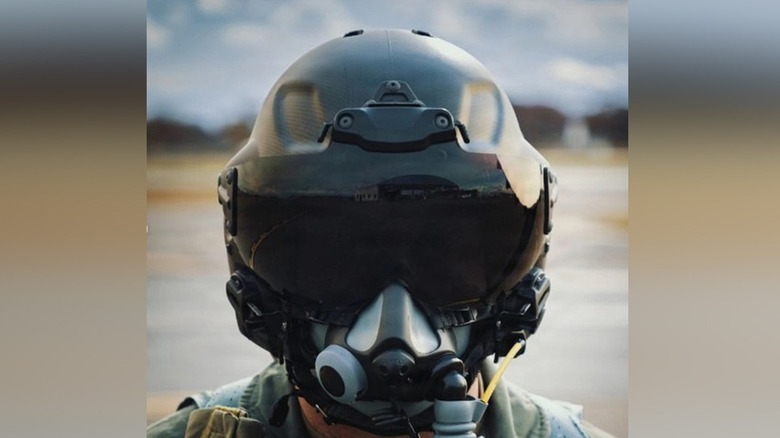
The Navy's NGFWH PURSUIT helmet was selected by the Naval Aircrew Systems program office (PMA-202). The helmet is designed to support all Navy fixed-wing aircraft under an "Indefinite Delivery/Indefinite Quantity" contract that covers more than 5,000 helmets along with any required spare parts.
Working alongside Gentex on the project were a team of partners, including the US Navy & Air Force, helmet-mounted display manufacturers, and various overseas partners.
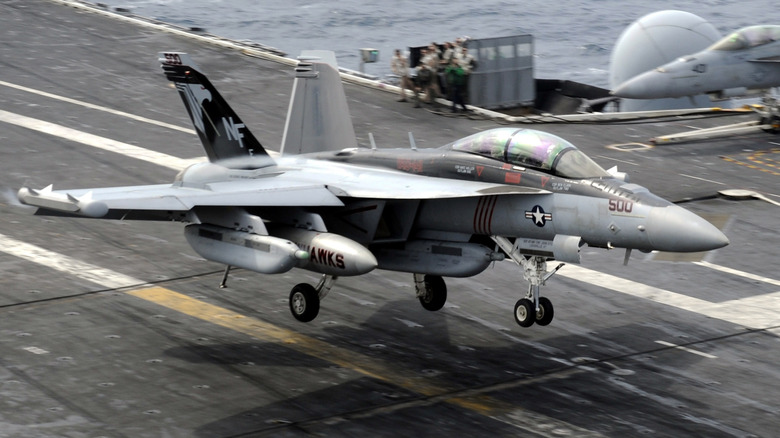
Ultimately, the PURSUIT system will be rolled out across all naval fixed-wing aircraft, including the F/A-18 Super Hornet, the EA-18G Growler, the E-2D Advanced Hawkeye, the outgoing T-45 Goshawk trainer, and whichever aircraft is ultimately chosen as the Navy's new jet trainer.
Unlike earlier systems that remained largely unchanged for decades, the NGFWH is designed to be a modular system. Navy officials say it allows for the integration of modernized head-up displays, night-vision systems, and enhanced communication systems without the requirement for an entirely new helmet to be designed every few years. In other words, this is a helmet that is designed to evolve with the changing requirements of combat zones and the military hardware that defines them.
According to Robert McCay, vice president of Gentex aircrew systems, "The PURSUIT system delivers meaningful advancements in aircrew safety, comfort, and mission performance, ensuring Naval Aviators and Naval Flight Officers are equipped with technology that keeps pace with the rapidly evolving demands of modern aviation."
Why this matters for naval aviation
You don't need to be a brain surgeon to realize that a primary function of a pilot's helmet is to protect their head. However, in pilot welfare terms, the PURSUIT system is designed to do more than this. It's engineered to reduce the physical and operational demands faced by aircrews. Years of wearing heavier, less balanced helmets have contributed to long-term neck and back strain among pilots — an issue the Navy has acknowledged for decades.
This was a point addressed by Captain Joseph Kamara, the Naval Aircrew Systems program manager. He said, "By utilizing a lighter, more balanced carbon-fiber shell, we are significantly reducing the long-term physical toll on our aviators."
This is why shifting to a lighter carbon-fiber shell with an optimized center of gravity matters. It's hoped that such engineering will reduce the cumulative physical toll faced by aviators, while maintaining stability in demanding flight conditions. This is especially important when aircrew are subjected to high-G maneuvers; even in such demanding circumstances, the helmet's internal liner is designed to keep it securely in place.
Although it's a seemingly obvious point, a secure fit ensures that integrated display systems remain properly aligned. This is more than just a comfort issue or a factor with the inconvenience of a shaky monitor and nothing more — in high-stress environments, even small shifts in helmet positioning could interfere with visibility or data presentation.
In short, just like the unique F-35 fighter pilot helmet, the Navy's new helmet does far more than just protect heads.