

China's Biggest Carmaker Has Its Hands In Way More Than Just Automobiles
BYD, which stands for "Build Your Dreams," is the largest automobile manufacturer in China. As of 2025, it's also the largest EV manufacturer in the world, trumping Tesla in EV sales, with 2.26 million produced compared to Tesla's 1.63 million. And the brand Elon Musk once laughed at has its hands in many more pies than just the EV space, too.
The company was founded in 1995 with 20 employees as a manufacturer of nickel-cadmium batteries. As of January 2025, that number has apparently grown to nearly 1 million employees, with 11 research institutes and about 110,000 engineers. In addition to its automotive operations, the company is also a major player in electronics, new energy, and rail transit.
BYD has a huge presence in the electronics field, with its BYD Electronic (International) Co., Ltd. having been listed on the Hong Kong Stock Exchange in 2007. It provides a range of services to companies like Xiaomi, Lenovo, Huawei, iRobot and others, including materials development, design services, precision manufacturing, testing and certification, and supply chain management. It also produces conventional laptops, smartphones, and tablet PCs, as well as intelligent products like gaming hardware, drones, AI servers, household energy storage systems, 3D printers, medical devices, and robots.
The company claims to be the only source of product design and manufacturing services that can also provide structural parts made of plastic, ceramics, glass, or metal. BYD even offers its customers one-stop shopping, acting as a contract manufacturer that offers turnkey solutions.
What other areas does BYD have its hands in?
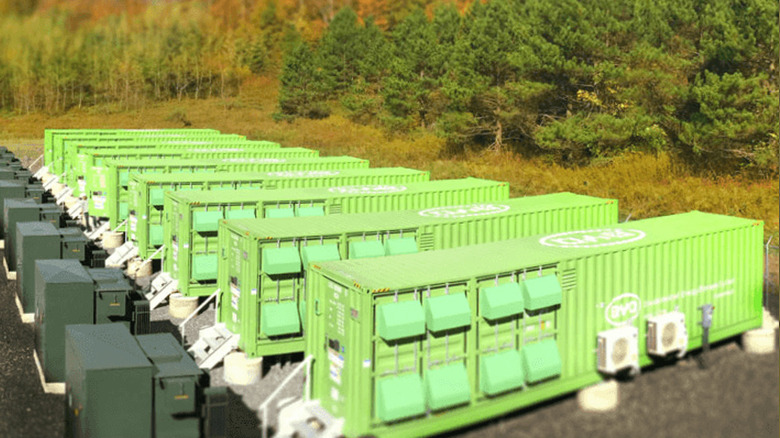
BYD has been a trailblazer in the new energy arena, with 13 years of experience in providing energy storage systems and a 24 years of experience in making batteries. BYD Energy boasts 14,000 authorized energy-related patents and the world's largest battery factory producing iron-phosphate cells, which displayed a superior balance of cost and longevity compared to Tesla's. BYD covers the entire range of energy production, storage, and usage options, from solar power generation facilities to storage solutions to electric forklifts that can use the generated power to do work. BYD sees its energy technology as spanning the entire cycle, creating what it calls a "zero-emissions Energy Ecosystem."
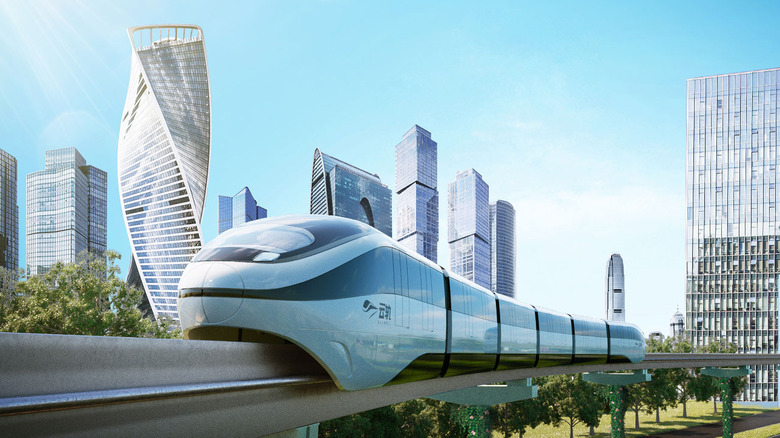
Rail transit is another of the company's areas of focus. BYD has accumulated complete control of its own intellectual property related to rail transit. This permits the company to provide everything needed in a transit system from start to finish, including the overall design, the track, the railcars, the intelligent operating system, system communications, extending even to the maintenance of the overall system.
After investing the equivalent of more than $723 million and the services of over 1,000 engineers for a period of five years, BYD created its SkyRail system to combat congestion in urban centers. SkyRail is an electric-powered monorail system that uses pre-fabricated track, typically built either on median strips of roads or above ground. This greatly reduces the cost and construction time required, compared to a traditional subway. SkyRail can move 10,000 to 30,000 people per hour.