

5 Of The Worst Places To Store Your Power Tools (And Why)
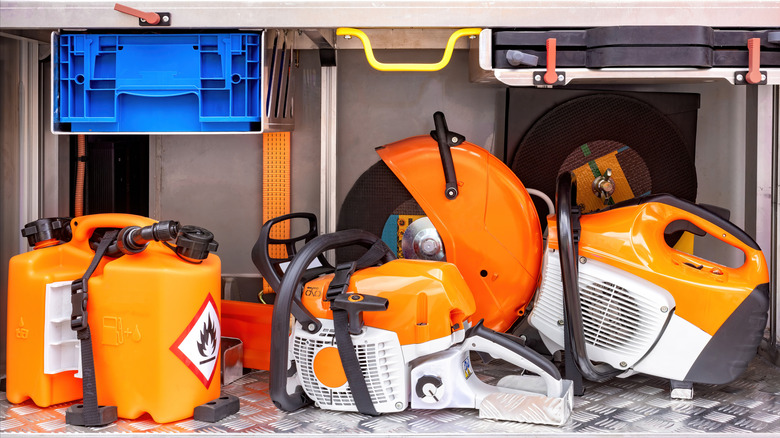
Power tools vary widely in size and function, but they all have one thing in common: When storing them, just as with using them, safety and responsibility are key. It's typical to leave tools in a vehicle, basement, or garage. You may think these locations protect tools from thieves and the elements, but these common areas carry risks.
Power tools are usually equipped with Li-ion batteries. This dictates storage, because, despite being common, these batteries are particularly volatile. Ideally, you should store your tools in areas with stable temperatures with limited risk of leaks and break-ins. Let's take a look at some of the worst places you can keep your tools and what you can do to protect your property if you don't have access to alternative options for safer storage.
In the back of your vehicle
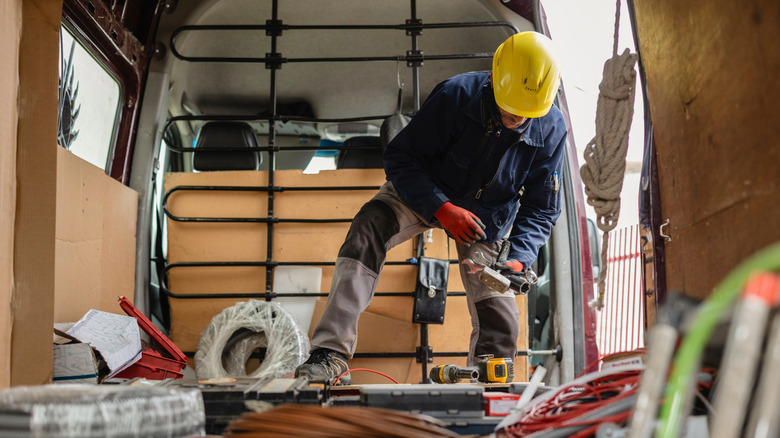
Power tools can be very costly; for example, DeWalt's priciest models aren't cheap. Thieves know this, and they're on the hunt for work trucks and vans. In February 2025, British builder Stephen Baker recounted a serious theft to the BBC. "It took them 22 seconds to get into the van, four-and-a-half minutes to empty it," said Baker, who lost £15,000 worth of tools (approximately $11,000).
This is why measures such as installing slamlocks (which instantly lock the doors as you close them to prevent quick thefts between jobs) and not keeping your tools in the back while parked up for the night, which could be a stressful insurance claim or a devastating financial hit.
Even without the theft risk, there are good reasons to avoid storing power tools in your vehicle. Depending on where you live and the time of year, there's a considerable danger of exposing your tools to unstable temperatures. Items with Li-Ion batteries typically warn users not to let them overheat. So, if you store tool batteries in a hot car, you risk seriously impacting their capacity or even causing them to catch fire through thermal runaway. It's best to adhere to the manufacturer's instructions and maintain recommended temperature levels. The batteries themselves can be stored indoors to lessen that risk.
Garages
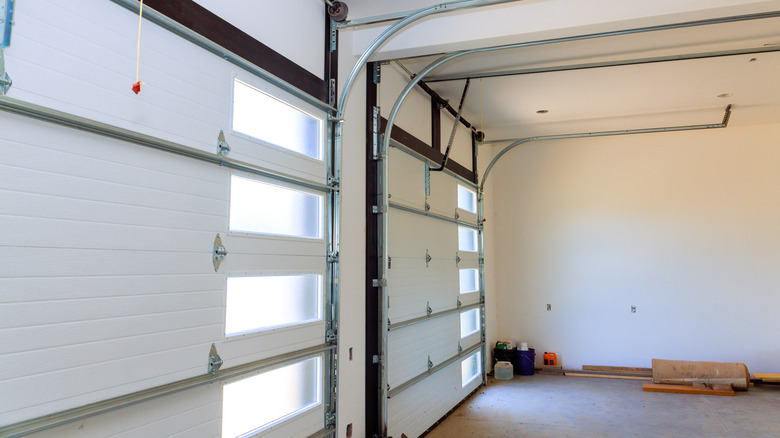
If you're an experienced DIY enthusiast, you may well have a climate-controlled, well-ventilated garage that's just perfect for storing tools. If you don't, keeping them in the garage or a shed could be problematic in the long run.
Though typically sheltered from the sun and rain, a garage that isn't weatherproofed can damage your power tools and their batteries. With many tools, especially those used outdoors, rust is a natural and almost inevitable enemy. It can be difficult and time-consuming to remove it, and so it's always best to ensure that your tools are as protected as possible.
After all, even if dampness isn't a concern, garages and sheds can get extremely cold, and this can negatively affect your device's battery as well. As noted, though, this might be your only storage option for your tools, and it's still workable if that's the case. Simply removing the batteries and keeping them in the house during the coldest times can be a huge help in regulating their temperature and maintaining their performance. To limit rust, place your tools in an elevated position, such as hooks or pegboards.
Basements
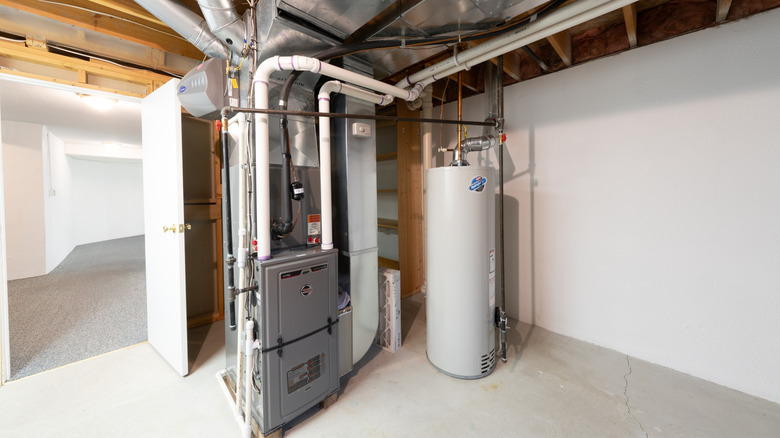
Basements are often neglected quarters of our homes. Much like garages and sheds, they become dumping grounds for all sorts, including power tools. However, basements present the same risks, namely flooding, which will likely wreck any power tools.
If your basement is the only option, don't leave anything on the floor, as this is the coldest and wettest area. This applies to everything from power tools to car tires: higher is better, as long as you can retrieve the items safely. Keeping your power tools well packed while they're in the basement, and stored off the ground (again on a pegboard as appropriate), gives the best chance of keeping them dry. Rust may occur — so keep an eye out.
Attics
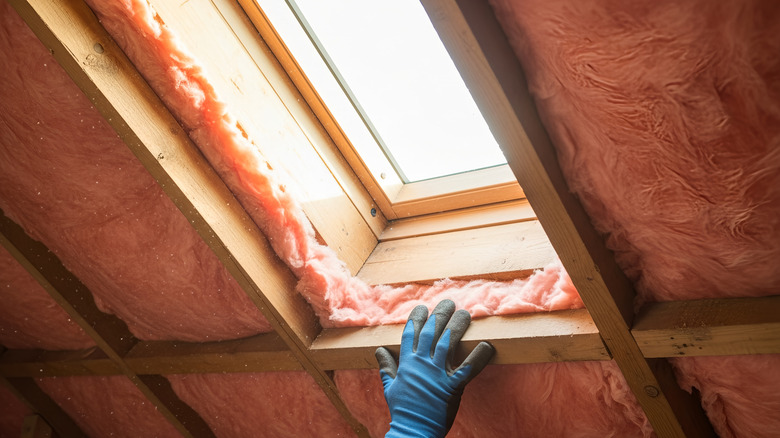
A sizeable attic may seem like a good storage space. However, like basements, conditions in this part of a home can be unpredictable. Heat rises, and if you live in a warm climate, your attic might bust the thermometer.
Just as there's a danger of power tools overheating if they're worked too hard (drills are especially susceptible), simply being stored in extremely hot environments can have the same effect. Components may even melt, and the battery's life can take a significant hit. Battery firm EBL estimates that storing a battery at 40°C (104°F) for a year can reduce capacity by 35%.
If your attic is the only option, improved ventilation is the practical first step. If you have a robust, sealed attic, you could even consider air conditioning. Only consider AC if the space is well insulated, though; cooling a drafty space wastes energy.
Construction sites

During construction projects, it's convenient to keep tools on-site and ready for when workers arrive. A big construction site requires many tools, and they must be stored and managed responsibly, as safety is paramount in these dangerous working environments.
So, where is best on a construction site? As we've seen, work vans and vehicles are among the most common targets of theft. Industry publications widely cite Insurer Allianz Cornhill's survey, which concluded that theft costs the industry in Britain £800,000,000 (approximately $1.1 billion) annually. Power tools and other portable items are common targets because they are easier to conceal and involve less risk than stealing heavy machinery.
Construction firms have taken numerous measures to tackle this, including cameras, alarms, locking boxes, crates, and tool cribs. Combined, these safeguards deter thieves and protect tools from wear and tear.