

This City's Red Street Lights Are Helping Cure A Problem Most Urban Centers Have
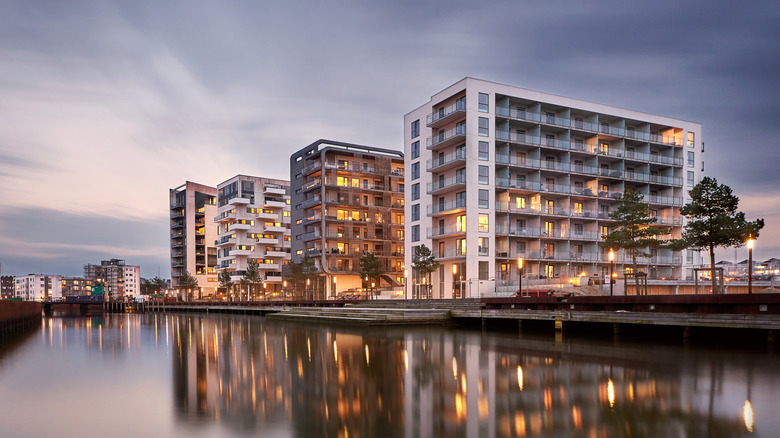
City planning usually prioritizes the needs of the humans living there rather than the resident plants and animals, but some cities are trying to buck the trend. While various grand, futuristic concepts are shaping today's global smart cities, sometimes smaller, simpler changes can make a difference too. The Danish city of Odense recently installed street lights that glow orange-red at night instead of white, with the aim of minimizing the impact on local wildlife. According to DR, the lights have been installed on a bicycle and walking path near the Lindved Å river, and stretch for 1.3 km, or about 0.8 miles.
The reddish glow creates less light pollution, which helps local wildlife maintain normal day-night cycles. The path along the river is reportedly home to various birds and insects, including kingfishers, butterflies, and frogs, all of which can be impacted by traditional white street lights. Odense's installation is just one of several projects around Denmark that aim to replace older lighting with wildlife-friendly alternatives, with Næstved and the Norddjurs municipality also planning similar projects.
Residents living near the newly illuminated path in Odense haven't been entirely positive about the changes, with one calling the lighting "creepy." However, many others have appreciated the changes, with one resident telling DR that they liked being able to see wildlife while cycling home.
Other cities could learn from the Danish projects
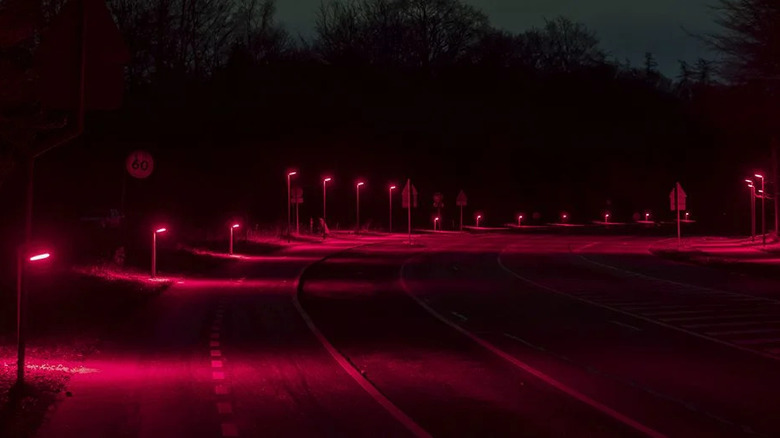
The latest projects were commissioned after a successful trial installation of lights in the Danish municipality of Gladsaxe in 2022. This initial lighting project was designed by Light Bureau, and saw red glowing street lights installed along a stretch of road to reduce the disruption caused to bats living nearby. While these recent projects have all been carried out in Denmark, there is plenty of potential for other major cities around the world to benefit from similar schemes.
According to Guinness World Records, Saint Petersburg in Russia takes the unfortunate title of having the most light pollution of any city in the world. However, two North American cities, Calgary and Edmonton in Canada, also feature in the top ten. As well as having a negative effect on wildlife, studies have shown that excessive light pollution can also have a negative impact on human health. It can disrupt the body's natural circadian rhythm, which has been linked to various diseases and disorders including cardiovascular disease, depression, and even certain types of cancer.
Rather than spending public money installing hidden cameras in street lights to perform covert surveillance, authorities could be attempting to cut down light pollution in cities to minimize the harmful effects on both humans and the plants and animals around us. While Danish authorities plan to install more low-impact red street lights in the future, cities in other parts of the world haven't yet caught on to their benefits.
Instead, some have been busy installing street lights that glow purple, which can actually be more dangerous than white lights by making it harder for drivers to spot hazards on the road.