

Lockheed Martin Unveils Undersea Drone That Latches Onto Any Vessel
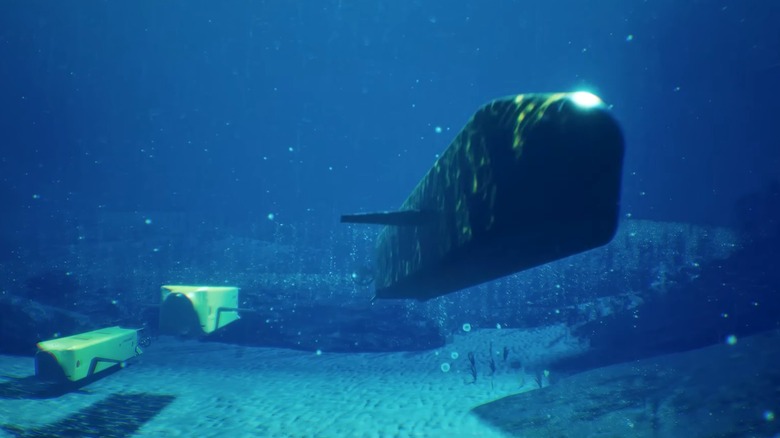
The 21st century has seen a shift in warfare, specifically toward drone dominance. Since the United States began arming itself with the likes of the propeller-driven MQ-1 Predator and high-speed MQ-9 Reaper drones, militaries around the world have followed suit. It used to be that a drone was defined as something that flew, but these days they crawl, walk, fly, and swim, with new and highly capable drones emerging all the time.
In February 2026, Lockheed Martin revealed its newest drone, called the Lamprey multi-mission autonomous undersea vehicle (MMAUV), and it's unlike anything that came before. Much like its namesake, which latches onto various marine organisms, Lockheed Martin's underwater Lamprey does the same, attaching itself to other vessels for transportation, and is packed with capabilities that make it particularly dangerous to any hostile nation.
The Lamprey combines numerous mission capabilities into a single package, and its ability to loiter on the seafloor makes it far more dangerous than something like a low-tech marine mine. It can disrupt enemy sensors, fire its own short-range missiles or uncrewed aerial vehicles, and it can collect intelligence in ways no other marine drone could do previously. From everything Lockheed has revealed about the Lamprey, it looks to be a completely new class of vehicle that has the potential to change naval warfare forever.
Everything we know about the Lamprey MMUAV
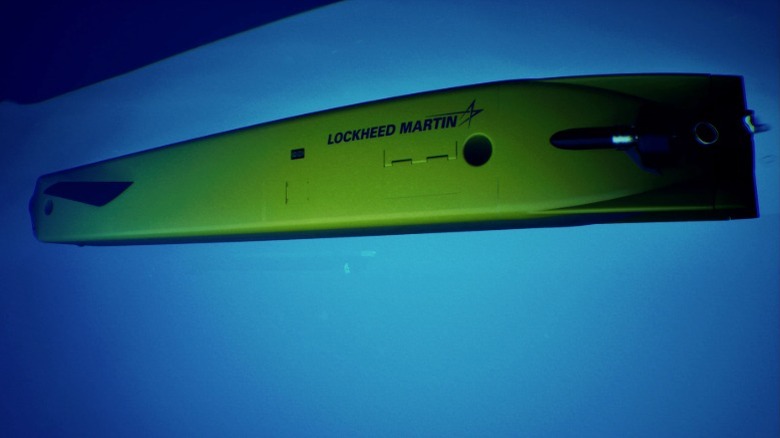
Lockheed seems to have thought of everything with the development of the Lamprey. It's a battery-powered drone with 24 cubic feet of internal payload space. It includes a built-in hydrogenator, which can charge its batteries while en route. This comes into play when it uses its integrated docking anchors to latch onto the hull of a surface ship or submarine while it's submerged. While attached, it can recharge without expending more energy as its hydrodynamic shape offers little resistance to its host vehicle.
They operate with full mission autonomy and can rest on the seafloor until a hostile ship is detected. It then becomes active and can engage in a variety of ways. By deploying decoys, a Lamprey can confuse the sensors of hostile surface and subsurface vessels. It can also surface and dispatch small aerial drones from two launch tubes. These can provide surveillance of the surrounding area or carry out precision strikes. The internal payload can also accommodate unspecified torpedoes, and its integrated communications array can coordinate with strike aircraft and other systems.
Lockheed's press release suggests that the Lamprey can perform a wide range of missions. These include "delivering undersea and air kinetic and non-kinetic effects; performing intelligence, surveillance, reconnaissance, targeting, and multi-intelligence collection; and deploying equipment to the seafloor." While it's unclear how long a Lamprey can remain autonomous, its design suggests it will be able to stay in a target area for a significant period of time, making it a potential game-changer in naval warfare operations. Lockheed's new marine drone is not the only advancement in underwater drones, however, as China unveiled its own underwater stealth drone in late 2025.