

Don't Fall For A Scam: Always Look Closely For This When Buying A New Car
Buying a new car in the U.S. is something that many will agree is a lot more stressful and way more complicated than it should be. While some newer car companies like Tesla have avoided a lot of this with their direct sales model, the majority of new car buyers still need to work through the opaque and at times incredibly frustrating dealer system when buying a new vehicle.
Whether it's added dealer markup, hidden fees, or incentives and discounts that may or may not apply, there can often be a huge difference in the manufacturer's suggested retail price (MSRP) and what the dealer is asking for. There's often even more of a difference between the final, agreed-upon selling price on the paperwork you sign before getting the keys.
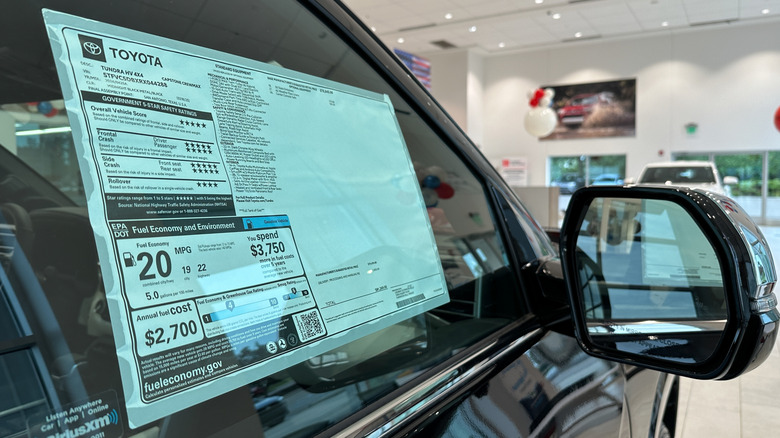
Whether you are shopping for a new car online or physically at a dealer's lot, there's one thing that each new vehicle has — as required by law — that you'll want to look for before you begin any price negotiation or even think about signing on the dotted line. It's sometimes called the Monroney label by those in the industry, but it's better known as the window sticker. And it's a lot more than just a price tag. The label itself will not protect you from dishonest dealers when buying a new vehicle, but it's an important tool. Familiarizing yourself with a car's window sticker is one of the first steps to avoiding some of the many scams or other dubious tactics that some car dealers have been known to try.
A car's window sticker is more than just a price tag
There are lots of different things that new and first-time buyers can get wrong while vehicle-shopping. Simply knowing a given car's specific options and exact retail price should always be one of the biggest starting points before beginning the purchase process, and that's exactly what that window sticker is supposed to do.
The Monroney label, or Moroney sticker as it's sometimes called, gets its name from Senator Mike Monroney, who sponsored The Automobile Information Disclosure Act of 1958. This law legally requires all new cars under a certain weight for sale in the United States to have a decal or label displayed on the side window with pertinent information about the car. In the modern era, along with physical printed window stickers, many online dealer listings will also include a digital version of this Monroney label.
The window sticker will have all of the important information about a vehicle, including its VIN, trim level, engine size, standard equipment, and most importantly, its base price. Then it shows factory options, packages, and their prices, all of which is used to total the manufacturer's suggested retail price (MSRP), including any destination fees. In the decades since they were introduced, Monroney stickers have also grown to include things like EPA fuel economy numbers, safety scores, warranty information, and the location(s) of where the car and its parts were made.
Window stickers provide critical transparency for buyers
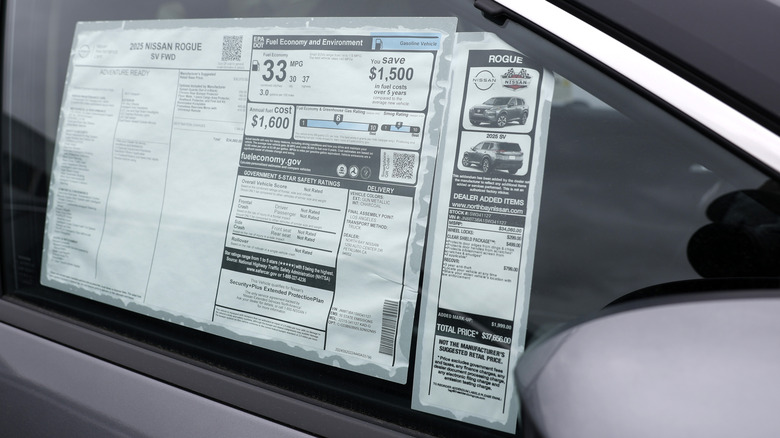
If for any reason a dealer has a "new" car without a Monroney sticker to show you, we'd suggest you steer clear. In such a case, the dealer isn't just being sketchy — they are breaking a federal law. However, just because a new car is legally required to have a window sticker displaying its MSRP does not mean the dealer has to sell the car at that price. The number on the sticker is still just a suggestion; independently-owned, franchised car dealerships are free to raise or lower these prices as they desire.
In fact, there's often even more transparency if you know what you're looking at. At many dealerships, it's not uncommon to see a second, smaller label next to the factory Monroney sticker that shows things like added accessories, dealer markup, and the new adjusted asking price for the car. But at the very least, this makes it easy to see exactly how much the dealer is trying to pad on to the original MSRP.
Window stickers can also be a valuable tool when it comes to used car shopping. Monroney labels aren't legally required on used cars, but they can often be found by VIN lookup from the manufacturers themselves or from third-party services. This can be helpful in knowing exactly which options a given car has, and also how much you are saving versus its original MSRP. Ultimately, the existence of the Monroney label hasn't stopped some car dealers from using deceptive practices, but factory window stickers remain a vital tool for car shoppers.