

Where Do Pilots Sleep On Long-Haul Flights?
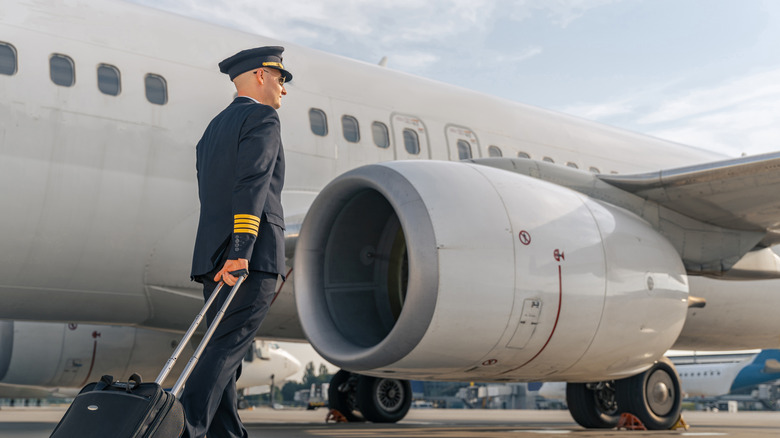
If you're preparing for a long-haul flight, you're probably packing the necessities: Noise-canceling headphones, a neck pillow, a light-blocking eye mask, and even a blanket or comfortable sweater — everything you need so you can get a bit of rest. But what about the pilots and crew? Do they get a chance to rest and if so, are they more comfortable than you?
The short answer is yes. All major airlines have strict rules that govern how long pilots are allowed to fly before a mandatory rest period. These regulations are the result of hard-won knowledge. Many aviation accidents have been linked to pilot fatigue, including a 1999 American Airlines flight that slid off the runway during landing, killing 11 people. Rules now include restrictions on both the number of hours and consecutive days pilots can work, making for a safer environment for everyone on board. As a result, long-haul flights always include at least two pilots and often more.
While passengers are reclining their seats back a few inches to grab some shut eye, the widebody airplanes used for long-haul flights typically have a hidden space for pilots to get their mandated sleep. These crew rest compartments are in different locations depending on the type of plane, but in newer ones they're often located above the main cabin. In older planes, they may be in the cargo hold or in a crew-only section of the main cabin. But no matter where the compartments are, it's guaranteed to be more comfortable than your typical airline seat.
A commercial airliner's crew cabins prioritize comfort
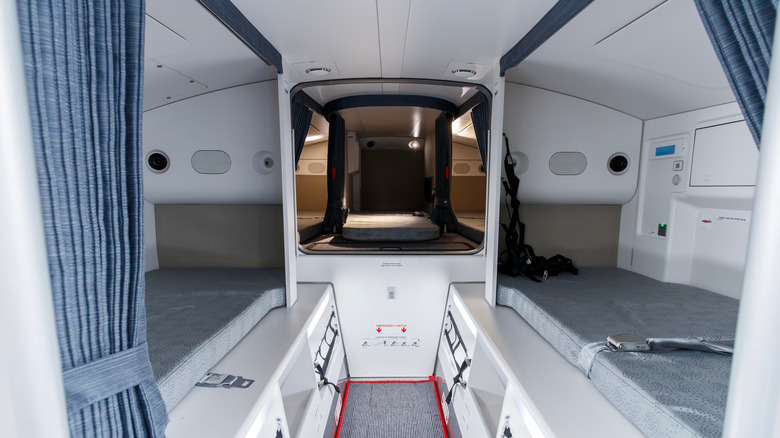
Considering that they're responsible for transporting hundreds of passengers safely across thousands of miles, it's only fair that pilots get the best seat in the house when it's time for a nap. The configuration of the crew compartments varies depending on the airline, but FAA regulations ensure that these rest areas are soundproofed or not in parts of the plane that are too noisy for pilots to sleep. To keep pilots comfortable, there are even regulations on vibrations, and the crew must be able to adjust both the lighting and the temperature within the space. The bunks must be at least 78 inches by 30 inches, and these cabins are also required to have an area that allows the crew to change clothes.
These small rest areas for pilots don't have windows, but they're equipped with all the requisite safety gear like oxygen masks and seat belt lights. There's also an intercom or phone to allow resting pilots to communicate with the cockpit or other crew members. Some of these rest areas even come with the same in-flight entertainment options provided to passengers.
These small cabins aren't the only hidden areas on a plane — some airliners also boast larger areas for crew, like the Airbus A380, which has a hidden area with 12 bunk beds for the flight crew located underneath the main cabin. Each bunk has a curtain for privacy, allowing crew to take breaks during long flights. These areas are always off-limits to passengers, joining spaces like the cargo hold underneath the passenger deck, which is typically pressurized and sometimes ferries dogs or other animals.