

These 3 Popular Items Were Once Banned By TSA, But Not Anymore
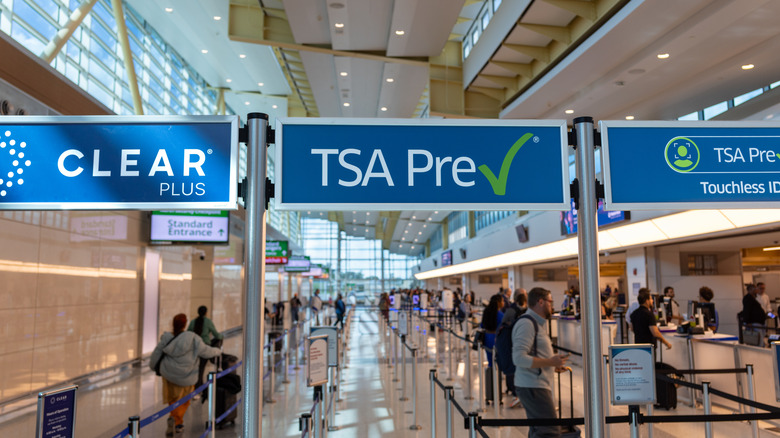
When the Transport Security Agency (TSA) was established on November 19, 2001, its mission was to make flying in the US safer in the aftermath of 9/11.
The agency was tasked with performing 100% checked baggage screening, increasing the role of the Federal Air Marshal Service, and overseeing the introduction of reinforced cockpit doors. However, it's easy to forget just how important a job this is when a TSA agent takes your favorite gadget or tool before you board a flight.
The good news is that many of the rules that governed what could and could not be taken onto a plane have been relaxed. This is not because it's suddenly safe to take these items on board, but because of advancements in imaging scanners, improved explosive detection systems, and far more detailed training for screeners.
This doesn't mean that security has been relaxed. In some cases, if bans weren't lifted entirely, they were refined. Size limits were introduced, battery capacity thresholds were defined, and distinctions were made between items that merely looked intimidating on a scanner and those that posed a realistic risk inside an aircraft cabin.
Certain small tools
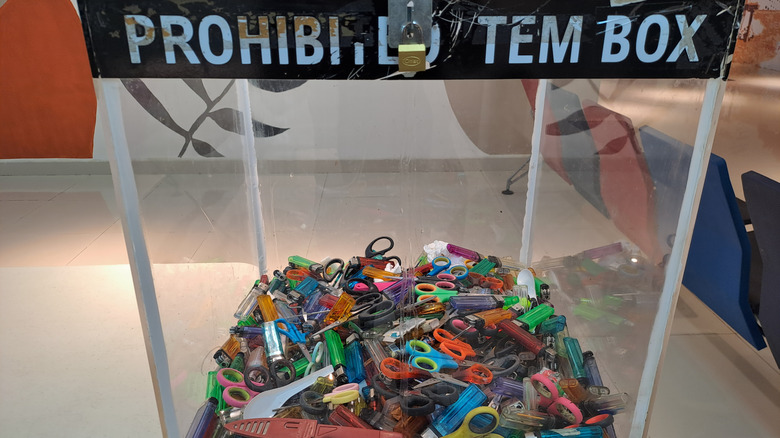
The TSA has an incredibly difficult balancing act to perform — they need to protect millions of passengers and do so with finite resources. This means they sometimes have to make practical decisions as to what they allow in aircraft cabins. Allowing small tools on board is one instance where such a decision was taken.
Initially, the TSA banned all tools from airport sterile areas and aircraft cabins. However, this blanket approach to small tools was impractical, with TSA officers finding — and presumably confiscating — nearly 470,000 tools in the second half of 2005 alone. The decision was taken that the risk associated with many of these tools didn't justify the resources spent on detecting them.
By December of 2005, the rules had been changed to reflect this. However, don't try boarding a plane with your favorite DeWalt drill or a crowbar, or you will be disappointed. The tools in question have to be smaller than seven inches and, in the case of scissors, have a blade length of no more than four inches.
While the seven-inch figure might seem arbitrary, the logic is that this size accounts for a large percentage of the intercepted tools. Imposing a size limit makes determining whether a tool can be carried onboard as simple as taking out a measuring tape. However, knives are still forbidden in the cabin, and even common brands like Swiss Army Knives need to travel in checked luggage. There are, however, certain multitools that are allowable on planes as per the TSA's tool regulations.
Large Printer cartridges
While most people are aware of the trouble with bringing liquids onto planes and the limits that apply, a liquid-filled device that was once banned from planes might surprise you — printer cartridges. The ban dates from 2010 and was initiated after British and UAE authorities discovered two cartridges that had been converted into IEDs. The devices were discovered on two flights originating from Yemen, and it was determined that the devices were meant to explode on flights with US destinations.
In response, printer ink and toner cartridges were treated as a risk, and all cartridges over 16 ounces were banned from hand luggage and checked baggage. However, as screening technology improved and detection systems became better at identifying the contents and structure of cartridges, that approach changed.
Now, printer cartridges are again allowed on planes, as they comply with standard screening requirements. So, the next time you intend to fly across the country and feel compelled to carry some printer cartridges, you can rest easy.
Electronics larger than a smartphone
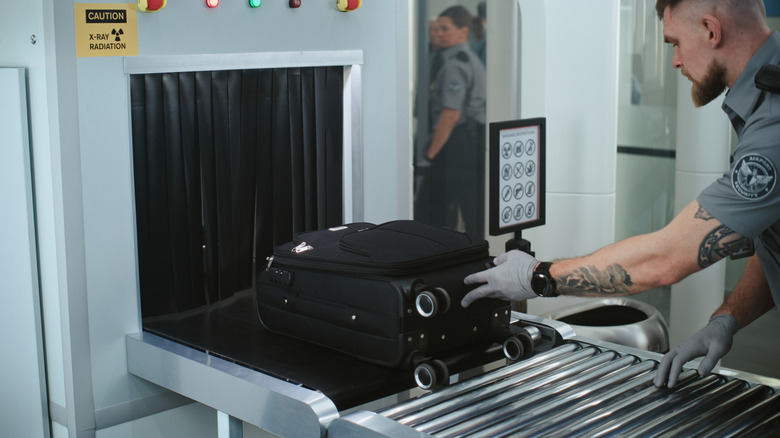
For a brief period, large personal electronics such as laptops and tablets were banned from carry-on luggage on certain international flights to the U.S. The restriction followed intelligence suggesting explosive devices could be concealed inside consumer tech products. There was also an instance in Somalia where such a bomb was successfully detonated, although the affected aircraft did land safely.
However, rather than applying a blanket ban, the rule targeted specific airlines and departure airports. Among the airlines affected were Kuwait Airways, Emirates, Saudi Arabian Airlines, and Turkish Airlines. A similar ban in the UK also affected British Airways and the budget airline EasyJet. Countries affected by the ban included Qatar, Morocco, Jordan, and the United Arab Emirates.
Even with this smaller-scale rollout, the move sparked concern over device damage, data security, and theft when electronics were forced into checked baggage. There were also concerns about the fire risk posed by lithium-ion batteries and whether it was a sensible idea to concentrate large numbers of them in the cargo hold rather than keeping them in the cabin.
As enhanced screening technology was rolled out at affected airports, the restrictions were gradually eased, and our precious electronics were once again allowed to accompany us in airplane cabins.
This story is a microcosm of how security policy often evolves in response to intelligence assessments and technological capability. Once improved security measures were in place, the TSA reexamined the situation and determined that large electronics were allowed in cabins again.