

Historic Air Force Base Gets $133M Upgrade – Here's What They're Building
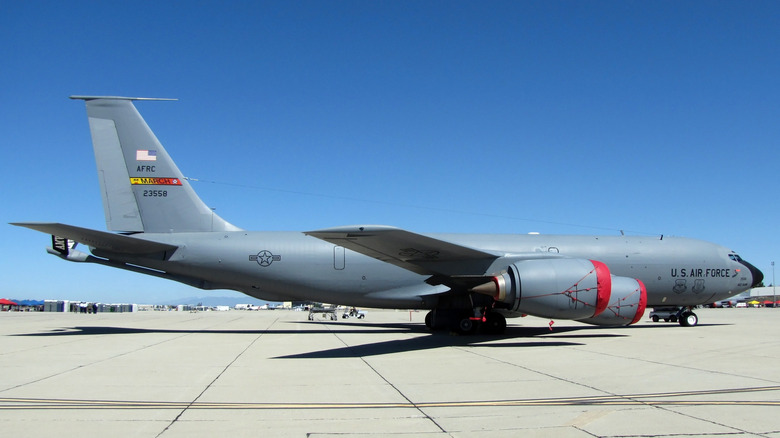
March Air Reserve Base (ARB) in Riverside County, California, was founded in 1918. For context, this is a mere 15 years after the Wright brothers brought us into the age of flight. It's also worth noting that the historic Wright brothers' flights covered 120 feet, less than the length of the long-service Boeing KC-135 Stratotankers that are currently based at March ARB.
This is an airbase that has been serving its country with distinction since the very dawn of flight, and this service is set to continue with a $134 million upgrade.
Since the 1980s, the base has become closely associated with air mobility and aerial refueling, operating successive generations of tanker aircraft, including the aforementioned KC-135 and the KC-10. The upgrade is intended to extend this heritage through a major construction project that will support the introduction of the KC-46 Pegasus tanker.
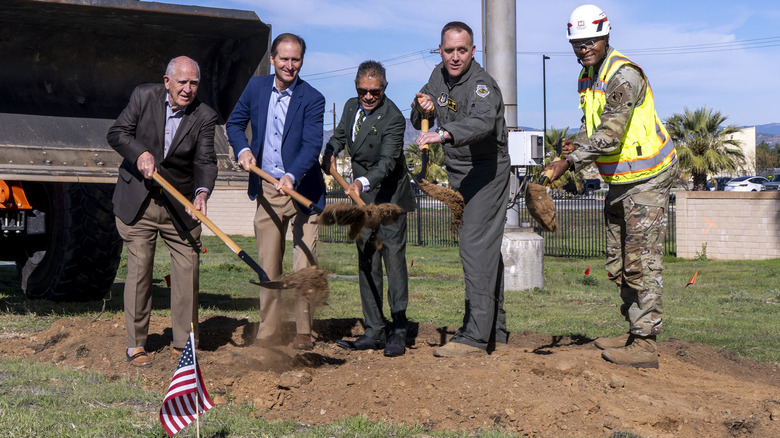
The focus of the upgrade is a new, purpose-built two-bay maintenance and fueling hangar designed specifically around the KC-46A aircraft, alongside associated training and support facilities. The work is being undertaken by Harper Construction Company Inc., and construction began on December 16, 2025.
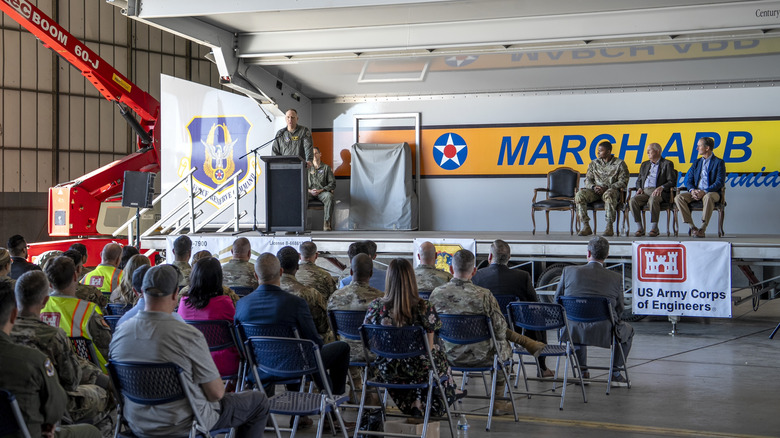
Speaking at a ceremony to mark the start of the construction, Lt. Col. Stephen Brooks of the US Army Corps of Engineers (USACE) said, "This is a significant moment for March Air Reserve Base, which has been a cornerstone of American airpower for more than a century. This project will ensure it continues that legacy of excellence."
What are the upgrades to March Air Reserve Base?
The most visible part of this upgrade will be the massive hangar built specifically to support two KC-46A Pegasus tankers simultaneously (the tanker is also one of the civilian jets used by the US military). To get an idea of the scale of this project, it's worth noting that KC-46A has a wingspan of 156 feet, and is 165.5 feet long — this hangar will support two of them simultaneously.
According to the USACE, the hangar is being constructed with reinforced concrete foundations and a steel frame and roof system. Other design features include insulated metal walls and the modern utilities required to manage the demands of a large tanker aircraft.
Additionally, the facility will also include fire suppression and fall-protection systems. There will also be dedicated storage areas for hazardous materials, tools, supplies, equipment, and the personnel support spaces needed for day-to-day operations.
The project also includes significant upgrades to Building 1244. This is to be upgraded to support fuselage training and cargo pallet storage operations. Planned improvements include new classrooms, a briefing room, and office space. Other Building 1244 improvements involve upgrading its HVAC and fire suppression systems.
Other planned works include the demolition of existing structures, site preparation, airfield striping, KC-46 mooring points, and environmental mediation where required.
The project is expected to take around three years to complete and is described by officials as part of a broader KC-46 modernization effort at the base, with additional work planned in future phases.
Why the price tag around March ARB's upgrade isn't straightforward
The construction cost of the work at the March ARB has been quoted as being $250 million. Officially, however, the US military and the USACE describe the upgrade as a $134 million construction project with a clearly defined scope to update the base to allow it to service Boeing's important KC-46 Pegasus aircraft. The lower figure reflects the value of the construction contract as awarded, rather than the higher estimated values outlined in the project's solicitation materials.
The larger figure appears in project solicitation documents rather than in the awarded contract itself. In federal construction projects, these documents often contain an estimated value range. In this case, figures cited during solicitation — including values up to $250 million — reflect early planning estimates rather than the final contract value.
Some of the confusion could be attributed to how large construction works are planned and discussed. Projects like these are commonly developed in phases and funded across multiple budget cycles, a standard feature of the Department of Defense's military construction process. As a result, solicitation documents may reference higher notional values to accommodate potential variations, even though only a portion of that work is funded at the outset.
Ultimately, this historic base has earned its upkeep and its upgrades, and whether the upgrade remains at $134 million or rises to $250 million, the base's century-plus history looks set to continue.