

New AI Model Lets Farm Robots Identify Weeds – Then Kill Them With Lasers
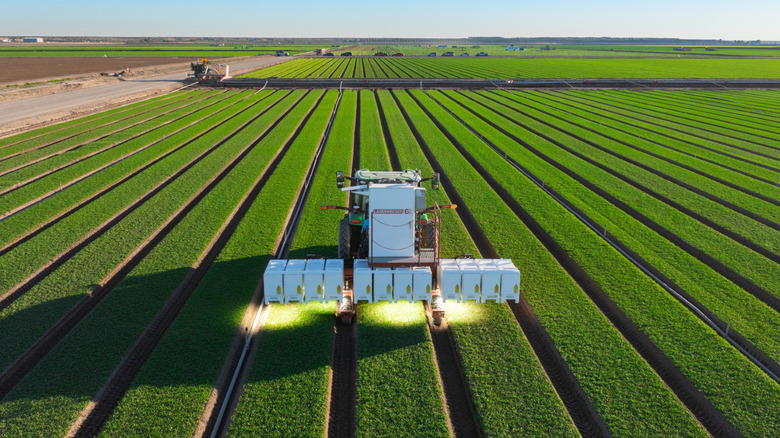
You've probably heard about large language models, those sophisticated AI systems that power all chatbots today. Get ready for Large Plant Models (LPMs). Developed by Carbon Robotics, a Seattle-based agricultural technology company, it's essentially an AI model trained on over 150 million labeled plants for the goal of recognizing basically any weed in any field of the planet. Computer vision is fast emerging as a transformative tech in farming — another startup company recently used the tech in mushroom-picking robots.
The LPMs will power LaserWeeders, the company's fleet of four-wheeled, autonomous robots that literally laser weeds to death. It's a novel technique that's being touted as more efficient than the traditional method of spraying herbicides, which can disturb the soil and damage crops. You can say the lasers are spiritually similar to Harbor Freight's weed burner tool, except they work a lot faster.
While LaserWeeders have been around for over three years now, the new software is set to significantly upgrade their capabilities. Previously, every time a new type of weed showed up on a farm, or even the same weed looked slightly different because of the soil or weather, Carbon Robotics had to create fresh data labels and retrain its machines. That took around 24 hours each time, according to CEO Paul Mikesell. Of course, the problem is now a thing of the past.
Speedier weed killing
Now, the LPM can identify a weed it's never encountered before and respond instantly. "The farmer can live in real time and say, 'Hey, this is a new weed. I want you to kill this,'" Mikesell told TechCrunch. He added that there's no new labeling or retraining involved now – the model understands plants at a much deeper level than before.
The LPM will reach existing machines through a software update, and from there, the whole system is only set to grow more powerful. That's because LaserWeeders currently operate on over 100 farms across 15 countries, and all of those machines are continuously feeding data collected from the fields they run on back into the model.
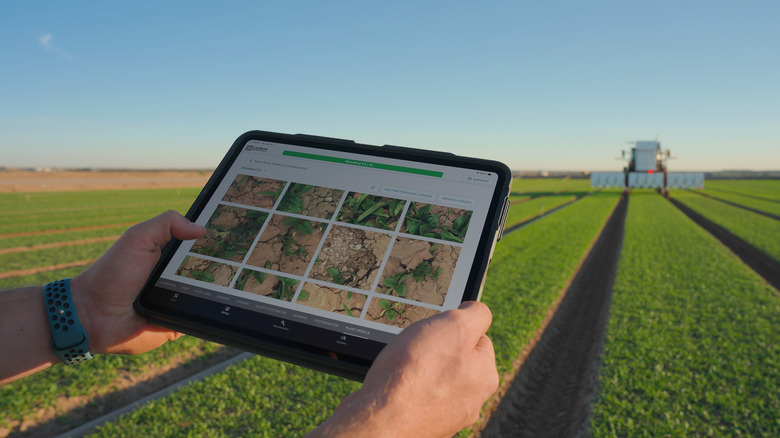
Besides this, the company also rolled out a feature called Plant Profiles. It lets farmers customize how the model behaves in their specific fields using just two or three photos selected through an iPad app. This happens in minutes, which Carbon Robotics claims is way faster than the weeks or months that competing AI-based systems typically require for that kind of calibration.
The road to robot weed killers
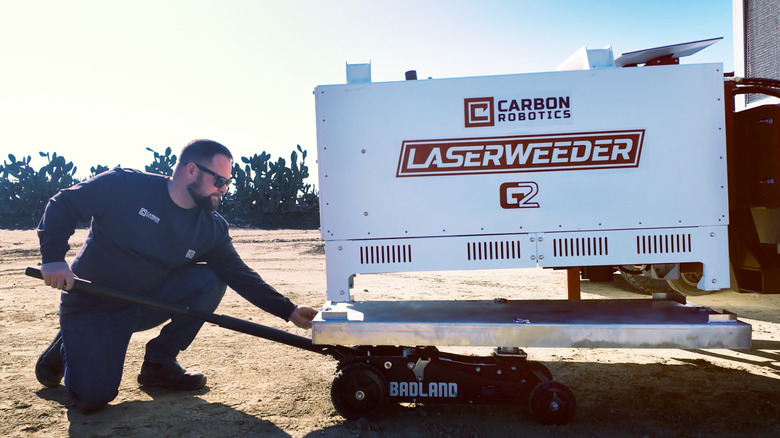
Carbon Robotics has been kicking for a while now. It was founded back in 2018 by Mikesell, who previously worked on autonomous vehicle infrastructure at Uber and also contributed to Meta's Oculus VR headsets. The company spent its first few years experimenting with different approaches to weed control, and after going through all of that, it ended up settling on carbon dioxide lasers as the most effective method.
The first Autonomous LaserWeeder shipped around 2021 and 2022. It was a 10,000-pound robot equipped with 20 high-resolution cameras and high-powered lasers that could fire every 50 milliseconds, which is already kind of wild on its own. The way it worked was by targeting the meristem – essentially the growth cells at the center of a plant — and killing the weed. Impressively, the robot did this without disturbing the surrounding soil or crops. Even more impressively, early models could eliminate around 100,000 weeds per hour – and this actually doubled in 2022 with an upgraded model.
Those machines sold out almost immediately. Mikesell has said that once farmers actually see it working out in the field, the thing basically sells itself. The economics behind all of this make sense, too, as Carbon Robotics has demonstrated an 80% reduction in weed control costs, with farmers typically breaking even on the purchase within two to three years.