

4 Of The Worst Places To Install A Smoke Detector
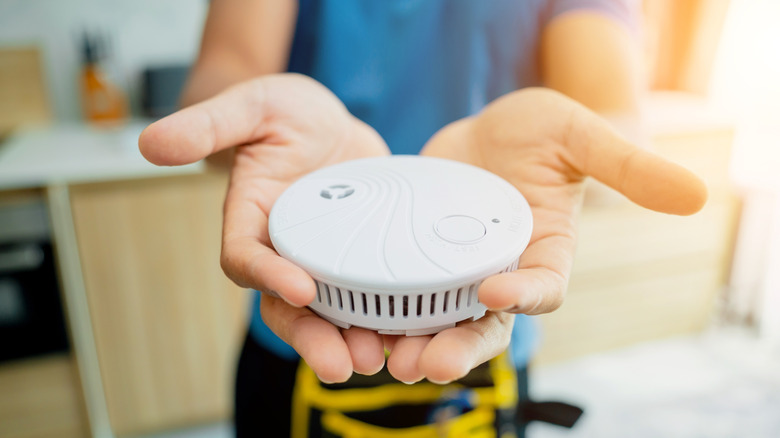
House fires may not be something you put much thought into, beyond buying a few fire extinguishers and hatching an escape plan with your family, and while your risk is relatively low, there were more than 344,000 residential building fires in 2023, according to the U.S. Fire Administration.
These incidents resulted in almost 3,000 deaths and more than 10,000 injuries. One of the best ways to protect yourself and your family from a house fire are smoke detectors – the National Fire Protection Association (NFPA) states that they decrease your risk of dying in a home fire by 60%.
Smoke detectors work by detecting particles in the air, either with ionization detectors or photoelectric detection. They can recognize both fast-burning fires and slower blazes that smolder, emitting a sound or even flashing a strobe light to alert you that smoke has been detected.
The NFPA recommends that you install several smoke detectors in your home, up on the ceiling or high on a wall. You may be tempted to remove the battery if your smoke detector gives off false alarms or is frequently triggered when you're cooking, but you should ensure your smoke detectors are in good working order and test them at least once a month.
New technology means fewer false alarms, so upgrade instead of deactivating. Install a smoke detector in every bedroom and on every level of your home, including the basement. But there are also several areas where you shouldn't put a smoke detector, because it won't work properly and may trigger those annoying false alarms.
Directly in your bathroom
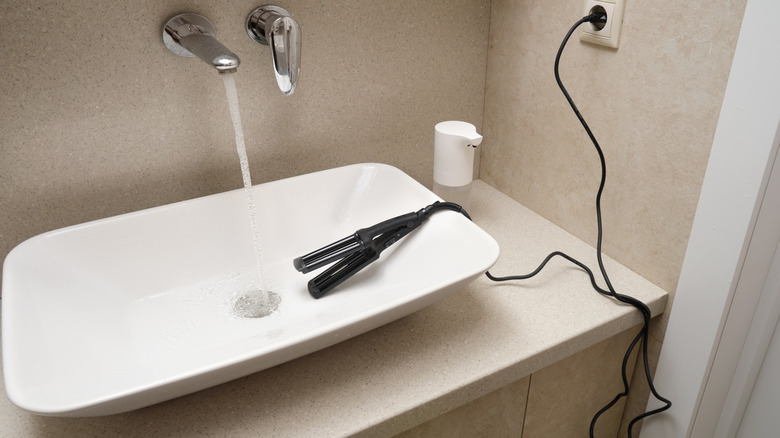
Your bathroom may seem like a logical place to install a smoke detector. Exhaust fans are often overlooked as potential fire hazards, but it's something many of us use every day without even thinking about. These fans can get dirty after years of use, causing them to overheat and catch fire. While newer fans are designed to turn off it they get too hot, older fans won't. People also use other fire hazards in the bathroom, like candles, curling irons, and even space heaters.
Despite these risks, you should avoid placing a smoke detector directly in a bathroom. The steam can not only trigger a false alarm, tempting you to disable the device, the high humidity can also damage its sensors. Instead, place a detector nearby, but still outside of the bathroom, where the heat and humidity won't accidentally set it off or damage it. Experts advise that you place it at least 10 feet away from showers, saunas, and baths.
Near cooking appliances in your kitchen
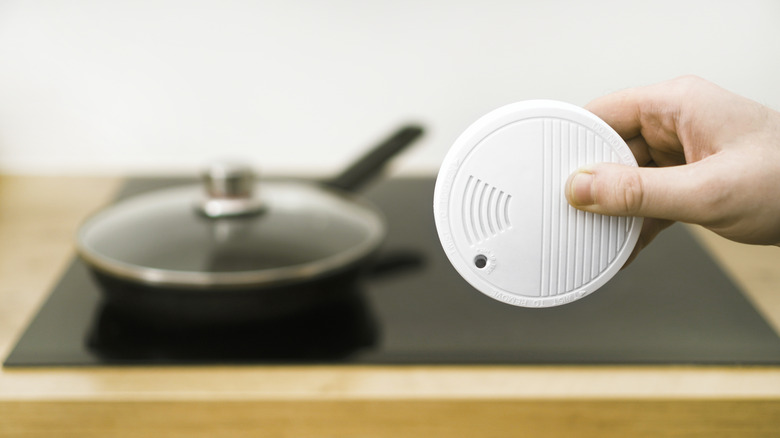
Cooking fires are a leading cause of home fires, resulting in hundreds of deaths and thousands of injuries. The majority of fires are started by ranges or cooktops, and electric ranges are more dangerous than gas ones, according to the National Fire Protection Agency. You should also never walk away while you're in the middle of making a meal or a snack — unattended cooking is an even greater risk.
With such a high risk, it seems logical that we should all have a smoke detector in our kitchen, and if your kitchen is large enough, you certainly should. Install the detector at least 10 feet away from all cooking surfaces, including the range or stovetop. You should also be mindful of the type of smoke detector you select for this space. Ionization detectors don't work well in kitchens because they are sensitive to the small particles that can be put out even by cooking. Instead, look for a photoelectric detector that will likely reduce the chances of false alarms.
Inside your garage
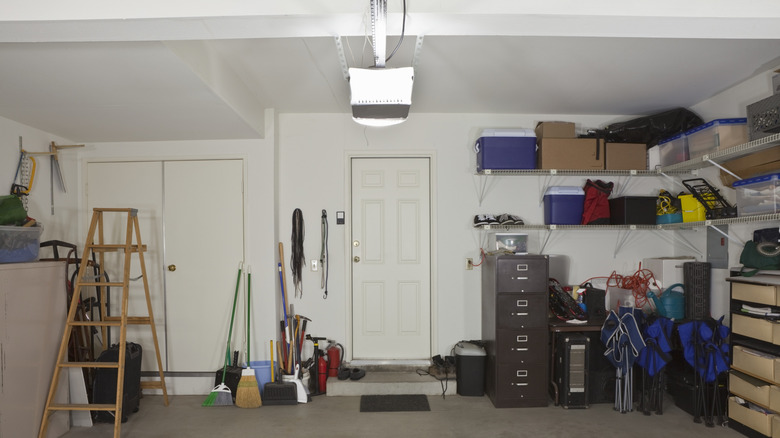
For many, the garage is a multi-functional workspace or storage area, along with a handy spot to park our cars. While car fires are relatively rare, you may store paint, propane, and other flammable liquids inside your garage. Some use it as a workshop, with power tools, electrical cords and chargers, or even a space heater. According to the U.S. Fire Administration, garage fires tend to be more destructive than other home fires, so it's a logical leap to think that you should definitely install a smoke detector in that space, but you'd be wrong.
Fumes from your vehicle may set off the smoke detector, and even if you don't park your car inside your garage, false alarms can be caused by dust or dirt blowing around. Instead, install a heat detector. These devices are intended for spaces where smoke detectors may not be advisable, and they sound an alarm when they detect high temperatures. You can even install one that is interconnected to the other alarms in your house, to make certain you know if it alerts. Just be sure to mount it away from fluorescent lights, as they may cause false alarms.
Too close to fireplaces, wood stoves, and windows
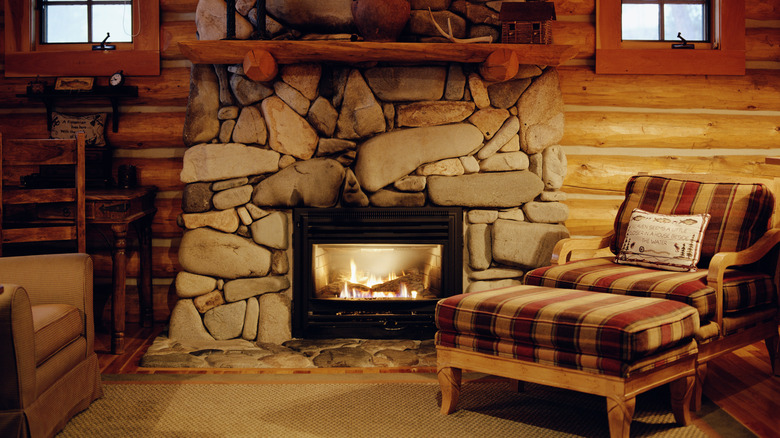
Fireplaces and wood stoves are a common source of house fires, and of course you should install a smoke detector near those features in your home, but experts recommend that you avoid placing the detector directly above these heating sources. Instead, install a smoke detector about 10 to 15 feet away from your fireplace or wood stove in order to avoid false alarms from any smoke they may put into the air.
You should also avoid installing your smoke detectors too close to windows and even exterior doors. Drafts may impact their effectiveness, so keep these safety devices on inner walls. It may seem like a lot to remember, and it is. There's more to keeping your home and family safe than simply testing your smoke detectors several times a year and replacing them when they get too old or stop working, though that's a great place to start.
If you're unsure about the best place to install smoke detectors in your home, or you don't know how many you need, try contacting your local fire department for assistance. If they can't help, a contractor can. If you can't afford smoke detectors or are unable to install them on your own, your local Red Cross also offers services.