

New NASA Wing Tech Helps Plane Reach 144 MPH Without Ever Taking Off
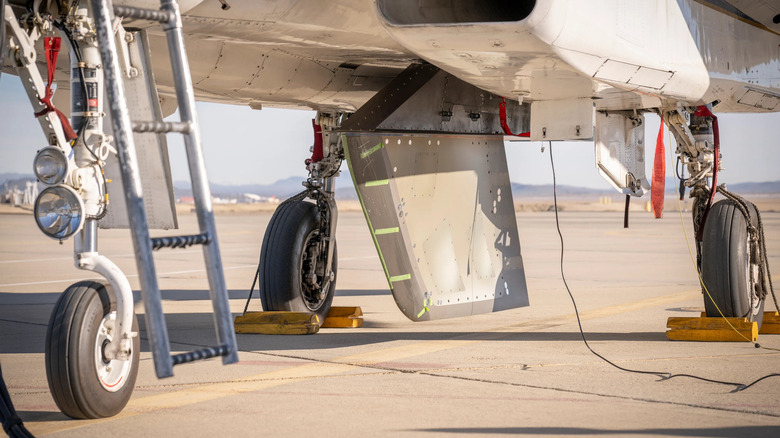
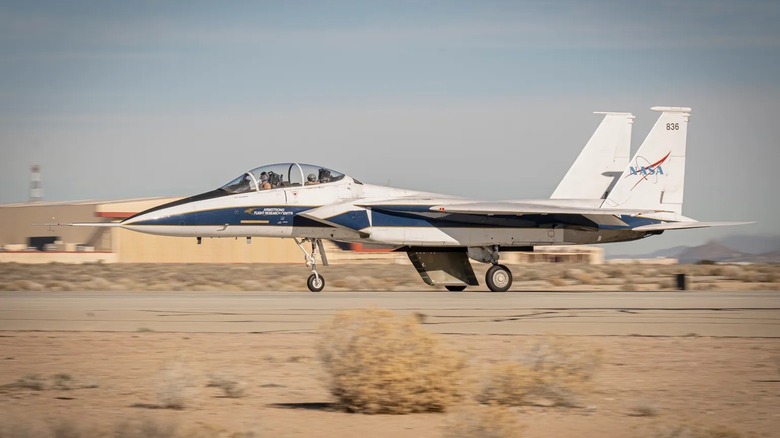
Commercial airlines spend a lot on fuel each year. Some estimates for 2024 put the figure at $291 billion, and that's up from $271 billion in 2023. We can only assume that number climbed even higher last year in 2025. But NASA may have found a new wing technology that could significantly cut those costs for commercial airplanes... and all without leaving the ground. During last month's testing of a radical new wing design that reduces aerodynamic drag, NASA's research jet was able to reach speeds of 144 mph without ever leaving the runway.
For the test, engineers mounted a 3-foot-tall scale model of the innovative new Crossflow Attenuated Natural Laminar Flow (CATNLF) concept underneath an F-15B research aircraft. This test let researchers expose the design to real-world airflow conditions without needing to create a full aircraft wing (let alone a whole new test plane). You'll notice it's shaped like a narrow fin and positioned vertically instead of the traditionally horizontal wings we're used to. NASA officials say this simple design tweak could save millions of dollars in fuel costs per plane each year.
The surprisingly simple science behind the new wing tech
At its core, the CATNLF concept targets a long-standing aerodynamic challenge: managing the thin layer of air that clings to an aircraft's surface during flight. That air can cause turbulence, and that increases friction and drag. That extra resistance means the aircraft has to burn more fuel to maintain its speed and lift. But with the CATNLF concept, that thin layer of air can't cling to the aircraft as easily. That reduces friction and improves overall efficiency.
NASA's findings back up years of computer model testing and wind tunnel research that suggested the CATNLF concept could cut down on annual fuel consumption for long-range aircraft like a Boeing 777 by as much as 10 percent. Based on past years' figures, that could be tens of billions annually. Sure, that's best-case scenario, but even modest gains in fuel efficiency could translate into hundreds of millions saved all over the world. Of course, that's not to mention the environmental impact of reduced emissions.
This most recent high-speed taxi test is only a precursor of what's to come: a series of upcoming flights that will see the F-15B actually carry the CATNLF model into the air for further evaluation. Researchers say the same principles could eventually be adapted for supersonic aircraft, opening the door to efficiency gains at even higher speeds. For now, though, the focus remains on commercial aviation. That's where the potential impact is the greatest.