

There's A Good Reason Why US Aircraft Carriers Are Now Using 3D-Printed Parts
When you hear the words "3D printing," what first comes to mind is most likely some sort of simple and hobbyist consumer item. These cool 3D printer possibilities can include action figures and model kits, but also little oddities such as a candy dispenser and toilet paper riders.
But as 3D printing technology and capabilities continue to advance, we are seeing more serious and substantial parts coming from 3D printers — or, at least, the advanced, industrial-grade versions of them. The U.S. military has actually been using 3D-printed parts for a while now, with 3D printers even used to produce the components for concrete barracks at U.S. Army bases.
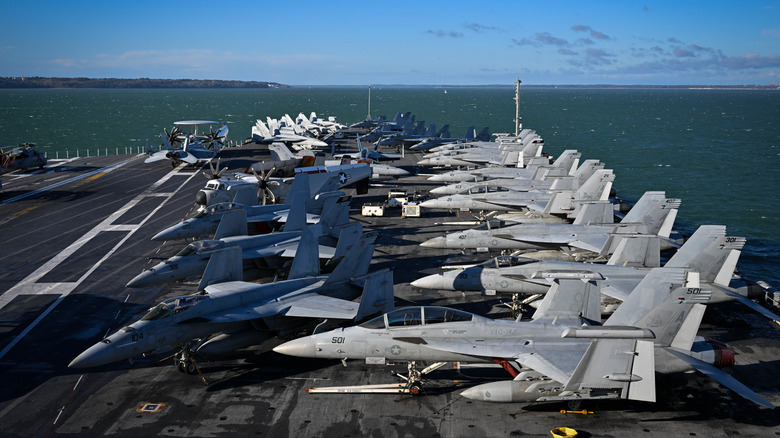
Additive manufacturing, as 3D printing is known within the defense industry, is also now being used for parts on a growing number of U.S. Navy vessels, including its latest nuclear-powered super carriers. But why would the Navy want to use 3D-printed parts on the most powerful and important fighting ships on earth? The answer is pretty simple. As the Navy has found out, using additive manufacturing for both shipbuilding and repair can save a lot of money and, more importantly, time. And both of those are extremely important given the Navy's well-known issues with new ships being over budget and delayed by years.
This isn't your average 3D printing
3D-printed parts have been used across all branches of the military since the start of the 2020s. Along with applications like the aforementioned Army barracks, the U.S. Air Force has used 3D-printed components to replace structural elements on its massive C-5M Super Galaxy transport aircraft. The U.S. Navy, though, through its Naval Sea Systems Command (NAVSEA), is home to some of the most ambitious uses of additive manufacturing technology yet.
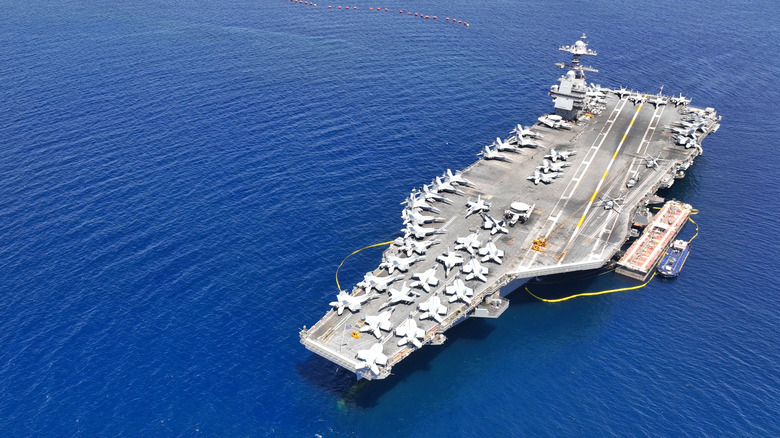
While building the new Gerald R. Ford-Class carrier USS Enterprise (CVN 80), the shipbuilder HII used a 3D-printed valve manifold to distribute fluid from the pump room to various points across the ship. The company also plans to use similar 3D-printed parts when building future Ford-class carriers like the USS Doris Miller.
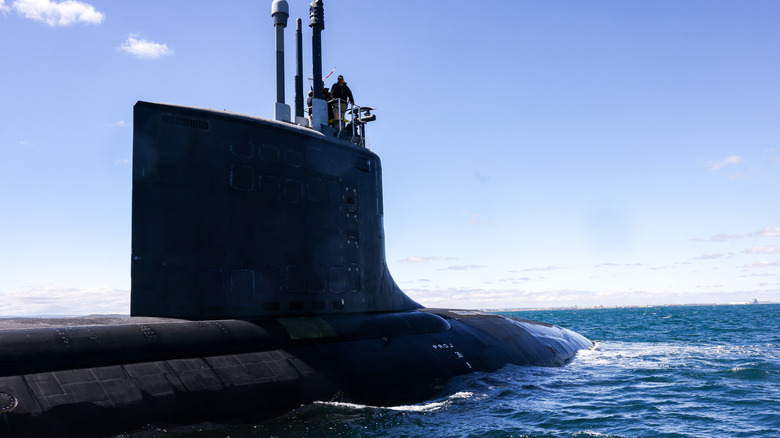
The 992-pound (450-kg) manifold used on the USS Enterprise was built using an advanced 3D-printing process called direct energy deposition, where laser-treated metals are formed into components for a variety of military and aerospace uses. 3D-printed parts are also finding uses on vessels under the sea, as well, with the Navy's new Virginia-class nuclear attack submarines implementing additive-manufactured copper deck drains.
Efficiency is everything
The primary reason that NAVSEA is so invested in 3D-printed parts is because of how efficiently they can be sourced. Navy shipbuilding is still heavily impacted by the supply chain shortages of the post-pandemic era, with Navy leaders stressing the need to build ships as if the nation were currently at war. So far, 3D printing has shown to reduce lead times by an impressive 70%.
Additionally, the Navy also stresses that additive manufacturing can strengthen alliances with industrial partners in the U.K. and Australia while speeding up shipbuilding and repair processes across those regions. In one specific situation, NAVSEA claimed that it was able to significantly cut down repair time and save over $300,000 by 3D printing a single pump rotor for an Arleigh-Burke-class guided missile destroyer. It's easy, then, to imagine the kind of overall impact this could have when applied across the U.S. Navy's entire fleet.
By some standards, the science and capabilities of 3D printing might still be in their infancy. However, the Navy believes that additive manufacturing is viable enough to be considered a proven and powerful ship-building tool that it hopes will trim both costs and build timelines in a big way. It certainly seems that every bit of improved efficiency would help, given that the oft-delayed USS Enterprise is only scheduled to launch in 2030.