

Is An 8K TV Worth Buying In 2026?
We may receive a commission on purchases made from links.
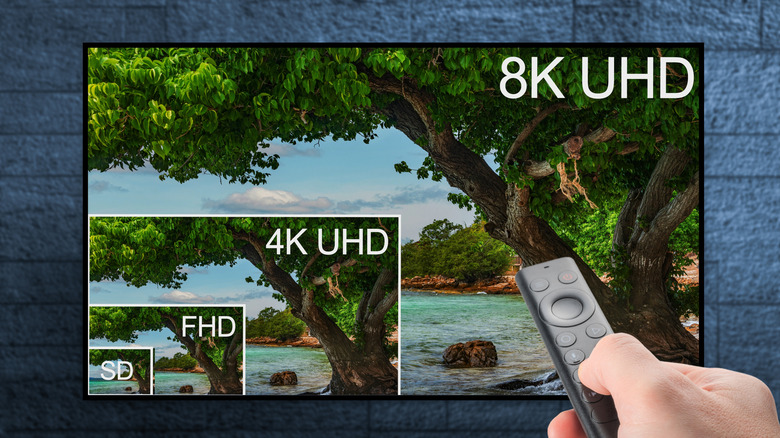
Buying a new TV can get complicated. Most top-rated models offer lengthy lists of built-in features and technologies, some of which are worth paying for, and some of which aren't. 8K resolution is one high-end feature that's been around for a while now, first debuting in TVs in the early 2010s. However, it hasn't really made it into the mainstream.
Back in 2022, we put together a list of all the reasons why it wasn't worth buying an 8K TV, citing a lack of native 8K content and high initial cost as notable drawbacks. In 2024, we asked again whether an 8K TV was worth it, and came to the same conclusion. Two more years have passed since then, so has the situation changed? Not really. If anything, the continued lack of 8K content after so many years of 8K TVs being available is an even bigger reason to stay away from them.
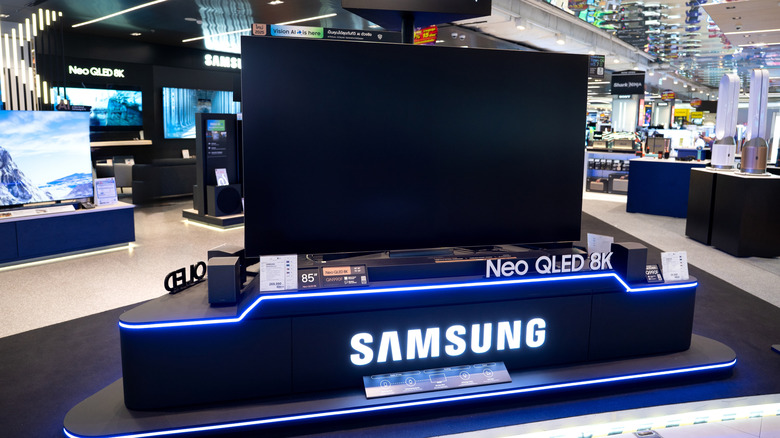
When new technologies become available, it's natural for their makers to hail them as the future of the industry. However, from its early days, 8K TVs have suffered from significant limitations. One of the biggest is price, with 8K displays costing far more than their 4K counterparts. To take just one example, a Samsung 65-inch 8K QLED TV has a list price of $3,097.99 on Amazon at the time of writing, while a similarly feature-rich Samsung 65-inch 4K QLED TV is available for $1,497.99.
Limited content matters as much as the high price
Convincing buyers to pay roughly double to upgrade to 8K was always going to be a tricky to pull off. However, it has been made even trickier by the lack of available native 8K content. At the time of writing, none of the best-rated major TV and movie streaming services offer native 8K support, and none have announced plans to in the immediate future either.
TVs with 8K displays might still be able to upscale streaming platforms' 4K content into 8K, but due to the nature of the upscaling process, that content still won't be as crisp and clear as native 8K. YouTube lets creators upload in 8K, marking the content with a dedicated tag in search results. However, a quick scroll down trending pages is all it takes to prove that not many are actually doing it.
It isn't just movie and TV fans that will find the selection of 8K content underwhelming. Gamers are also likely to be disappointed. The PlayStation 5 Pro supports 8K resolution, but it's currently only available for a small selection of games. The Xbox Series X can also technically support 8K upscaling, although Xbox boss Phil Spencer has previously downplayed its importance. In a 2020 interview with Wired, Spencer said that he thought "we're years away from 8K being — if it ever is — standard in video games," later referring to the introduction of the technology as "buzzword bingo."
8K is unlikely to gain popularity in the foreseeable future
Even if more 8K content is produced over the coming years, plenty of people will be excluded from consuming it due to their internet connection. Estimates for bandwidth requirements vary slightly between content types, but HighSpeedInternet suggests that 8K content will require a minimum connection speed of at least 100Mbps. Meanwhile, 4K content can be streamed via a 20Mbps connection.
A 2021 report found that 17% of the U.S. population did not have access to an internet connection above 25 Mbps, making streaming 8K content from a platform like YouTube completely out of the question, regardless of a given TV's capabilities. Even users who can access — and pay for — higher internet speeds might find that 8K streaming takes up an unacceptably large amount of bandwidth, particularly in households that stream multiple shows, movies, or games from different devices at the same time.
If that wasn't enough, a 2020 study produced by Warner Bros and various collaborators reported that viewers noticed only a marginal improvement in perceived quality when watching 8K content compared to 4K.
With limited visual improvement, a lack of content, higher upfront costs and higher internet speed requirements, there still really isn't any good reason to buy an 8K TV in 2026. Instead, save your money and check out our TV buying guide for a rundown of the features that are actually going to make a difference.
How we came to our conclusions
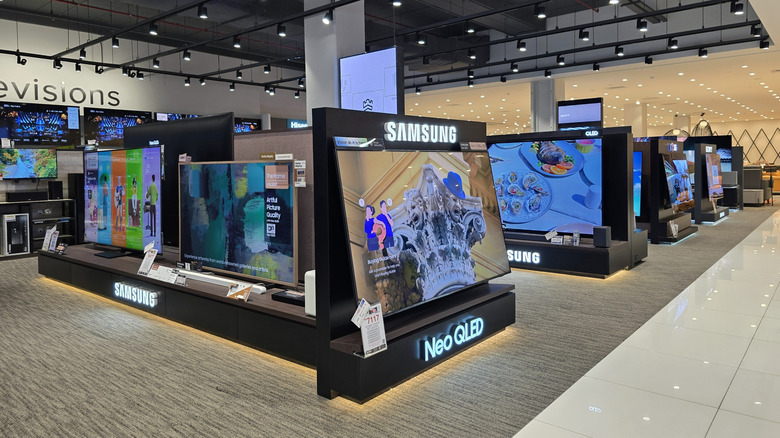
There's no point spending money on TV features you don't need, and so to evaluate how worthwhile 8K resolution was in 2026, we drew from a wide variety of sources including academic studies, government reports, and our own research on the availability of 8K content across platforms. We used Amazon to compare prices for TV models, but prices may differ from other retailers.